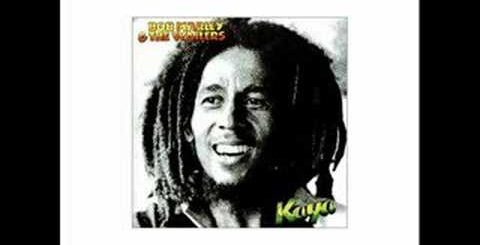
Kaya by Bob Marley feat. The Wailers Lyrics Meaning – The Euphoric Escape into Rastafarian Bliss
Lyrics
Wake up and turn me loose
Wake up and turn me loose
For the rain is falling
Got to have kaya now
Got to have kaya now
Got to have kaya now
For the rain is falling
I’m so high, I even touch the sky
Above the falling rain
I feel so good in my neighbourhood, so
Here I come again
Got to have kaya now
Got to have kaya now
Got to have kaya now
For the rain is falling
Feelin’ irie I
Feelin’ irie I
Feelin’ irie I
‘Cause I have some kaya now
I feel so high, I even touch the sky
Above the falling rain
I feel so good in my neighbourhood, so
Here I come again
Got to have kaya now
Got to have kaya now
Got to have kaya now, Lord
For the rain is falling
(Kaya now, kaya, kaya) Huh
Bob Marley’s ‘Kaya,’ performed with the stalwarts The Wailers, has long been etched into the zeitgeist, not just as a song but as an anthem of serene defiance. Draped in the languid rhythms of reggae, the track is an ode to the escapist solace that kaya — a term for marijuana in Jamaican culture — can provide.
But to distill ‘Kaya’ down to only its surface-level interpretations as a song about getting high is to miss the rich tapestry of cultural, political, and spiritual implications woven into its lyrical fabric. With its roots firmly planted in the Rastafarian beliefs to which Marley was deeply connected, ‘Kaya’ opens up a world where the physical high meets the metaphysical quest for freedom and peace.
Inhale the Freedom: Cannabis as a Symbol of Liberation
Bob Marley’s advocacy for marijuana transcended simple substance use; for him and many Rastafarians, it serves as a sacrament that liberates the consciousness. ‘Kaya,’ at its core, celebrates this liberation. As Marley croons for the need to ‘wake up and turn me loose,’ he’s not only talking about enjoying a smoke. He’s making a deeper commentary on the need to break free from the metaphorical chains that bind the mind and spirit.
The symbolism here is potent: getting high is paralleled with a yearning for waking up to the realities of the world, and rain—often seen as a sign of trouble—becomes inconsequential. ‘Kaya’ is an invocation to rise above the ‘falling rain,’ which can be seen as the tribulations of life or political oppression faced by marginalized groups.
A Rain of Revelation: What the ‘Falling Rain’ Really Means
The refrain that comes with the call for ‘kaya now’—’for the rain is falling’—is rich with interpretative layers. Rain, in its duality, can represent both life-giving sustenance and a storm to be weathered. In ‘Kaya,’ rain serves as a double entendre, highlighting the paradox of life’s challenges being both the impetus for growth and a force to seek shelter from.
Marley seems to suggest that ‘kaya’ provides not just a physical respite from this downpour, but also a spark of enlightenment, a tool through which one can view the challenges of life with a heightened perspective, and thus march forward with strength and joy—’Feelin’ irie.’
Revelations from the High: The Song’s Hidden Meanings
‘Kaya’ uncovers layers of spiritual awakening that Marley often infused in his music. The lyrics ‘I’m so high, I even touch the sky / Above the falling rain’ illustrate an ascent not only above physical concerns but also a metaphysical rise towards a communion with the divine—a concept deeply entrenched in Rastafarian beliefs, which hold that one can find connections with God, Jah, through nature, cannabis, and music.
This track is an articulation of Marley’s intimate relationship with his faith, a declaration of finding the divine in the day-to-day, and a testament to the transformative power of ‘kaya’ experienced through the lens of Rastafarian philosophy.
The Groove that Unites: A Sense of Community in the Lyrics
Beyond its perceptible mellowness, ‘Kaya’ exudes a sense of community and social kinship. The assertion ‘I feel so good in my neighbourhood’ reinforces the idea of shared experience, insinuating that the liberation kaya brings is not only an individual journey but a collective one. The song encapsulates a unifying message, inviting listeners to partake in this shared elevation, to collectively rise ‘above the falling rain.’
Marley’s message is that the power of kaya, combined with music, has the potential to transcend individual enjoyment and become a communal event. It’s an acknowledgment of the interconnectedness of people’s joys and sufferings and the quest for a collective uplifting spiritual experience.
Memorable Lines: Echoes of A Generation’s Quest for Inner Peace
‘Got to have kaya now,’ the simple yet powerful phrase that forms the song’s backbone, became a resonant anthem at the height of its popularity and remains a memorable line today. Its insistence implies urgency—a need for immediate peace of mind and a reprieve from the stressors of life.
In these four words, Marley encapsulated a sentiment that many could relate to and rallied behind. It was not just a personal longing; this was the collective voice of a generation seeking connection, peace, and the ultimate freedom—to be ‘feelin’ irie’ in a world where the rain seems to never stop falling.