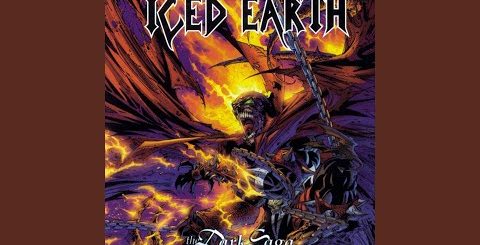
Melancholy (Holy Martyr) by Iced Earth Lyrics Meaning – Unveiling the Shadows of Despair
Lyrics
Come back another day
For years I’ve tried to teach
But their eyes are empty
Empty too I have become
For them I must die
A sad and troubled race
An ungrateful troubled place
Chorus:
I see the sadness in their eyes
Melancholy in their cries
Devoid of all the passion
The human spirit cannot die
Look at the pain around me
This is what I cry for
Look at the pain around me
This is what I’ll die for
Make the sadness go away
Come back another day
The things I’ve said and done
Don’t matter to anyone
But still, you push me to see
Something, I can never be
Why am I their shattered king?
I don’t mean anything
I see the sadness in their eyes
Melancholy in their cries
Devoid of all the passion
The human spirit cannot die
Look at the pain around me
This is what I cry for
Look at the pain around me
This is what I’ll die for
In the emotive tapestry of metal music, few songs manage to resonate with the existential angst that plagues the human condition as Iced Earth’s ‘Melancholy (Holy Martyr)’. A poignant narrative encased in potent riffs and haunting harmonies, the track serves as a mirror reflecting the despair and disillusionment embedded in the soul of society.
Through exploring the myriad layers of this lamentation, a profound understanding begins to unfurl–illuminating the internal turmoil and communal sorrow that intertwine within its verses. The ostensibly bleak landscape of ‘Melancholy’ houses a kaleidoscope of deeper significances and whispered truths, waiting to be discerned by those who dare to listen closely.
The Echoes of Hidden Agony—A Reflection on Society’s Descent
At the heart of ‘Melancholy (Holy Martyr)’ is a profound disenchantment with humanity—a theme that is striking in its relatability. The narrator speaks of a sad and troubled race, echoing a sentiment that reverberates within the soul of listeners. Iced Earth captures the essence of a collective consciousness burdened by a sense of futility and loss, personified in the eyes of every onlooker, devoid of the passion once pulsating through the veins of the human spirit.
As the lines unfold, it becomes evident that the song’s protagonist carries the weight of his people’s pain, perceived as a savior yet feeling incapable and undeserving of such reverence. The crushing weight of expectations and the unfulfilled yearning for meaning in an ungrateful world singe through the melody, encapsulating a widespread existential crisis.
A Martyr’s Burden—Shouldering the Sins of the Heartless
The titular designation ‘Holy Martyr’ surmises an underlying narrative of sacrifice and consequence; an individual who, perhaps unwillingly, bears the cross for the sake of others. Iced Earth masterfully intertwines this self-designation with a sense of irony and weariness, as the protagonist recognizes the sainthood foisted upon him and the isolation it breeds.
As mentoring turns into martyrdom, the essence of the song spirals into the contemplation of purpose and the value of a single life amidst the multitude’s malaise. The pressure to alleviate their suffering, to ‘make the sadness go away,’ becomes a crucible, testing the resilience of the spirit against the corrosion of hope.
Undying Spirit—The Unquenchable Fire Within
Despite the overwhelming sorrow, ‘Melancholy (Holy Martyr)’ offers a glimmer of resistance. The assertion that ‘the human spirit cannot die’ rises as a war cry against the suffocating shroud of despondency. It is a declaration of resilience and perhaps offers the only semblance of redemption within the confines of this somber ballad.
In the face of emotional devolution, the song champions undying perseverance, suggesting that even amidst the ruins of hope, something inherently indestructible remains within us. This steel-threaded sentiment anchors the song, establishing an ironclad defense against the nihilism that incessantly drills into the protagonist’s worn psyche.
Cries of Melancholy—The Memorable Lines that Define Despair
Some phrases etch themselves into memory, and in ‘Melancholy (Holy Martyr),’ there are lines that cut through the silence with lucid pain. ‘I see the sadness in their eyes, Melancholy in their cries’ transmits more than mere observation; it breathes empathy and the inexorable understanding of shared suffering.
Furthermore, the rebellion in ‘This is what I cry for, This is what I’ll die for’ rings out as an emotive epicenter for the track, instilling a haunting persistence in fighting against the agony that pervades. These powerful verses capture the essence of the song, the resignation interspersed with stalwart defiance against an inherently flawed condition.
Behind the Curtain—The Subtext and Ever-Relevant Themes
Understanding the true profundity of ‘Melancholy (Holy Martyr)’ requires peering beyond the explicit lyrics into the metaphor-rich subtext. This song is as much an individual lament as it is a commentary on society’s collective accidie. Its verses are inextricably tied to the human experience—the desire to impact, to feel worthy, to connect with something larger than oneself, and to reconcile with the inevitable truth of mortality.
In a broader sense, Iced Earth encapsulates the profound alienation and search for authenticity in a world increasingly disenchanted. Listeners are left to grapple with the uncomfortable reflection that the song casts—a mirror that doesn’t just show, but also questions. In times of turmoil both personal and far-reaching, the resonance of ‘Melancholy (Holy Martyr)’ persists, enduring as a touchstone for those seeking solace in shared human tribulation.