Noldor (Dead Winter Reigns) by Blind Guardian Lyrics Meaning – Unraveling the Threads of Myth and Regret
Lyrics
Blood is on your hands
Your bane’s
A tearful destiny
Black clouds will carry
Rain of blood
I’ve seen it rain
We were lost
On grinding ice
In fear and hunger
Dead winter reigned
In Araman
prebridge:
(You) can’t escape
From my damnation
(Nor) run away
From isolation
bridge:
Guilty spoke the one
This deed can’t be undone
Hear my words
Fear my curse
chorus:
I know where the stars glow
(And the) sky’s unclouded
Sweet the water runs my friend
(But) Noldor
Blood is on your hands
Tears unnumbered
You will shet and dwell in pain
Your homeless souls
Shall come to me
There’s no release
Slain you might be
Slain you will be
Slain you will be
And the lost
Who will not reach the
House of spirits
(Will) grow old and weary
prebridge
bridge
chorus
I’ve seen this bitter end
As I’ve foreseen
The storm and ice
And I could see it
(How) a million died
And I?
The blame’s on me
Cause I was not there
prebridge
bridge
chorus
Dead winter reigns
And tomorrow’s still unknown
Lies
Condemned and betrayed
Now everything’s said
See my eyes
(Are) full of tears
And a cruel price
We’ve paid
But still I can’t claim
That I’m innocent
Lost
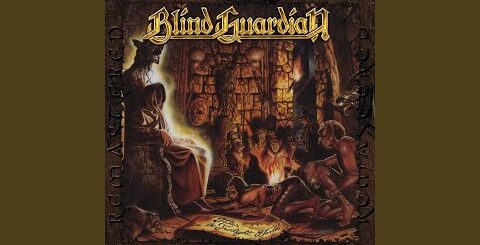
Blind Guardian has long been synonymous with storytelling through the power of music, blending epic fantasy with melodic metal in a way that captivates and resonates with fans around the globe. ‘Noldor (Dead Winter Reigns)’ is a significant chapter in their extensive repertoire, taken from their 1998 concept album ‘Nightfall in Middle-Earth,’ which pays tribute to J.R.R. Tolkien’s ‘The Silmarillion.’
The song weaves a tale of tragedy, remorse, and a relentless curse – the legacy of the Noldor, a race of Elves in Tolkien’s legendarium. There’s an inherent sorrow and complexity to the piece that both demands and defies simple interpretation. Poetic lyrics and mournful melodies invite listeners into a world of fallen heroes and bitter consequences, where blood is permanently stained on the hands of an ancient people.
The Tragic Tale of the Noldor: A Legacy of Doom
Rooted deeply in the lore of Middle-earth, the song ‘Noldor (Dead Winter Reigns)’ speaks to the heart-wrenching story of the Noldorin Elves. Their decision to leave the bliss of Valinor led to a series of calamitous events, steeped in betrayal and war. As Blind Guardian channels the essence of this narrative, the music becomes a vessel for the profound sorrow and the inescapable curse that haunt the Noldor – a blend of their own making.
The relentless ‘rain of blood’ and ‘dead winter’ are not merely poetic metaphors but a reflection of the Noldor’s spiritual and physical exile, as they faced the consequences of their actions. The song captures the cold desolation of their journey, and the lingering loneliness of their fate, with a fierce authenticity that bespeaks Blind Guardian’s mastery in storytelling.
The Weight of Guilt and the Price of Rebellion
At the core of ‘Noldor (Dead Winter Reigns)’ lies the heavy burden of guilt. The lyrics, ‘Blood is on your hands,’ repeated with haunting insistence, symbolize the Noldor’s responsibility for the bloodshed caused by their rebellion against the Valar, the godlike beings of Tolkien’s universe. This rebellion ultimately led to kinslaying and relentless war, marking a stain upon their beings that no victory could ever cleanse.
The bridge, ‘Guilty spoke the one / This deed can’t be undone,’ serves as a chilling indictment of the past, while ‘fear my curse’ forewarns of an inescapable doom. In this reflection, Blind Guardian captures the essence of fatalism entwined with free will – an interplay central to the elven saga.
Between Hope and Despair: The Emotional Paradox at Play
Even amidst the darkness, ‘Noldor (Dead Winter Reigns)’ juxtaposes despair with glimpses of what once was, as well as what could have been. The lines ‘I know where the stars glow / (And the) sky’s unclouded’ conjure memories of Valinor’s undimmed beauty, a stark contrast to the grim fate they’ve embraced. It’s this duality that gives the song its poignant depth, ensnaring listeners in the emotional paradox of the Noldor’s existence.
Beneath the surface of this lament lies a sorrowful longing for redemption and an acknowledgment of an irrevocable fall from grace. The haunting memoriam of their choices reinforces the melancholy mood throughout the melody and encapsulates the band’s ability to balance the delicate interplay of hope and hopelessness.
Deciphering the Sonorous Enigma: The Song’s Hidden Meanings
Much like the multifaceted stories it draws from, ‘Noldor (Dead Winter Reigns)’ is rife with hidden meanings that beg for deeper exploration. The narrative of the song is interwoven with themes of prophecy and foresight, hinted at with lyrics like ‘As I’ve foreseen,’ suggesting an awareness of the ultimate doom yet an inability to avoid it.
This can be interpreted as a profound commentary on the human condition – the hindsight that haunts us, the outcomes we could have altered, and the shared fate to which we are all bound. Blind Guardian brilliantly employs the Noldor’s myth as a lens through which to examine the universal experiences of regret and consequence.
Lyrical Labyrinth: Memorable Lines That Stir the Soul
‘Dead winter reigns / And tomorrow’s still unknown’ – with such powerful lines, Blind Guardian encapsulates the uncertainty of life and the finality of the choices we make. The song is punctuated with emotive lyrics that evoke strong imagery and elicit visceral reactions, ensuring that their message lingers long after the notes have faded.
The closing lines, ‘See my eyes / (Are) full of tears / And a cruel price / We’ve paid / But still I can’t claim / That I’m innocent,’ serve as a poignant end to the Noldor’s tale. Here Blind Guardian subtly reminds us that while we might regret the paths we have taken, claiming innocence in the face of our choices is a folly all its own. It’s a final, haunting note that solidifies the narrative potency of this balladic masterwork.