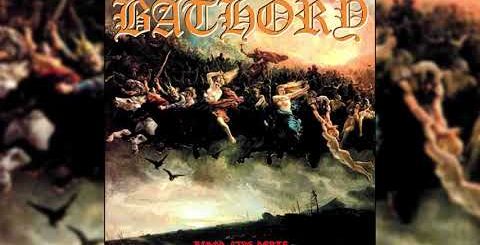
One Rode to Asa Bay by Bathory Lyrics Meaning – Unveiling the Enigmatic Saga of Faith and Conquest
Lyrics
Down to Asa bay
Where dragon ships had sailed to sea
More times than one could say
To see with own eyes the wonder
People told of from man to man
The God of all almightyness
Had arrived from a foreign land
The rumors told of a man
Who had come from the other side the seas
Carrying gold cross around neck in chain
And spoke in strange tongue of peace
He had come with strange men in armor
Dressed in purple shirts and lace
Smelling not of beer but flowers
And with no hair in face
And the bold man carrying cross
Had told all one of Asa bay
The God of all man woman child had come
To them all save
And to thank Lord of Heaven
One should build to God a house
And to save one’s soul from Hell
One should be baptized and say vows
A man of pride with the Hammer told new God
To build his house on own
And spoke loud of the Gods of their fathers
Not too long time gone
The rumors said the man with a beard like fire
And the Hammer in chain
By men in armor silenced was and by
Their swords was slain
Those who did not pay the one coin
Of four to man of new God
Whipped was twenty and put in chains then locked
By their neck to the log (To the log)
And so all of Asa bay did build
A house of the cross
Every hour of daylight they did sweat
Limbs ached because faith does cost
And on the day two hundred
There it stood white to the sky
The house of the God of the cross
Big enough to take two dragon ships inside
And all of Asa bay did watch
The wonder raise to the sky
Now must the God of the cross be pleased
And satisfied
Just outside the circle of the crowd
One old man did stand
He looked across the waters
And blotted the sun out of his eyes with one hand
And his old eyes could almost see
The dragon ships set sail
And his old ears could almost hear
Men of great numbers call out Oden’s hail
And though he did know already
Though he turned face towards sky
And whispered silent words forgotten
Spoken only way up high
Now this house of a foreign God does stand
Now must they leave us alone
Still he heard from somewhere in the woods
Old crow of wisdom say
People of Asa land, it’s only just begun
Like a time capsule unearthed from the dark and tumultuous soil of history, Bathory’s ‘One Rode to Asa Bay’ is not merely a track—it’s a revival of an ancient saga set to the ominous rumble of Viking metal. With each verse and chorus, Quorthon, the mastermind behind Bathory, guides us through a gripping narrative of cultural clash and religious imposition.
When unraveling the depth of this epic song, it becomes clear that the verses are stitched with a rich tapestry of symbolism that speaks to the collision of old and new worlds—a subject as resonant today as it was in the Viking Age. Here’s how Bathory’s haunting ballad reaches across centuries, echoing the existential musings of identity, belief, and resistance.
The Clashing Tides of Old and New Beliefs
At its core, ‘One Rode to Asa Bay’ is a powerful narrative that chronicles the advent of Christianity into a pagan land. The lyrics describe the arrival of a Christian missionary ‘carrying gold cross around neck in chain,’ upending the traditional worship of the Norse gods.
This man, adorned in exotic finery and preaching of peace in foreign tongues, represents the broader historical wave of religious change that swept across Europe during the Middle Ages. The song dramatizes the confrontation between the ‘bold man carrying cross’ and the defender of the old ways, welding his Hammer with pride.
The Gritty Reality of Conversion and Coercion
Quorthon doesn’t shy away from depicting the brutish methods used to enforce the new faith. ‘Whipped was twenty and put in chains then locked by their neck to the log’ paints a grim picture of conversion, not through spiritual revelation, but through physical subjugation and economic pressure—a ‘one coin of four’ toll exacted by the agents of the new God.
The forcible building of a ‘house of the cross,’ large enough to house two dragon ships, symbolizes not just the establishment of a new religion, but also the domination of the people’s labor, time, and very essence for a foreign deity.
Amid the Divine, a Spark of Human Defiance
In one of the song’s most compelling scenes, an old man stands apart from the crowd, envisioning dragon ships and hearkening back to the days of the old gods. He represents the indomitable spirit of those not easily swayed, even in the face of sweeping change.
His silent words are a subdued but potent protest against the erasure of his culture’s identity. This character is a symbol of silent resilience, reminding listeners that true belief cannot be easily quashed by force.
Unearthing the Song’s Hidden Meaning: Cultural Persistence
Bathory’s song delves deeper than a mere historical recount; it is an allegory for cultural perseverance in the face of globalization. Just as the old man whispers to the high heavens, cultures today continue to whisper in the shadows of ever-advancing homogeneity, asserting the value of what was and what still ‘is’.
The ‘old crow of wisdom’ that still speaks in the woods is the enduring voice of tradition that insists on being heard, even in modern times. Those who understand the language of these woods can still find magic and meaning outside the grasp of contemporary homogenizing forces.
Memorable Lines: Vows, Hammers, and Dragon Ships
‘The God of all almightyness / Had arrived from a foreign land’ juxtaposed with ‘the bold man carrying cross / Had told all one of Asa bay / The God of all man woman child had come.’ These memorable lines speak to the aggressively assertive arrival of one worldview and the implicit expectation of the erasure of another.
The song masterfully entwines the spiritual and physical realms, with the earthly ‘Hammers’ and ‘dragon ships’ standing as proud, but ultimately mortal, symbols against the ethereal might of the ‘house of the cross.’ Quorthon’s words craft a stark reminder of the ephemerality of worldly power and the eternal struggle for spiritual sovereignty.