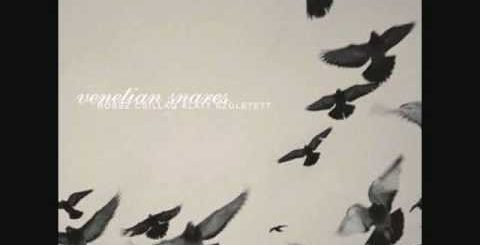
Öngyilkos vasárnap by Venetian Snares Lyrics Meaning – Deciphering the Lament within Electronica
Lyrics
Not where the black coach of sorrow has taken you
Angels have no thought of ever returning you
Would they be angry if I thought of joining you?
Gloomy is Sunday, with shadows I spend it all
My heart and I have decided to end it all
Soon there’ll be candles and prayers that are sad I know
Let them not weep let them know that I’m glad to go
Death is no dream for in death I’m caressing you
With the last breath of my soul I’ll be blessing you.
Darling, I hope that my dream never haunted you.
You know my love of dreams.
(Dream dream dream…)
The haunting melody of ‘Öngyilkos vasárnap,’ a track by the avant-garde electronic artist Venetian Snares, carries within it the weight of an elegy that transcends its own gothic resonance. Known for its intricate breakbeats and unconventional structures, Venetian Snares conjures a narrative soaked in both personal and historic grief, enveloped in a complex, dissonant soundscape.
This track, which translates to ‘Suicide Sunday,’ is a reimagining of a Hungarian suicide song, ‘Szomorú vasárnap,’ composed by Rezső Seress and published in 1933. Aaron Funk, the mind behind Venetian Snares, intertwines his passion for breakcore with the morose themes of the original, creating a poignant collision of the past and present.
The Haunting Echoes of a Historic Melancholy
Delving into ‘Öngyilkos vasárnap’ reveals layers of emotional depth as the song weaves through its chilling narrative. To understand this track is to listen closely to the echoes of a song once dubbed the ‘Hungarian Suicide Song,’ which became infamous for being connected to a spate of suicides in the early 20th century.
Venetian Snares reinvents this sorrow-soaked melody, infusing it with the rawness of electronic experimentation. It’s an homage that brings to light not just the sadness of one’s demise but also the profound loneliness that casts a long shadow over human existence.
The Lyrical Dance with Death and Desire
The lyrics of ‘Öngyilkos vasárnap’ talk to us from beyond the grave, with the protagonist contemplating the serene allure of death, asking if the angels would be enraged by a desire to join a lost beloved. It is this yearning that spreads through the song like a chilling mist.
By embracing the macabre, the track challenges us to confront our most private contemplations of mortality and the hereafter. Funk’s version retains the somber essence while interspersing it with electronic vitality, redefining the boundaries of how we interpret longing in music.
An Unlikely Symphony of Breakbeats and Desolation
Venetian Snares is known for his pulsating rhythms and anarchic sound palettes, yet ‘Öngyilkos vasárnap’ bears witness to a somber deviation. The song is an exploration of how electronic music can narrate a story dripping with despair, without uttering a single word.
This track, paradoxically tranquil and disordered, places listeners in a liminal space. It’s a brutal portrayal of the juxtaposition between the algorithmic precision of technology and the free-flowing nature of human despondency.
The Unveiling of the Song’s Hidden Vista
Beneath the meticulously constructed chaos of ‘Öngyilkos vasárnap’ lies a hidden vista, an invitation to understand the complexity of the human psyche. The song’s nonlinear narrative and abrupt shifts serve as metaphors for the erratic journey of the mind in its darkest hours.
Funk fixates on the thin line that separates dream from reality, life from death, love from oblivion. By mastering the art of electronic pastiche, he invites the audience to peel back the layers, to find solace even within a song steeped in notions of finality and cessation.
Memorable Lines: A Testament to Everlasting Adieu
‘Darling, I hope that my dream never haunted you. You know my love of dreams.’ These final words resonate as the song’s ethos, wrapping up the tormented love affair with an ethereal ribbon. They leave us pondering the intersection of dreams and death – a reminder of our fascination with what lies beyond.
The simplicity of this sentiment betrays the complexity of its implications, making it one of the most impactful moments of the piece. With these lines, the song morphs into a surreal lullaby, granting both peace and perturbation, a dichotomy that Funk captures with unnerving precision.