Our Deal by Best Coast Lyrics Meaning – Unraveling the Layers of Love and Loss
Lyrics
The bed is empty
And I feel crazy
Cause I didn’t say anything
I wish you would tell me
How you really feel
But you’ll never tell me
Cause that’s not our deal
When you leave me
You take away everything
You take all my money
You take all my weed
I wish you would tell me
How you really feel
But you’ll never tell me
Cause that’s not our deal
I wish you would tell me
How you really feel
But you’ll never tell me
Cause that’s not our deal
That’s your deal
That’s not my deal
That’s your my deal
That’s not my deal
That’s your my deal
That’s not my deal
That’s your my deal
That’s not my deal
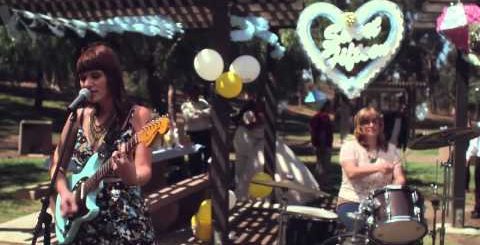
Best Coast’s ‘Our Deal’ is a poignant exploration of the complexities that navigate the waters of modern relationships, capturing the quintessence of longing and the pain of tacit emotional contracts that remain unspoken yet heavily govern the dynamic between two lovers. With its melodic guitar riffs and Bethany Cosentino’s haunting vocals painting a picture of vulnerability, the song taps into a universal angst, stirring the souls of those who have tread the thorny path of unrequited love.
In the realm of melancholic indie anthems, ‘Our Deal’ stands out as a paragon of raw emotion wrapped in simplicity. The potency of its lyrics lies in their candidness, their representation of the silent battles fought within the confines of a lover’s heart, and the taxing weight of what goes unsaid. Here, we peel back the layers of ‘Our Deal,’ revealing not just the evident themes of heartache, but the deeper resonances that oscillate with the rhythms of countless relationships hanging in the balance.
The Echoes of Emptiness
Examining the opening lines, ‘When you leave me / The bed is empty,’ Best Coast instantly encapsulates the desolation that lingers after a partner’s departure. It’s more than the mere void of a presence; it’s an overwhelming sense of incompleteness that permeates the room, becoming almost a sentient being of its own. This depiction of emptiness resonates with a feeling familiar to many, where one’s departure leaves not just a physical space unoccupied but an emotional chasm that is often difficult to articulate.
The admission of feeling ‘crazy’ for not voicing inner turmoil tilts the song into a spiral of self-reflection. It’s a common plight in relationships where communication breaks down, underscoring the idea that the true madness lies not in the chaos of emotions, but in the silence that fails to give them life.
Decoding the Unspoken Contract
The term ‘deal’ in the song emerges as a metaphor for the unwritten agreements that couples often forge unknowingly – the insidious concessions of holding back truths to either keep the peace or out of fear of the vulnerability that comes with openness. The lines, ‘But you’ll never tell me / Cause that’s not our deal,’ signify the heartbreaking acceptance of a dynamic where emotional honesty is sacrificed at the altar of an illusionary tranquility.
It’s not just that emotional expression is stifled, but that this very act of suppression has been silently agreed upon. This ‘deal’ becomes a character in the narrative, as much of a protagonist as the lovers themselves, dictating the conditions of their interactions and ultimately the health of their relationship.
The Costly Price of Love
The song takes a material turn with lines that speak to the transactional side of relationships: ‘You take all my money / You take all my weed.’ This imagery, woven into a narrative of emotional loss, serves as a metaphor for the exhaustive toll that personal bonds can extract from us. Not only is there an emotional deficit left in the wake of a loved one’s absence, but there is also the very real depletion of resources – whether financial or otherwise, representing the all-consuming nature of love.
While this may not be a tale of actual theft, it paints the picture of how, in the economics of relationships, we sometimes give far more than we receive, spending our currency of love and care with little return on investment.
The Irrevocable Difference of Perspectives
Towards the end of the song, the repetition of contrasting perspectives, ‘That’s your [my] deal / That’s not my [your] deal,’ spotlights not just a separation of understanding but an underlying conflict of expectations and desires. It embodies the eternal struggle of subjectivities within a relationship, where what is significant for one may be inconsequential for the other.
This disparity of views is further pronounced by the juxtaposition of pronouns, creating an interplay that mirrors the dance of push and pull between partners. It reflects the inescapable fact that every individual enters a relationship with a unique set of principles and thresholds, and the negotiation, recognition, or rejection of those factors can be the determining force behind a relationship’s endurance or its demise.
The Haunting Refrain: A Disharmony in Repetition
At the heart of ‘Our Deal’ is its chorus, a haunting refrain that is both sentimentally wrenching and, oddly enough, a testament to the tenacity of hope. The repetition of ‘I wish you would tell me / How you really feel,’ is a plea for authenticity, a call for the breaking of the silence that has become a wall between the two souls. With each iteration comes the unspoken understanding that the plea may go perpetually unanswered, yet the yearning for genuine connection never wavers.
It is through this persistent echo that the song extends a hand to listeners, encouraging them to move beyond their own unspoken deals – to seize the potential of what could be, rather than what has silently been agreed upon to be the limitations of their relationships.