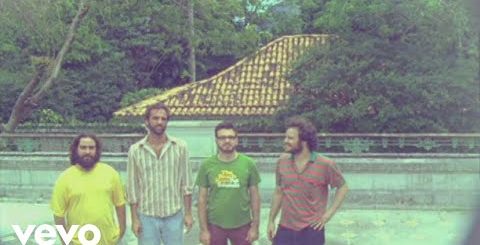
Pois É by Los Hermanos Lyrics Meaning – Unraveling the Poetic Depths of Existential Serenity
Lyrics
Deixa assim como está sereno
Pois é de Deus
Tudo aquilo que não se pode ver
E ao amanhã a gente não diz
E ao coração que teima em bater
Avisa que é de se entregar o viver
Avisa que é de se entregar o viver
Pois é, até
Onde o destino não previu
Sei mas atrás vou até onde eu consegui
Deixa o amanhã e a gente sorri
Que o coração já quer descansar
Clareia minha vida, amor, no olhar
Clareia minha vida, amor, no olhar
Wrapped in the gentle acoustics and the soothing melody, Los Hermanos’ ‘Pois É’ emerges as an anthem of serene acceptance and the subtle embrace of destiny’s unforeseen turns. The Brazilian rock band, known for their keenness in blending rock with samba, bossa nova, and other Brazilian styles, casts a spell of introspective tranquility through their lyrics – narrating a tale that distinguishes between what is seen and unseen, what is controlled and surrendered.
The song’s potency lies in its ability to weave philosophical threads with a poetic ease that echoes in the minds of listeners long after the music has stopped. It’s a work that invites rumination, each lyric a delicate stroke on the canvas of existential thought, painting a picture that prompts a deeper inquiry into our relationship with life and the divine.
The Serene Acceptance of Life’s Grand Tapestry
The opening lines of ‘Pois É,’ which translate to ‘Well, it didn’t happen / Leave it as it is, serene,’ present a resignation not to the futility of life but to its inherent unpredictability. It’s a reflection on how, despite our best efforts, some outcomes remain firmly out of our grasp. The phrase ‘deixa assim como está’ is not one of defeat, but rather, a gentle suggestion to release the tension that comes from resisting the natural flow of life’s events.
There is a maturity in the way the songwriters concede to the greater forces at work, recognizing ‘tudo aquilo que não se pode ver,’ or ‘everything that one cannot see,’ reminding us of the invisible threads that connect the universe and our lives within it. The acknowledgment of a higher power at play is not about religious submission but an artistic contemplation of the mysteries that govern existence.
Carpe Diem: The Art of Living in the Present
The song holds a profound moment of clarity in the line ‘E ao amanhã a gente não diz,’ which means ‘And to tomorrow, we do not speak.’ Los Hermanos captures the essence of living in the present, an age-old wisdom often overlooked in the constant pursuit of the future. ‘Pois É’ invites us to dwell in the now, where our heart continues to beat—emphasizing that life itself pines for participation, not just planning.
Through the urging of the line ‘Avisa que é de se entregar o viver,’ meaning ‘Tell that it is about surrendering to living,’ the song exudes a sense of liberation. It gently prods listeners to let go of the anxieties wrapped up in tomorrows and yesterdays, and instead focus on the living, breathing present where life’s true elixir can be savored.
Embracing Destiny Beyond Predictions
In a poignant twist, ‘Pois É’ acknowledges the limit of foresight. ‘Até / Onde o destino não previu’ or ‘Up to where destiny has not foreseen’ hints at the differentiation between the path we chart and the one laid by fate. The song does not dread nor reject the whims of destiny; instead, it suggests a voyage, a commitment to push as far as one’s capabilities allow.
Los Hermanos doesn’t just leave us at the mercy of destiny; they embolden us with the resolve ‘Sei mas atrás vou até onde eu consegui,’ or ‘I know, but beneath I will go as far as I managed.’ It’s an invitation to strive without attachment to outcomes, encouraging a balance between effort and surrender, and ultimately leading to personal growth and understanding.
The Song’s Hidden Meaning: The Interplay of Light and Darkness
There’s an undercurrent in ‘Pois É’ that goes beyond acceptance and surrender. As the lyrics progress towards ‘Clareia minha vida, amor, no olhar,’ or ‘Brighten my life, love, in the look,’ we uncover a profound desire for elucidation and guidance. The metaphor of light piercing through dark is a plea for clarity amid life’s confusions, asking for love to be a lantern in the darkness.
This craving for light suggests an overarching human need for understanding and connection—a reassurance that even in the complexity of existence, there’s a possibility for love and insight to render the world comprehensible and more bearable. ‘Pois É’ becomes a spiritual conversation, revealing the hidden layers of the human search for meaning in the chaos.
The Memorable Lines That Sing to Our Core
‘Pois É’ is a tapestry of memorable lines, each lyric woven with the contemplation of life’s bigger picture. One of these lies quietly in the verse ‘Deixa o amanhã e a gente sorri / Que o coração já quer descansar,’ stating ‘Let go of tomorrow and we smile / The heart already wants to rest.’ It underscores the fatigue that comes from perpetually chasing horizons, advocating instead for a moment of peace and contentment.
It’s a narrative that champions the power of a simple smile to dispel the shadows of tomorrow’s uncertainty, allowing our hearts—the universally acknowledged symbol of our emotions and desires—to pause and find solace. In these lines, Los Hermanos reminds us that within the song’s rhythmic tempo lies a rhythm of life that’s worth dancing to, where smiles and rest coexist harmoniously with our endeavors.