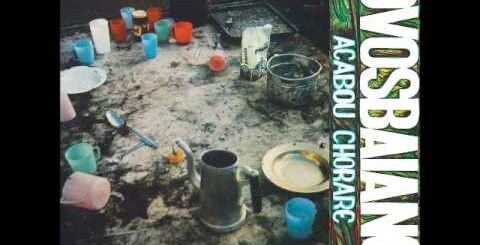
Preta Pretinha by Novos Baianos Lyrics Meaning – Unveiling the Poetry of Nostalgia and Love
Lyrics
Assim eu ía
Lhe chamar!
Enquanto corria a barca
Lhe chamar!
Enquanto corria a barca
Lhe chamar!
Enquanto corria a barca…
Por minha cabeça não passava
Só! Somente Só!
Assim vou lhe chamar
Assim você vai ser
Só! Só! Somente Só!
Assim vou lhe chamar
Assim você vai ser
Só! Somente Só!
Assim vou lhe chamar
Assim você vai ser
Só! Só! Somente Só!
Assim vou lhe chamar
Assim você vai ser…
Eu ía lhe chamar!
Enquanto corria a barca
Eu ía lhe chamar!
Enquanto corria a barca
Lhe chamar!
Enquanto corria a barca
Eu ía lhe chamar!
Enquanto corria a barca
Eu ía lhe chamar!
Enquanto corria a barca
Lhe chamar!
Enquanto corria a barca…
Abre a porta e a janela
E vem ver o sol nascer…(6x)
Eu sou um pássaro
Que vivo avoando
Vivo avoando
Sem nunca mais parar
Ai Ai! Ai Ai! Saudade
Não venha me matar
Ai Ai! Ai Ai! Saudade
Não venha me matar
Ai Ai! Saudade
Não venha me matar
Ai Ai! Ai Ai! Saudade
Não venha me matar…
Lhe chamar!
The 1970s were an era of political turmoil and cultural revolution in Brazil, and within this vibrant tapestry of change, a musical collective known as Novos Baianos crafted a sound that perfectly encapsulated the liberated spirit of the times. Among their legendary contributions to Brazilian music is the iconic ‘Preta Pretinha’, a song that soars beyond its surface simplicity into the realm of timeless poetic expression.
‘Preta Pretinha’ isn’t just a song; it’s a journey through emotion and memory, conveyed by the raw and captivating sound of Novos Baianos. This composition, wrapped in the band’s signature blend of samba, rock, and Bahian folklore, invites listeners to explore the depths of its meaning through lyrics that resonate with the soul’s deepest yearnings.
The Melancholic Echo of Nostalgia
The repetitive nature of the song’s lyrics, like the mantra ‘Enquanto corria a barca’, reflects the relentless passage of time—similar to a boat gliding ceaselessly along the river. This powerful imagery paints a picture of life’s transient moments, as the narrator calls out to someone, perhaps a symbol of opportunities, people, or experiences lost or left behind.
This motif of running and calling out draws listeners into the heart of human experience, where one is often caught in the swiftness of time, trying to grasp onto the fleeting moments that define us. The lamentation of nostalgia in ‘Preta Pretinha’ is almost palpable, as the song captures the essence of what it means to reminisce and long for that which we can no longer reach.
The Enigma of ‘Só! Somente Só!’
A central element of the track is the Portuguese word ‘Só’, meaning ‘alone’ or ‘only’, which is repeated and emphasized throughout the chorus. By doing so, the song delves into the universal sentiment of solitude, casting a light on the loneliness that often accompanies deep reflection and longing for the past.
In the midst of this, ‘Só’ becomes more than a word; it transforms into a concept, perhaps even a character in the story that the song is telling, a character that is always being called upon and is ever-present. The repetition serves as a reminder of our own solitude and the singular nature of personal experiences and memories that shape us.
Unlocking the Song’s Hidden Meaning
The title of the song, ‘Preta Pretinha’, which can be translated to ‘Black Little Girl’, is itself a term of endearment. It’s an intimate phrase, evoking a sense of warmth and familiarity, yet within the context of the song’s lyrical journey, it could represent a lost love, a cherished memory, or perhaps an idealized figure.
The phrase ‘Lhe chamar’, meaning ‘to call you’, is the core action happening throughout the song. This action, repeated ad infinitum, takes on a metaphorical significance. It could be interpreted as the soul’s endless pursuit of beauty, understanding, and connection—themes that pulse at the heart of Brazilian music and culture.
The Unmistakable Call for Liberation
‘Abre a porta e a janela / E vem ver o sol nascer’, the line which translates to ‘Open the door and the window / And come see the sunrise’, serves as a powerful directive to the listener, a beckoning to break free from the confines of the past and embrace the promise of a new day.
This is not merely an invitation to witness a daily occurrence but an urging to partake in a symbolic rebirth. The sunrise signifies hope, renewal, and the eternal cycle of life—concepts that are deeply ingrained in Brazilian culture and that Novos Baianos masterfully weave into their song, inviting us to partake in the dance of life.
A Melody that Carries the Weight of Longing
‘Eu sou um pássaro / Que vivo avoando’, or ‘I am a bird / That lives flying’, these lines encapsulate the spirit’s inherent desire for freedom while acknowledging the inescapable gravity of yearning. The juxtaposition in these lyrics, between the bird’s ability to soar and the heavy burden of ‘saudade’—the untranslatable Portuguese word that describes a profound sense of longing or nostalgia—reveals a dynamic tension in the human condition.
As the bird, we are all subjects to the winds of fate, capable of reaching great heights, yet vulnerable to the pains of memories and lost love. ‘Ai Ai! Saudade’ serves as an emotive refrain, a cry that resonates within the souls of listeners, as universally understood as love itself and as uniquely piercing as an arrow straight to the heart.