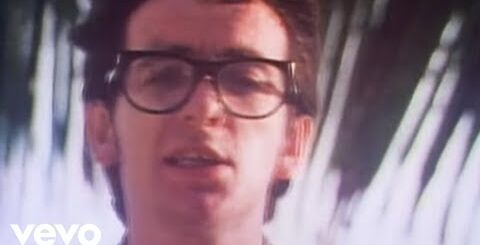
Pump It Up by Elvis Costello & The Attractions Lyrics Meaning – The Rhythmic Anthem of Restlessness and Desire
Lyrics
Escuchando música, alucinando con tu boca
Ella dice, eso es, bájalo un poquito más
Ya no quiere más hablar, es mejor olvidarlo
(Pump it up) When you don’t really need it
(Pump it up) Until you can feel it
Abajo donde hay placer
El cielo y el infierno ves
Se pone el mundo al revés
Mentiras en mis ojos ves
No hay un misterio que no pueda resolver
(Pump it up) When you don’t really need it
(Pump it up) Until you can feel it
!Hey!
Aroma de tabaco, condimento químico
Tratas de decirle stop, ¿eres un narcótico?
Te hace alucinar, reir y volar
Todo los puedes perder, cuando esto empiece a arder
(Pump it up) Until you can feel it
(Pump it up) When you don’t really need it
Ella tiene su show
Pero su energia en low
Ella pone la pasión
Yo le doy corazón
No hay sumisión
Vengo a relajarme
Tentación sin remordiendo
(Pump it up) When you don’t really need it
(Pump it up) Until you can feel it
(Pump it up) Until you can feel it
(Pump it up) When you don’t really need it
(Pump it up) When you don’t really need it
(Pump it up) Until you can feel it
Don’t really need it
No quiero que te olvides
Don’t really need it
No quiero que te olvides
Don’t really need it
No quiero que te olvides
In an era where punk and new wave percolated through the veins of a restless youth, ‘Pump It Up’ by Elvis Costello & The Attractions roared into the scene with its frenetic energy and hypnotic rhythm. The track, featured on the 1978 album ‘This Year’s Model,’ quickly became a manifesto of its time, though its pulsating beat and catchy riff hinted at something more than just an energetic tune to lose yourself to on the dance floor.
Decades have passed, and while the song still stands firm in the pantheon of rock classics, the layers beneath its surface continue to intrigue listeners. Costello’s wordplay and the convictive delivery by The Attractions leave a trail of breadcrumbs that call for a deeper exploration into the psyche of this emblematic piece.
A Manifesto of Internal Struggle
Costello’s lyrics reveal a conflict that borders on the existential, where the act of ‘pumping it up’ transcends the literal and probes into the fabric of our own self-inducements and gratifications. It is a relentless pursuit of something to satiate the empty spaces within, a cycle of craving and fulfillment that Costello sketches with sharp-edged precision.
This internal tug-of-war presents itself not just in the thematic heart of the song, but also through its structure—its rising and falling dynamics mirror the emotional highs and lows of the human experience. The Attractions’ keyboard and guitar licks launch the listener into these crests and troughs, mimicking the adrenaline and subsequent exhaustion that comes from chasing whatever it is that we believe will fill us up.
The Pulse of an Era: The ’70s Punk/New Wave Scene
At its core, ‘Pump It Up’ encapsulates the spirit of an era where the youth challenged the status quo, and music became a vehicle for expression and escape. The song’s aggressive beat and repetitive chorus epitomize the punk/new wave philosophy of simplicity laced with intensity, both musically and lyrically. It invites you to connect with that insatiable hunger for something more—more passion, more life, more feeling.
Costello and the Attractions managed to create a song that resonates on multiple frequencies—it’s a party anthem for the disenchanted, a call to action for the dreamers, and a reflection piece for the thinkers. It’s no wonder that the song has retained its relevance, continuing to pump through speakers as a declaration of dissatisfaction and the pursuit of something greater than the mundane.
Dissecting the Dynamism: The Song’s Musical Mastery
Beyond the restive lyrics lies a track meticulously crafted for movement. The tight, punchy drums, the relentless bass line, and the punctuating keys all conspire to create a momentum that is impossible to ignore. The Attractions didn’t just provide a backdrop for Costello’s musings; they amplified every ounce of urgency and anticipation in the storytelling.
The instrumentation in ‘Pump It Up’ isn’t ornamental—it’s fundamental, doing double duty by both carrying the melody and augmenting the song’s lyrical theme. Each instrument plays a role in sustaining the feverish climate the song induces, proving that sometimes the way a story is told can be just as important as the story itself.
Decoding the Metaphor: The Song’s Hidden Meaning
Peering beneath the surface of the driving beat and iconic riff, ‘Pump It Up’ is a sly nod to the sexual tension and release that drives much of human interaction. In the interplay between needing to ‘pump it up’ and being able to ‘feel it,’ there’s Costello’s Saucerful wink to the listener—recognizing the carnal needs and desires that propel us forward, often leading to places of vulnerability and surrender.
Yet, it’s not just about the physical act. It is also about the psychological ‘high’ we chase—be it through love, power, knowledge, or fame. Costello captures the essence of a generation desperate to break free from the perceived constraints of society and the traps of their own making, painting a picture of humanity as complex creatures forever seeking an outlet for their boundless energy and infinite appetites.
Memorable Lines: A Closer Look at Costello’s Wordplay
‘Pump it up until you can feel it’ is not merely a phrase to shout along to; it is an indelible marker of an era and a psyche. Costello’s snarling delivery encapsulates the urgency and immediate gratification the song preaches. Yet, these words are words of warning as much as they are of encouragement, emblematic of a cycle of desire that fuels but never fully satisfies.
Furthermore, the line ‘Down in the pleasure centre, hell bent or heaven sent, listen to the propaganda, listen to the latest slander’ is as much a cultural critique as it is personal introspection. Here, Costello cleverly crafts a bridge between societal ills and individual vices, calling into question our susceptibility to the rhythms of both propaganda and our own internal narratives.