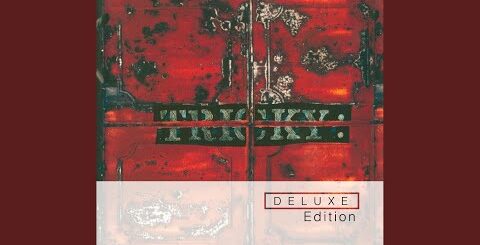
Pumpkin by Tricky Lyrics Meaning – Peeling Back Layers of Identity and Media in ’90s Trip-Hop
Lyrics
You’re hollow kid
More how I’m to do
Let the heart give us some
Set the word seeds
Like flowers they
Shine out when
I find what will make you
Love me
Life is our find
Hollow is he
(Tricky section)
So hollow
Don’t back
Over someone who
(?)
Follow thee
How, how I feel
(Tricky section)
So hollow
How I
Go on
(Tricky section)
I can’t breathe and I can’t see
MTV moves too fast, I refuse to understand
You go your way and I’ll see mine
Feels like wasted time
And it feels like I must be blind
How’d you like yourself, you don’t know yourself
I smell of she and I fail to be
Well, anyway
Well, anyway
Well, anyway
I can’t breathe and I can’t see
I can’t see and I can’t breathe
The ’90s were a time of heavy experimentation in music, marked by the emergence of new genres that pushed the boundaries of what was sonically and thematically possible. In the midst of this creative renaissance, Tricky, the enigmatic architect of trip-hop, unleashed ‘Pumpkin’ – a track whose haunting beats and elusive lyrics continue to captivate and confound listeners decades later.
But beyond its eerily hypnotic rhythms lies a tapestry of introspection and cultural critique. Diving into the depths of ‘Pumpkin’ is like unlocking a Pandora’s box of emotional and existential dilemmas, set against the backdrop of an increasingly fast-paced and disconnected world.
The Haunting Echoes of Empty Identity
‘Pumpkin’ opens with a stark pronouncement: ‘You’re hollow, kid.’ Tricky’s lyrics immediately confront us with the idea of emptiness, a void within the self. This image of hollowness invites multiple interpretations – is it a comment on the shallowness of contemporary life, a reflection on personal emptiness, or a broader existential statement?
The repeated assertion ‘so hollow’ throughout the song reinforces this sense of internal desolation. It is as if Tricky is challenging the listener to consider what lies beneath their surface, to question the substance of their own character in a world that increasingly values the veneer over the visceral.
A Juxtaposition of Visual Noise and Inner Silence
In the most striking verse, Tricky laments the sensory overload of modern media: ‘I can’t breathe and I can’t see / MTV moves too fast, I refuse to understand.’ The lines are a clear commentary on the frantic pace of media consumption in the ’90s – a pace that has only accelerated with today’s digital environment.
‘Pumpkin’ hosts this critique in a personal realm, almost as if the songwriter is suffocating under the weight of relentless imagery and sound. By refusing to understand, Tricky is not merely dismissing the content but rebelling against an entire system that demands constant attention and engagement.
Exploring the Duality of Connection and Isolation
The dichotomy ‘You go your way and I’ll see mine’ suggests a resignation towards the fragmentation of relationships. Tricky addresses the notion that even as we strive for connection, there is an underlying isolation that pervades our interactions. Despite the multiple avenues for contact, there remains an inherent distance between individuals.
‘Feels like wasted time / And it feels like I must be blind’ captures the frustration of this paradox – the longing for genuine connection and the frequent inability to achieve it, leading to a sense of futility and lack of clear vision.
The Enigmatic Semblance of Self-Knowledge
In questioning ‘How’d you like yourself, you don’t know yourself,’ Tricky probes the issue of self-awareness. It’s a call for introspection, an invitation to question how well we truly understand our own desires and motivations. Especially poignant in an era where identity is often constructed through external validation, ‘Pumpkin’ posits that real comprehension of self lies beyond superficial constructs.
This line encapsulates the song’s overarching theme – the journey towards self-discovery is mired in contradictions and distractions. The stark contrast between liking oneself and knowing oneself serves as a reminder that the pursuit of self-knowledge is perpetually incomplete and complex.
The Surrealist Descent into Personal and Social Labyrinths
‘Pumpkin’ doesn’t offer listeners a tidy conclusion or comfortable resolution. Instead, it leaves them lingering in a state of contemplation, suspended in the space between the spoken and the unspoken. The song’s repetitiveness and elusive nature reflect life’s own repetitiveness and the ambiguity of the human condition.
By summoning feelings of suffocation and blindness within the context of media saturation and emotional disconnection, Tricky’s ‘Pumpkin’ emerges not just as a song, but as a poetic metaphor for the incessant search for meaning in a world of increasing chaos and clutter.