Punch and Judy by Elliott Smith Lyrics Meaning – The Subtle Articulation of Alienation in Melody
Lyrics
In a crowded corner where anybody can listen in
But they don’t read page-to-page or speak easy
Now, they’re gonna go say the words in the wrong order again
They walk in a circle through all the sidewalk scenes
They used to be a part of one time, now, everybody just stares and whispers
Driving around up and down Division Street
I used to like it here, it just bums me out to remember
Can’t you ever treat anyone nice?
Think I’m gonna make the same mistake twice
Oh, they draw the curtain, wait for a call
Pretty lucky if they get any kind of response at all
Can’t you ever treat anyone nice?
Think I’m gonna make the same mistake twice
Gonna make the same mistake twice
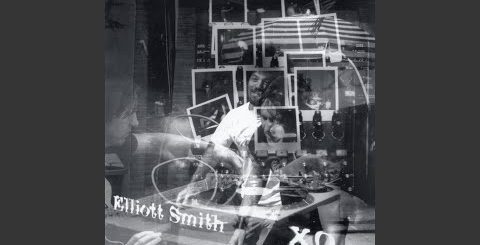
Elliott Smith’s ‘Punch and Judy,’ a track from his 1998 album ‘XO,’ weaves an intricate tapestry of introspection and social-commentary. Smith’s songwriting is renowned for its ability to capture the essence of human emotion through allegorical lyrics and tender melodies that resonate on a profoundly personal level.
With ‘Punch and Judy,’ Smith invites listeners into a dimly lit world of personal introspection and outward observation. The auditory experience is laced with layers of metaphor and melancholic melodies that guide us into a narrative fraught with existential musings and delicate critiques of interpersonal dynamics.
Whispers in the Crowd: Decoding the Social Isolation
The lyrics of ‘Punch and Judy’ begin in a space that signifies social visibility yet personal seclusion—a crowded corner where conversations may be public but the individuals remain essentially invisible to one another. There is a poignant irony within the anonymity of the crowd, where being surrounded by chatter only serves to amplify the silence of being unheard.
Smith uses the metaphor of a wallflower, someone who is present but not actively participating, to convey the feeling of detachment that pervades the lives of the song’s characters. In this social landscape, ‘Punch and Judy,’ representing everyman and everywoman, are trapped in a loop of miscommunication, symbolized by the ‘words in the wrong order.’ The sentiment illustrates the wider alienation felt in society where individuals struggle to genuinely connect.
The Melancholic Memory Lane of Division Street
There’s a bittersweet nostalgia embedded in the reference to Division Street, a nod to a simpler time when the setting held a sense of belonging for the protagonist. However, as memories collide with the present, the fondness fades into a gloomy introspection, highlighting the often-painful process of revisiting places that no longer feel like home.
Smith’s portrayal of driving ‘up and down Division Street’ is metaphorical for the cyclical nature of pondering over the past—a sort of emotional purgatory where the dream of recreating vanished happiness is confronted by the relentless passage of time that alters all things familiar.
Searching for Kindness in a Thoughtless World
In the questioning refrain, ‘Can’t you ever treat anyone nice?’, lies a profound exasperation with the seeming inability for kindness within human interaction. Smith encapsulates a universal yearning for compassion amid the impersonal and oftentimes harsh realities of daily life.
Through these simple, yet piercing lines, the song challenges the listener to reflect on their own actions and the nature of their relationships. The notion of repeating mistakes, a hint at hopelessness in expecting different outcomes from the same flawed approaches, adds an extra layer of depth to the inquiry.
Behind the Curtain: Unveiling the Song’s Hidden Commentary
When Smith sings of waiting for a call ‘pretty lucky if they get any kind of response at all,’ one uncovers a subtle yet sharp commentary on the lack of genuine interaction and the superficial connections that dominate modern times. There’s an implicit loneliness conveyed here, where the yearning for meaningful human contact is often met with indifference.
The metaphor of the drawn curtain suggests an act that purportedly invites anticipation for a reveal that rarely arrives. This futile wait serves as a poignant reflection of a deeper societal critique—a world where true engagement and empathy are as scarce as the curtain being pulled back to unveil a reality one wishes to see.
Memorable Lines that Echo Enduring Truths
As the song concludes with the lines, ‘Think I’m gonna make the same mistake twice / Gonna make the same mistake twice,’ there’s an almost fatalistic acceptance of the cyclic nature of the protagonist’s condition. These memorable lines resonate as a haunting echo, emphasizing the inescapable patterns of human behavior that ensnare even the most self-reflective among us.
It’s in these lasting phrases that Smith’s mastery shines. With poetic brevity, he captures a feeling of resignation, while also reflecting our propensity for optimism, our innate hope that perhaps this time, mistakes may be a catalyst for change rather than the blueprint for regret.