Reptiles by Them Crooked Vultures Lyrics Meaning – Unraveling the Layers of a Modern Anthem
Lyrics
What a fool
I should’ve known, I never listen
I’m in a cage
An animal, I’m in a cage
But the reptiles
They won’t let me go
I think they want you to stray
Watch the monkey dance
Give ’em a taste
Look at him he’s always smiling
Help me to escape
Your mouth agape
You foreign tourist
Woe is me, it will be a funeral
A circus, I’ll rap on the cell door
Questions are a fire
That needs feeding to survive
So just you let those flames die down
Trained by consequence and the lash
It leaves me breathless
Their praise is a poison to us all
In the moonlight their scars flash like jewelry
Get too precious
Get locked up in a cage
Want to get, gotta risk any move
Misconstrued and you’re screwed
Tongues flash and flick as if they’re screaming
Oh they lie just like a lover
Oh do they, those kisses will burn
Under the lights
They snap a finger
You jump, you answer
Like a naive hooker with a big dumb smile
For the reptiles
I guess you’ll never know
They won’t let you go
Cause you’re the soup du’jour, that’s for sure
Questions are a fire
That needs feeding, to survive
So just you let those flames die down
See them reptiles crawl?
Getting closer
Why won’t someone come to drive them away?
Don’t rest too long
It’s a mistake we can’t take back
Take one lying down for a change
And oh it’s like cleaning up after an orgy
When it’s over
I wish someone would burn this place
To the ground
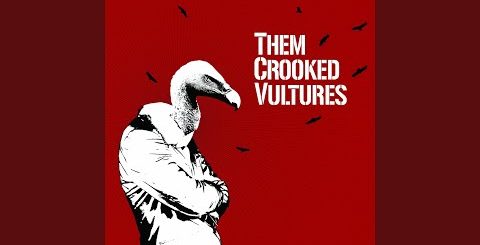
At the intersection of rock royalty, supergroup Them Crooked Vultures etched a deep mark with ‘Reptiles’, a song as enigmatic as it is visceral. With its intricate soundscape and foreboding lyrics, the track goes beyond mere musicality to explore the darker corridors of the human condition. Josh Homme, Dave Grohl, and John Paul Jones joined forces to create something that speaks to the primal and the profound in equal measure.
Dissecting ‘Reptiles’ proves as complex as the pedigree of its creators. Underneath the sheer gravitas of rock bravado lies a treasure trove of metaphor and emotion, a canvas painted with the strokes of human vulnerability, societal critique, and existential disquiet. Let’s delve into what makes this cryptic composition tick, with its tapestry of words and music that compels the mind and moves the spirit.
A Cage of Consequences: The Struggle for Autonomy
The opening lines of ‘Reptiles’ immediately thrust the listener into a narrative of entrapment. Painting the self as both jailer and inmate, Homme introduces us to a character caught in a metaphorical cage – a powerful image of restriction, whether imposed by others or self-inflicted. It’s an evocative start, prompting questions about the nature of freedom and the forces that compel us into figurative imprisonment.
More than just a personal dilemma, the cage represents a societal construct that regulates behavior. Themes of control and subjugation ripple through the lyrics, painting a grim portrait of individuality under siege. It’s an all-too-familiar human story: the tension between the innate need for self-determination and the external pressures that shape our existence.
The Allure of the Flames: An Ode to Incessant Inquiry
Questions are the fire, the song professes, a metaphor for the restless spirit of inquisitiveness that fuels human progress—and yet, like fire, these questions have an insatiable appetite. This analogy underscores the importance of perpetually seeking truth, while simultaneously cautioning against the exhaustive nature of such pursuits. The flames of curiosity, if unchecked, can consume the very essence of our being.
Homme’s lyrical prowess shines as he warns of the danger in letting the fire die down—suggesting that without the warmth of continual inquiry, we risk falling prey to ignorance. It’s an urgent reminder of the vigilance required to maintain our intellectual integrity, even amidst the somber recognition of the toll it exacts.
Lingering Scars and Poisonous Praise: A Treatise on Suffering and Recovery
Through ‘Reptiles’, Them Crooked Vultures touch upon the duality of pain and survival. The evocative imagery of scars and lashes speaks to the torment one endures, a visceral recollection of past afflictions. And yet, paradoxically, these scars also serve as a form of adornment, much like jewelry, signifying not just a violent past but a survival story, a badge of honor in the moonlight.
Bearing a stark warning against the all-consuming desire for approval, the song confronts the toxic nature of external validation. The band points a finger at the dangerous seduction of adulation, noting how it distorts one’s sense of self, implying that survival isn’t merely a physical ordeal but also an emotional and psychological battle for identity.
The Ensnaring Charade: Deciphering the Hidden Meaning
Taking a deep dive into the metaphorical waters of ‘Reptiles’ reveals a hidden meaning that slithers throughout the song—a scathing take on manipulation and exploitation. The lyrics weave a lurid tapestry where those in power play puppeteers, making others dance for their amusement, drawing stark parallels to the way the powerful exploit the vulnerabilities of the disenfranchised.
This track is elegantly layered with cynicism and disillusionment, painting a picture of a world where people are commodities, the ‘soup du jour’ for the ravenous elite. Them Crooked Vultures expertly crafts a symphony of dissent, questioning the status quo and urging listeners to be wary of becoming prey to the cold-blooded nature of the self-serving and the greedy.
Euphoria to Ashes: The Most Memorable Lines
Perhaps the most striking aspect of ‘Reptiles’ is the vivid imagery that Homme conjures with lines that stick long after the song has ended. ‘It’s like cleaning up after an orgy / When it’s over, I wish someone would burn this place / To the ground’—this graphic depiction symbolizes a post-revelatory collapse, the sobering aftermath of indulgence.
The song’s conclusion is a desperate call for obliteration, a wish to purge the remnants of a sordid carousel of excess and deception. It leaves the audience pondering over the cost of hedonism, and the cleansing potential inherent to destruction. These memorable lines encapsulate the vehement yearning for renewal, which becomes essential after inevitable desecration.