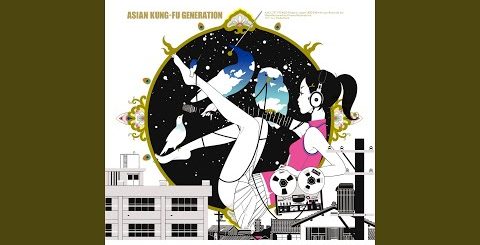
Rewrite by ASIAN KUNG-FU GENERATION Lyrics Meaning – Unraveling the Anthemic Call to Inner Revolution
Lyrics
存在の証明が他にないから
掴んだはずの僕の未来は
「尊厳」と「自由」で矛盾してるよ
歪んだ残像を消し去りたいのは
自分の限界をそこに見るから
自意識過剰な僕の窓には
去年のカレンダー 日付がないよ
消して リライトして
くだらない超幻想
忘れられぬ存在感を
起死回生
リライトして
意味のない想像も
君を成す原動力全身全霊をくれよ
Oh oh
芽生えてた感情切って泣いて
所詮ただ凡庸知って泣いて
腐った心を
薄汚い嘘を消して
リライトして
くだらない超幻想
忘られぬ存在感を
起死回生
リライトして
意味のない想像も
君を成す原動力
全身全霊をくれよ
Wow wow yeah yeah yeah
In a world where music transcends languages and borders, ASIAN KUNG-FU GENERATION’s ‘Rewrite’ stands out as an explosive track that captures the essence of youthful rebellion and the desire for self-transformation. It’s not merely a song; it’s an anguished cry from the depths of a generation’s spirit, a powerful plea for change resonating through the chords and the soul-stirring lyrics.
With its vigorous guitar riffs and fervent vocals, ‘Rewrite’ is an emblematic piece that strikes at the core of raw emotion and relentless drive for meaning and authenticity in a conforming society. The song is a poetic and rousing journey through existential angst and a declaration to redraft the narrative of one’s life. Below, we dissect this modern hymn to the human condition and the impulse to redefine existence.
Distorted Reflections: A Push for Self-Actualization
‘Rewrite’ starts on an introspective note, as the lyrics narrate the artist’s need to purge constricted thoughts – a visceral urge rooted in the search for proof of existence. The song encapsulates the struggle one faces when their envisioned future, once seeming within grasp, betrays them with contradictions between dignity and freedom.
This discord paints a clearer image of the strife within the individual’s soul. The powerful message delivered here is that without self-expression, without challenging one’s perceptions of self-imposed limitations, the sense of being is unanchored, lost in a sea of societal expectations and personal disappointments.
A Calendar Without Dates: The Paralysis of Passivity
Imagery is poignantly employed with a stark reference to ‘last year’s calendar with no dates’ – a metaphor for stagnation and the loss of time. Here, the song touches upon the dangers of prolonged inaction and self-absorption. Those without the will to change become trapped in the permanent history of yesterday, their potential untapped, days unmarked as life slips by.
This mirrors a common human fear: that life will pass us by without impact or change. The calendar symbolizes the ennui of comfort zones, prompting the listener to confront the unsettling reality of a future unclaimed and the urgency to rewrite their destiny before time becomes a relentless judge.
Revival and Resistance: The Anthem’s Core Cry
The chorus erupts into a defiant crescendo, calling for a ‘rewrite.’ It’s an anthem of resurrection, to shed mediocrity and embrace the indelible sense of existing with purpose. The repetition of the word ‘rewrite’ acts as a mantra, a vocalized determination to dismantle and rebuild the self that has succumbed to banality and decay.
The chant-like momentum is an infectious appeal to break the cyclical nature of despair. It serves as a reminder that all individuals have the power to revitalize their circumstances, to construct a narrative grounded in meaningful pursuits rather than hollow imaginings.
The Hidden Meaning: Existential Awakening within ‘Rewrite’
Beneath the initial angst and vigor of ‘Rewrite’ lies a deeper philosophical thread – one of existential awakening. The band’s choice of words proposes a journey inward, urging a thorough examination and alteration of one’s own life’s manuscript.
This is not just about overcoming external challenges, but also an intimate revolution. It’s about confronting the rot in one’s heart, the impurities clouding judgment, and ultimately, gaining the mental and emotional clarity necessary for profound personal transformation.
Memorable Lines: The Nexus of Pain and Aspiration
The striking verse, ‘Emerging emotions cut away, crying. In the end, just knowing mediocrity and crying.’ resonates with a haunting depth. It is a raw acknowledgement of pain and the universal battle between the desire for exceptionalism and the bitter acceptance of one’s ordinary nature.
These lines stay with listeners long after the song ends, serving as a stark reminder of our personal battles and the human condition. They compel us to question our place in the world, acknowledge our vulnerabilities, and catalyze a crucial choice: to succumb to despair or to take control and write a new chapter.