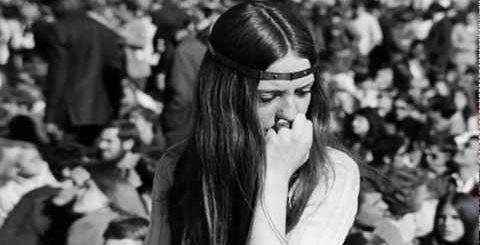
San Francisco (Be Sure to Wear Flowers in Your Hair) by Scott McKenzie Lyrics Meaning – Echoing the Spirit of the 60s
Lyrics
Be sure to wear some flowers in your hair
If you’re going to San Francisco
You’re gonna meet some gentle people there
For those who come to San Francisco
Summertime will be a love-in there
In the streets of San Francisco
Gentle people with flowers in their hair
All across the nation, such a strange vibration
People in motion
There’s a whole generation with a new explanation
People in motion, people in motion
For those who come to San Francisco
Be sure to wear some flowers in their hair
If you come to San Francisco
Summertime will be a love-in there
If you come to San Francisco
Summertime will be a loving day
A generation defined by love and revolution found its anthem in the soulful fibers of Scott McKenzie’s voice. ‘San Francisco (Be Sure to Wear Flowers in Your Hair)’ is more than a melody; it is the emblematic sound of a cultural movement that swept across the globe, bursting from the heart of the Haight-Ashbury district of San Francisco. The song captures the zeitgeist of the 1960s with its gentle nudging towards peace, love, and social transformation.
Penned as a promotional single for the Monterey Pop Festival by John Phillips of The Mamas & the Papas, the song soared beyond its commercial mission to become an enduring symbol of the counterculture era. It was 1967’s Summer of Love that would cement the track’s position in the annals of history, echoing a powerful message of communal harmony that resonates as an alluring siren call to those yearning to understand the era’s spirit.
A Call to the Kindred Spirits: The Migration Movement
The song’s lyrics beckon travelers to converge upon San Francisco, a clarion call that was answered by thousands. The city, known for its liberal values, became a pilgrimage site for those seeking an alternative way of life. McKenzie’s call to action wasn’t solely to partake in the visual spectacle but to engage in the profound sense of societal change—becoming one with the gentle people donning floral symbols of pacifism.
This movement sparked a nationwide migration, not just in a physical sense, but in cultural consciousness. As young people across the country packed their bags, they were simultaneously unpacking the conventional structures that confined their generation. With each verse, McKenzie nudifies the transformation from the rigidity of the post-war era to the fluid and vibrant tapestry of the counterculture.
The Symbolism of Flowers: More Than Just a Fashion Statement
Flowers in one’s hair acted as more than a mere fashion accessory during the 1960s. They were potent symbols of peace and a rejection of the ongoing Vietnam War. McKenzie doesn’t just suggest an aesthetic choice; he’s endorsing an identity, one steeped in the nonviolent ethos that permeated the ‘Flower Power’ movement. To wear flowers was to cloak oneself in the very ideals of love, unity, and dissent against the militarism that defined the era.
This floral imbuement, set to the backdrop of San Francisco’s streets, illustrates a vision of civil disobedience that is gentle, beautiful, and resilient. The flowers become a visual lexicon for an entirely new dialogue about resistance and the power of softness in the face of hard authority.
Vibrations and New Explanations: The Song’s Hidden Meaning
Beyond the immediate and apparent call to join a burgeoning love-in, McKenzie’s song thrums with vibrations that signal a deep-seated shift. The lyrics hint at a generation seeking a new explanation for life’s purpose and meaning, dissatisfied with the status quo and hungry for a sense of belonging and understanding in a tumultuous world.
These ‘strange vibrations’ and ‘people in motion’ convey an underlying restlessness, a collective striving for progression, and the quest to birth a new societal paradigm. In every repetition of the chorus, one can hear the sound of barriers crumbling and new thought frontiers emerging.
Eternal Summer: The Magic of the Love-in
McKenzie foretells a ‘summertime’ marked by a ‘love-in,’ inviting imagery of a season less temporal and more everlasting in its influence. These love-ins were vital gatherings where notions of communal living, free love, and spirited debate took physical form. One did not simply visit San Francisco; one immersed themselves in an ongoing cultural revolution, one love-in at a time.
The Summer of Love, forever entwined with the song’s legacy, serves as an enduring reminder of what happens when a society dares to imagine a reality based on togetherness and harmony. The eternal summer is a metaphor for a time when love dictated action, and action was steeped in the warm glow of idealism.
Legacy of a Generation: The Most Memorable Lines
While the entire song is stitched into the fabric of the ’60s revolution, certain lines capture the essence of that era with an extra gleam. ‘All across the nation, such a strange vibration, people in motion’ stands out as both a beacon and a mirror, reflecting both the widespread upheaval and the resonant impact of the hippie movement’s call for change.
These words, imbued with the weight of a generational shift, resonate as powerfully now as they did then. They serve as a chorus for anyone, in any era, looking for meaning and connection in defiance of the prevailing winds. Scott McKenzie’s ‘San Francisco’ thus crystallizes a moment in time that continues to illuminate a path of dissent, hope, and aspiration towards a world ruled by love.