School by Supertramp Lyrics Meaning – A Dissection of Rebellion and Conformity in Classic Rock
Lyrics
Don’t forget your books, you know you’ve got to learn the golden rule
Your teacher tells you stop your playing, get on with your work
And be like Johnnie-Too-good, don’t you know he never shirks
He’s coming along
After school is over, you’re playing in the park
Don’t be out too late, don’t let it get too dark
They tell you not to hang around and learn what life’s about
And grow up just like them, won’t you let it work it out
And you’re full of doubt
Don’t do this and don’t do that
What are they trying to do?
(Make a good boy of you)
And do they know where it’s at?
Don’t criticize, they’re old and wise
Do as they tell you to
Don’t want the devil to
Come and put out your eyes
Maybe I’m mistaken expecting you to fight
Or maybe I’m just crazy, I don’t know wrong from right
But while I’m still living, I’ve just got this to say
It’s always up to you if you want to be that
Want to see that, want to see that way
You’re coming along
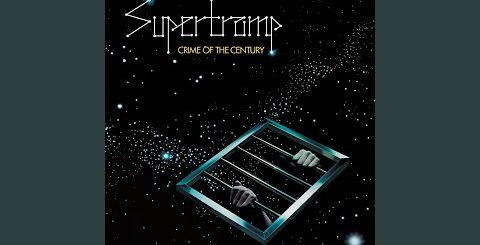
With an eerie harmonic backdrop and a piano riff that hooks you from the outset, ‘School’ by Supertramp isn’t just another track from the 1974 progressive rock album ‘Crime of the Century.’ It’s a hauntingly nuanced critique of the educational system and the broader societal expectations that funnel the youthful spirit into a mold of conformity. The lyrics, seemingly simple, weave a narrative that resonates as deeply today as it did then, perhaps even more so in our current climate.
Supertramp, known for their invocation of the aspirational and the melancholic in equal measure, has always had a way with words – and ‘School’ demonstrates this talent exquisitely. The song is a journey through the eyes of an individual reflecting on the experience of growth within and against the established norms, a journey that reveals layers about our own engagements with the world around us.
The Melody of Maturation: How ‘School’ Strikes a Chord
Supertramp’s ‘School’ opens with the stark, penetrating sound of a harmonica, a solitary cry that feels like a call to attention, preparing the listener for the ensuing lesson. As the narrative unfolds, the music mimetically follows the journey from the playful innocence of early school days to the echoing admonitions of authority figures.
The fusion of Roger Hodgson’s distinct vocal delivery and Rick Davies’ piercing harmonica sets ‘School’ apart, embuing it with an atmosphere of thoughtful introspection. The melody is reflective of the educational treadmill: regimented, cyclical, and at moments, beautifully chaotic, illustrating the internal struggle of the song’s protagonist.
A Lyrical Lens on Conformity: Unpacking the ‘Golden Rule’
Right from the opening lines, ‘School’ confronts listeners with the ‘golden rule’ – the expectation of silent obedience and the treadmill of rote learning. Supertramp presents a world in which the value of learning is overshadowed by the weight of compliance, where ‘Johnnie-Too-good’ becomes the benchmark, and mediocrity is the unintended consequence of aiming to please.
These lyrics capture the tension between the desire for personal freedom and the societal chains of expectation. The ‘golden rule’ isn’t just a standard of behavior but a symbol of the golden cuffs that bind creativity and individuality. Supertramp’s invocation of this rule is a call to scrutinize the cost of such compliance on the human spirit.
The Park After Dark: Innocence, Experience, and the Call of Life
When ‘School’ transitions to playground scenes where the shackles of authority fall away, we’re met with a conflicting directive: enjoy freedom, but don’t let it steer you into the unknown darkness of uncharted territory. The park serves as a metaphorical space for exploration, but even here there are curfews, both literal and figurative.
It’s in these paradoxical messages that Supertramp explores the essence of growing up – the push and pull between curiosity and the fear of autonomy. The park after dark, like the ideas that flourish in unguarded moments, represents the point at which imagination runs free but also where the specter of consequence looms.
Revealed: The Hidden Anti-Authoritarian Cry in ‘School’
Beneath the surface of a song about childhood experience lies a subversive thread woven into the fabric of ‘School.’ The repetition of ‘don’t do this and don’t do that’ is less a directive and more a chant, an undercurrent of rebellion against the prescriptive nuggets of conventional wisdom handed down from generation to generation.
Supertramp cleverly uses ‘School’ as both a canvas and a commentary, painting a stark image of education and authority that may, on the one hand, protect us from ‘the devil,’ yet on the other, poke out our eyes – a metaphor for the extinguishing of original insight and vision. The song becomes a profound allegory for the cost of nonconformity.
The Defiant Heartline in ‘School’s Most Memorable Lines
In the assertion ‘Maybe I’m mistaken expecting you to fight,’ there’s an acknowledgment of the interplay between doubt and determination. The song’s persona grapples with the idea that fighting the established order may be a fool’s errand, a path laden with questions of right and wrong. Yet, the declaration ‘it’s always up to you’ is a potent reminder of the agency we hold within the seemingly intractable systems we navigate.
This personal agency is the thread that runs through the refrain of ‘School.’ The willingness to ‘see that way’ – to envision a different path, to accept or reject the narrative laid before us – captures the essence of the human condition. The coming along is less about arriving at a prescribed destination and more about the individual’s journey – with all its accompanying doubts and discoveries.