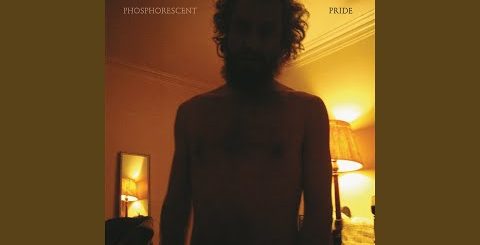
Song for Zula by Phosphorescent Lyrics Meaning – Unshackling the Chains of a Fabled Emotion
Lyrics
That it makes a fiery ring
Oh, but I know love as a fading thing
Just as fickle as a feather in a stream
See, honey, I saw love
You see it came to me
It put its face up to my face so I could see
Yeah, then I saw love disfigure me
Into something I am not recognizing
See the cage, it called, I said, “Come on in”
I will not open myself up this way again
And lay my face to the soil, and all my teeth to the sand
I will not lay like this for days now upon end
You will not see me fall, nor see me struggle to stand
To be acknowledged by some touch from his gnarled hands
You see the cage it called, I said, “Come on in”
I will not open myself this way again
You see the moon is bright in that treetop night
I see the shadows that we cast in the cold clean light
Now my feet are gold and my heart is white
And we race out on the desert plains all night
See, honey, I am not some broken thing
I do not lay in the dark waiting for thee
Now my heart is gold, my feet are light
And I’m racing out on the desert plains all night
So some say love is a burning thing
That it makes a fiery ring
Oh, but I know love as a caging thing
Just a killer come to call from some awful dream
Ah, and all you folks, you come to see
You just stand there in the glass looking at me
But my heart is wild, and my bones are steel
And I could kill you with my bare hands if I was free
In the pantheon of heart-wrenching anthems, Phosphorescent’s ‘Song for Zula’ is a modern-day odyssey that delves into the turbulent sea of love and heartache. With its lush strings and haunting vocals, the track distills the essence of vulnerability and the defense mechanisms we erect in the aftermath of emotional trauma.
Lyrically, ‘Song for Zula’ encompasses a narrative that is as personal as it is universal, taking the listener through a journey of disillusionment and defiant resilience. It presents a dichotomy between love’s traditional fiery passion and a reality tarnished by pain, encapsulated in a lyricism that feels both intimately confessional and profoundly philosophical.
Dissecting the Fickle Nature of Love
The song initiates with a conventional aphorism, ‘Some say love is a burning thing,’ only to subvert it with an admission of love as something far more ephemeral. This opening salvo establishes a tension between popular romanticism and a more somber, lived experience. Phosphorescent’s approach suggests love not as a perpetual flame but as something prone to extinguishment, as insubstantial as a ‘feather in a stream.’
In turning love from a burning ring to something fading and disfiguring, the song implies a transformation wrought by love that is not the promised blooming but a mutation into the unrecognizable. This contest between idealization and realization is a recurring theme that the artist masterfully weaves throughout the narrative, prompting listeners to question their own convictions about love.
The Haunting Allure of Emotional Isolation
Themes of imprisonment and self-preservation bubble to the surface as the singer describes a cage that both calls and repels. The imagery is potent, a willful sentencing of oneself to solitary confinement to avoid the ravages of vulnerability. ‘I will not open myself up this way again,’ the lyricist resolutely declares, marking a boundary line drawn from the wreckage of past relationships.
This introspection serves as an assertion of agency within suffering, indicating the decision to avoid pain may itself be torturous — a self-inflicted purgatory. Acknowledgment and touch, usually associated with tenderness, are recast as symbols of aggression and unwelcome contact, further illustrating the wariness of a scarred individual against further emotional upheaval.
Unveiling the Song’s Hidden Narrative
While ‘Song for Zula’ may superficially appear as a discourse on love’s pitfalls, it’s the beneath-the-surface storyline that captivates. The song weaves a secondary narrative of emancipation and self-discovery. It’s as much about the act of locking oneself away as it is about the quiet, defiant struggle to break free from the chains of one’s emotional jailers.
This subtext runs parallel to the overt message, suggesting that the true battle is not against love itself but against the constraints it imposes, whether they be external expectations or personal insecurities. The hidden story lies in the gestation of inner strength and the ultimate refusal to be defined by heartache.
Symmetry in Light and Darkness: Memorable Lines Explored
Phosphorescent crafts unforgettable contrasts within the song’s landscape. ‘The moon is bright in that treetop night’ against ‘shadows that we cast in the cold clean light’ presents a stark visual dichotomy that reflects inner turmoil. Moreover, the juxtaposition of golden feet and a white heart reverses the conventional iconography related to purity and corruption.
By affirming, ‘I am not some broken thing,’ the narrator reclaims integrity and self-worth, rebuking the notion of being helpless or waiting for salvation. This line is a potent refrain for anyone who has felt diminished by love’s trials, reinforcing the song’s manifesto of enduring and reclaiming self after devastation.
From Fiery Rings to Caging Things: The Evolution of Metaphor
Phosphorescent artfully loops back to the song’s opening verse towards the conclusion, transforming the initial burning ring into a caging thing. This evolution of metaphor is a masterclass in lyrical progression, signifying a deeper understanding of love’s complexities through the lens of painful experiences.
Yet, in the midst of acknowledging love as a caging killer from an awful dream, the song crescendos with an assertion of wildness, steel bones, and latent power. ‘I could kill you with my bare hands if I was free’ might be the song’s most impactful proclamation, a declaration of potential and a yearning to break free, all while under the powerless gaze of spectators, encapsulated in the glass of one’s own cage.