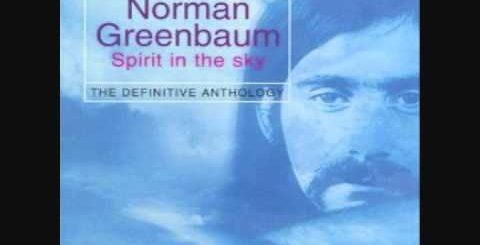
Spirit in the Sky by Norman Greenbaum Lyrics Meaning – A Heavenly Harbinger of Hope
- Music Video
- Lyrics
-
Song Meaning
- Ascending Melodies: The Uplifting Power of a Rock ‘n’ Roll Anthem
- Decoding Eternity: The Hidden Meaning Behind Norman Greenbaum’s Classic Tune
- A Friend in Jesus: Unpacking the Theological Dynamite of a Rock Classic
- An Immortal Verse: ‘Gonna Go to the Place That’s the Best’
- Never Been a Sinner: The Irony in the Claim to Perfection
Lyrics
Gonna go to the place that’s the best
When I lay me down to die
Goin’ up to the spirit in the sky
Goin’ up to the spirit in the sky (spirit in the sky)
That’s where I’m gonna go when I die (when I die)
When I die and they lay me to rest
I’m gonna go to the place that’s the best
Prepare yourself you know it’s a must
Gotta have a friend in Jesus
So you know that when you die
He’s gonna recommend you
To the spirit in the sky (spirit in the sky)
Oh he’ll recommend you to the spirit in the sky
That’s where you’re gonna go when you die (when you die)
When you die and they lay you to rest
You’re gonna go to the place that’s the best
Never been a sinner, I never sinned
I got a friend in Jesus
So you know that when I die
He’s gonna set me up
with the spirit in the sky
Oh set me up with the spirit in the sky (spirit in the sky)
That’s where I’m gonna go when I die (when I die)
When I die and they lay me to rest
I’m gonna go to the place that’s the best
Go to the place that’s the best
Norman Greenbaum’s ‘Spirit in the Sky’ from 1969 remains a seminal work, reverberating the infusion of rock with gospel undertones. Its deceptively simple lyrics echo an upbeat spiritual anticipation about the hereafter, wrapped up in a psych rock package that’s as ferocious as it is devout.
The song is a paradoxical blend of religious homage and rock rebellion. While undeniably catchy and fundamentally feel-good, it harbors a profound exploration of morality, redemption, and the afterlife, making it a staple across radio waves and religious discourse alike.
Ascending Melodies: The Uplifting Power of a Rock ‘n’ Roll Anthem
There’s an immediate infectiousness to the opening guitar riff of ‘Spirit in the Sky’. It’s this magnetic pull that transports the listener to a place of relentless positivity. Greenbaum marries the sacred with the secular, a bold move during a time when rock was often seen as counter-culture. The music’s upbeat nature is a celebration of life and a gleeful nod to the afterlife, suggesting that no matter one’s deeds, there’s a space above waiting with open arms.
The consistent, driving beat of the song mirrors the unwavering conviction of its protagonist’s beliefs. As the electric fuzz of the guitar permeates the track, it becomes clear that this is not just a song about dying—it’s an anthem about living with the confidence of a promised salvation, creating a dichotomy that still resonates with listeners today.
Decoding Eternity: The Hidden Meaning Behind Norman Greenbaum’s Classic Tune
Upon first listen, ‘Spirit in the Sky’ might come off as a straightforward declaration of Christian faith, but digging deeper reveals layers of cultural critique. It was released in an era teeming with spiritual searching and existential questioning. By boldly claiming a ‘friend in Jesus’ and guaranteeing his spot in the afterlife, Greenbaum was perhaps remarking on the era’s penchant for spiritual one-upmanship and the oversimplification of complex beliefs.
Moreover, the song reflects a nuanced commentary on the American Dream – the pursuit of happiness tied irrevocably to personal salvation. Greenbaum reassures with the absolute certainty that ‘the best’ is yet to come, brewing a hopeful vision for all who sought comfort during a turbulent era in history.
A Friend in Jesus: Unpacking the Theological Dynamite of a Rock Classic
Greenbaum opts not for a fire-and-brimstone approach, but a jovial camaraderie with the divine, which is at odds with some of the more traditional religious music of his time. The song’s religious element doesn’t chastise but instead promotes an inclusive celebration. ‘I got a friend in Jesus’ is not a statement of exclusive righteousness but a declaration of personal relationship and optimism.
What is most striking about these words is that they come from Greenbaum, who was raised in a Jewish household. His particular perspective broadens the spiritual appeal of the song and offers an ecumenical appeal, where the emphasis is not on dogma but on the universality of spiritual kinship and the hope for what lies beyond.
An Immortal Verse: ‘Gonna Go to the Place That’s the Best’
It’s rare that a single line from a song can encapsulate its entire essence, but Greenbaum’s promise to ‘go to the place that’s the best’ does just that. It’s eternally optimistic, assuring that regardless of the life one leads, redemption and a heavenly paradise await. This line has been etched into the collective cultural memory, becoming one of the most memorable lines in the rock scripture.
It’s not merely the final destination that’s noteworthy but the journey to the ‘spirit in the sky.’ The song suggests a celebration in the face of mortality, a rejection of fear, and an embrace of death as the entry point to the ultimate utopia. The simplicity of the line belies its profound impact—it resonates as a promise, a mantra and a comforting assurance to listeners from all walks of life.
Never Been a Sinner: The Irony in the Claim to Perfection
‘Never been a sinner, I never sinned’ is arguably the most controversial line in the song, hinting at a self-righteous proclamation that contrasts starkly with the humility often associated with piousness. In making this claim, Greenbaum confronts the listener with the complexity of religious adherence and the often-unrecognizable line between piety and pride.
The irony is, of course, that claiming a sin-free existence is, in many traditions, a sin in itself. This line ignites debate and encourages introspection about the nature of sin, redemption, and the prerequisites for spiritual transcendence. It also serves as a subtle critique of the self-assuredness of the countercultural movements of the time, begging the question: can anyone truly claim to be without sin, or is it this very claim that underscores our flawed humanity?