Tell Me What I Don’t Know by Danny Brown Lyrics Meaning – An Anthology of Street Saga
Lyrics
Dropped out for a slanging degree
9 on me, keep the devils off me
‘Cause we was living in hell, couldn’t afford property
Lil nigga gettin’ frontin’ from OGs
Oz of reggie bagged up in the Pelle
In a school hallways on a burnout celly
Leaving out of class early, caught a sale for 20
How long will it last?
Never ending race, chasin’ cash
One lane going wrong way ’til I crash
Teacher find my sack, going nowhere fast
Tell me what I don’t know
Last night homie got killed at the liquor store
Shot my nigga on the way to get a Swisher
Breaking down the weed when the call got received
We was so ambitious
All we really wanted was new Jordans and some bitches
Flashing bankrolls in the club taking pictures
Thinking we was grown men, really lil’ niggas
Jumping dope fiends that’s owing us for credit
Taking turns catching sales things copacetic
Slice your tomato if you owe us for the lettuce
Running through the sack of D sorta like Jerome Bettis
Naive to the outcome
Cuz hit the block, hit the stash and they found some
Lock us all up for a bag and some pistols
Now we in the county writing letters I miss you
Tell me what I don’t know
Hook raid came through kickin’ down the front door
Now we facin’ judge, got us sitting at the court
Gave us all probation now we smokin’ Newports
Tell me what I don’t know
Hook raid came through kickin’ down the front door
Now we facin’ judge, got us sitting at the court
Gave us all probation now we smokin’ Newports
Tell me what I don’t know
And we was so gung ho
Wet a nigga up like he forgot his poncho
On the block all day chasin’ that cilantro
Hook raid kickin’ on the front door
Shit is like a cycle
You get out, I go in, this is not the life for us
Shit is like a cycle
You get out, I go in, this is not the life for us
Tell me what I don’t know
Last night homie got killed at the liquor store
Shot my nigga on the way to get a Swisher
Breaking down the weed when the call got received
Tell me what I don’t know
Hook raid came through kickin’ down the front door
Now we facin’ judge, got us sitting at the court
Gave us all probation now we smoke Newports
Tell me what I don’t know
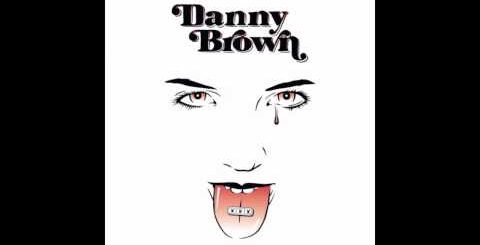
As enigmatic as he is vibrant, Danny Brown weaves a gritty narrative of street survival against the odds, where triumphs are muted and mentors are mythological. ‘Tell Me What I Don’t Know’, a track from his critically-acclaimed album, paints not just a picture, but a profound saga of the everyday lives shadowed by the specter of street violence, escapades, and the poignant pursuit of a prosperity often dangled like a carrot on a stick.
This song is a raw confessional and as much a heart-wrenching ballad of urban life as it is an indictment of the circumstances that keep many locked in a cyclical trap of poverty and criminality. Let’s traverse the labyrinth of intricate beats and bars that hold a mirror up to a segment of society’s harsh realities, as Danny Brown voices out a too-often ignored narrative.
The Prelude to the Streets’ Symphony
In a verse that begins with a paradox of the streets versus academia, Brown emphasizes the alternate, yet equally demanding, education one receives in the throes of urban survival. ‘Dropped out for a slanging degree,’ he suggests, conflating the life of drug dealing with an academic discipline, presenting his and similar stories with a stark realism that no textbook can capture.
The visceral imagery of ‘9 on me, keep the devils off me’ draws a line in the sand, where the possession of a weapon is less a choice and more a reluctant necessity for safety. The societal ‘devils’ Brown refers to are manifold—violence, desperation, poverty—each as capable as the next of drawing a young soul away from the potential of a brighter future.
A Symphony of Hollow Successes
‘We was so ambitious,’ Brown introspects, speaking to the youthful optimism that maintains that upward mobility is tethered to material gain. These lines offer an elegy to misplaced aspirations; the Jordans and bitches are Pyrrhic victories in a game where the real win—a way out—seems frustratingly elusive.
‘Flashing bankrolls in the club taking pictures…,’ but for what purpose? The question hangs in the air, a somber reflection on the ostentation of youth that often overshadows the creeping, impending costs of such bravado: legal troubles, addiction, violence, and death.
The Hidden Cost of High Risk Living
Between the beats, Brown artfully captures the flip side of the hustler’s dream. A friend is shot, police raids disrupt the fragile semblance of order, and the courtroom becomes as familiar as home. With each iteration of ‘Tell me what I don’t know,’ Brown throws a rhetorical question to a society that, perhaps, would prefer not to know the plight of its most vulnerable.
Probation and Newports become symbols of the cycle of incarceration and addiction, hinting at a deeper narrative of systemic failures and individual helplessness. A ‘hook raid’ serves as a metaphor not only for the sudden crash of reality but also as a narrative of disrupted lives and the repercussions of a life in the shadows.
The Vicious Cycle Comes Full Circle
Danny Brown could have just rapped about the bravado of street life, but instead, he chooses to lift the veil on the ‘cycle’—a reference to the Sisyphean struggle and interchanging roles between free man and prisoner. With the poetic line, ‘You get out, I go in,’ he captures a shared, inevitable destiny among his peers.
This lyric emphasizes the seemingly inescapable loop that ensnares those born into tough neighborhoods and faced with limited options. Brown is issuing an urgent plea, calling for a reconsideration of the societal mechanisms that perpetuate this cycle, and re-examination of what is considered ‘the life for us.’
Memorable Lines Etched in Urban Lore
‘Last night homie got killed at the liquor store.’ These haunting words, repeated in the refrain, serve as a chilling reminder that in the world Brown illustrates, mortality is always close, and tragedy could be a mere errand away. This line’s austere truth leaves an indelible mark on the listener, etching the unspoken into the annals of urban life and lore.
Equally vivid is the existential resignation in the lines, ‘Gave us all probation now we smokin’ Newports,’ which serve to both satirize and underscore the complexity of substance as a coping mechanism and the ironies intrinsic to the criminal justice system. They are stark, startling, and delivered with a blunt directness that challenges listeners to face the music, and the reality it represents.