The Ascent Of Stan by Ben Folds Lyrics Meaning – The Personal Becomes Political in Music’s Mirror
Lyrics
From the room upstairs
How’s the view there
Do you read what they’re sayin’ about you
That you’re no fun
Since the war was won
In fact you have become
All of the things you’ve always run from
The ascent of Stan
Textbook hippie man
Get rest while you can
So where’d the years go
All the time we had
Being poor was not such a drag in hindsight
And you wonder why your father was so resigned
Now you don’t wonder anymore
The ascent of Stan
Textbook hippie man
Textbook hippie man
Get rest while you can
Stan, once you wanted revolution
Stan, now you’re the institution
Stan, how’s it feel to be the man
It hurts to be the man, It’s no fun to be the man
La~ dada, la dada dada, la dada
La dadada dadada da~
And I watched it all go down
The ascent of Stan
Textbook hippie man
Stan
Textbook hippie man
Get rest while you can
Stan, once you wanted revolution
Stan, now you’re the institution
Stan, how’s it feel to be the man
It hurts to be the man, It’s no fun to be the man
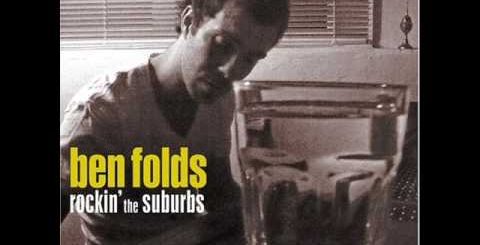
Ben Folds, the modern bard with a piano, guides us through a generational parable in ‘The Ascent of Stan,’ a ballad steeped in introspective melody and poignant lyrical nuance. The song, featured on his 2001 album ‘Rockin’ the Suburbs,’ delves into the complexities of social evolution and personal transformation against the backdrop of political change. Folds’s artistry lies not only in his musical craftsmanship but also in his ability to dissect human nature through a pop-cultural lens.
The character Stan, short for standard or stereotype, is our everyman, an archetype of an era that witnessed seismic shifts in public ideology. Through Stan, Folds encases a story of ideological metamorphosis, charting the journey from the youthful fervor of rebellion to the sobering acceptance of establishment norms. It’s a song that mirrors the maturation process of an entire generation, crescendoing in the stark realization of becoming what once was the antithesis of their youthful ideals.
Echoes of a Maverick’s Past – Unpacking the Melancholy Introspection
The withdrawn silence and the detached perspective are Stan’s initial markers, setting the stage for a character who has seemingly gained the world yet feels the loss of his soul. ‘How’s the view there?’ The question is rhetorical, probing and tugging at the disconcerting quiet of transformation. Stan’s ascent is juxtaposed alongside the remembrance of more carefree, fervent days when poverty was a shared experience that bound friendships, and hindsight romanticizes the struggles faced.
The mention of a war, a symbolic victory, paints a picture of a battle won at the cost of personal identity. What does it mean to no longer be ‘the fun one’ and to see yourself become the embodiment of what you once defiantly stood against? It’s the ingrained paradox of the post-revolution individual, encapsulated in the stillness of a room upstairs, where the isolation of current existence contrasts against the clamor of idealistic days.
From Flower Power to Power Suits – The Compromise of Ideals
Throughout the song, Folds captures the irony of Stan’s life transition with ‘textbook hippie man,’ a descriptor that feels almost clinical in its application—a formulaic expectation of peace and love now eclipsed by pragmatism. Stan, the emblem of generational change, is urged to ‘get rest while you can,’ a harbinger of the exhaustive demands of maintaining the status quo, suggesting the tiring nature of his new existence within ‘the institution’.
The lyrics serve as an anthem for the reversal of roles where once-radical voices become woven into the establishment’s fabric. The ascent is not merely a climb up the social ladder but a descent into the accepted norms of the very structures they sought to dismantle. There’s a palpable sense of surrender, of yielding to the inescapable gravitational pull of becoming part of the system to change it — or perhaps, as the song subtly interrogates, to be changed by it.
The Elegiac Chorus – Stan’s Reluctant Anthem
Stan’s name repeats throughout the chorus, a chant that increases in fervor and becomes an anthem of reluctant realization. ‘Stan, once you wanted revolution/ Now you’re the institution,’ Folds notes poignantly, searing Stan’s internal conflict into the listener’s consciousness. He uncovers the emotional toll such a transformation can impart: ‘It hurts to be the man.’ It’s unforgiving and, above all, it’s lonely.
But perhaps the greatest twist lies in the word ‘man.’ It’s multilayered, representing not only the individual who rises to a position of influence or conformity, but also invoking the universal ‘The Man’—a counterculture slang for authorities that enforce the mainstream societal norms. Folds is adept at incorporating such double entendres within his music, deepening the song’s texture and encouraging listeners to uncover layered meanings with each listen.
The Hidden Meaning – A Reflective Lens on Aging and Activism
On the surface, ‘The Ascent of Stan’ might simply narrate the aging process of a former hippie, yet the hidden meaning is much more salient: it’s a powerful commentary on social activism’s lifecycle. In Stan’s rise, we scrutinize our own beliefs and are prompted to confront the question of what sustaining those early ideals would actually require in a world that often demands compromise for survival.
It’s also a meditation on the nature of time and relevance. What does it mean to grow older with or without your convictions intact? How does the radical become mundane, and can the spirit of revolution ever coexist with the mechanics of ‘the institution’? Through the song’s metaphor-rich landscape, Folds invites us to wrestle with these existential queries without offering a sanctuary of easy answers.
Memorable Lines that Cut Deep – Stan’s Litmus Test of Self
‘Being poor was not such a drag in hindsight,’ Folds reflects, voicing a sentiment known to many who reached for the stars and found themselves in the stratosphere of disillusionment. These lyrics become the litmus test for the listener’s self-examination, challenging the narrative of aspiration and the true cost of our dreams.
Yet it’s the revelation in observing ‘I watched it all go down,’ that delivers the ultimate punch. Folds positions himself as a bystander, a witness to Stan’s rise and the inevitable descent that ensues. In many ways, we are all observers of our own journeys, watching the passage of time with a mixture of wonder and resignation. In the Ascent of Stan, every listener can find a fragment of their own story, echoing the truth that the most profound lyrics often hit close to home.