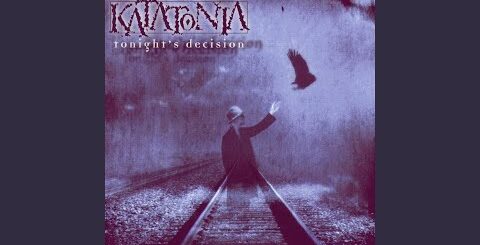
The Racing Heart by Katatonia Lyrics Meaning – Delving Deep into Melancholia and Resilience
Lyrics
Spring of wealth
Come for a good time
It’s not what I have
Vibrate
Life on the line
My racing heart
Your vacant mind
If I sow a wind now
I will reap a storm
You saw me sliding away from the sun
And tomorrow
Who will come
And put their hand over mine
Mine with the burning shape of a gun
Washed out
Soul of money
Couldn’t keep the fire
It’s not what I do
Vibrate
Life on the line
My racing heart
It’s all I find
Inside the sickness
Rest
Katatonia, a band renowned for their somber melodies and introspective lyrics, invites us once again into their shadowy world with their song ‘The Racing Heart.’ The track unfolds with a kind of quiet intensity, a feature characteristic of the band’s sound. What may initially seem like a simple lamentation, on closer inspection, reveals the layers of emotion and nuance that Katatonia is famed for.
Amid the myriad interpretations of ‘The Racing Heart,’ this analysis aims to sift through its poetic verses to uncover the entwined themes of existential dread, fleeting hope, and the perennial search for meaning — all set against the relentless beat of a racing heart.
The Spring of Wealth vs. The Poverty of Being
‘White sun / Spring of wealth’ – The song opens with these lines, a sharp juxtaposition against the pervasive melancholy that defines Katatonia’s music. It’s as if the band is mocking the traditional symbols of renewal and prosperity, only to reveal the internal emptiness (‘It’s not what I have’) that material abundance can’t fill. These lines speak to the disillusionment with surface-level pleasures and the yearning for something deeper, more enduring.
When they sing ‘Vibrate / Life on the line / My racing heart / Your vacant mind,’ it’s an intimate confrontation with the discrepancies between external appearances and internal realities. The image of the racing heart, a universal symbol of anxiety and anticipation, clashes with the idea of a ‘vacant mind,’ suggesting an emotional void that wealth and good times can’t assuage.
Sowing Winds and Reaping Storms: The Inevitability of Consequence
The line ‘If I sow a wind now / I will reap a storm’ taps into the biblical principle of reaping what one sows. But in the hands of Katatonia, this is less about moralism and more about the stark cause-and-effect that governs human lives. It might reflect the inevitability of facing the outcomes of one’s actions, particularly when those actions are driven by desperation or desire.
‘You saw me sliding away from the sun’ further portrays an image of descent — a person moving away from light and warmth into coldness and darkness. The notion of ‘tomorrow’ brings with it both fear of the unknown and the faint hope for someone to arrive and provide solace, to place ‘their hand over mine,’ a beautiful metaphor for companionship and understanding in the face of life’s tempests.
The Ephemeral Nature of Wealth and the Enduring Soul
‘Washed out / Soul of money’ the song laments the transient satisfaction that financial gain offers. While ‘couldn’t keep the fire’ suggests that even wealth cannot maintain passion or purpose, indicating a deeper crisis that financial success cannot resolve. The soul that money influences seems diluted, emptied of its essence.
Again, the chorus ‘Vibrate / Life on the line / My racing heart / It’s all I find’ hammers home the central thread of the song: a heart in perpetual motion, a life defined by its immediacy and the existential pulse that continues despite the void — or perhaps, in spite of it.
Inside the Sickness: Unraveling the Song’s Hidden Meaning
The phrase ‘Inside the sickness, Rest’ may be the most revealing in the entire song. These words suggest that within the very heart of suffering or ‘sickness,’ one might find a perverse kind of peace or resignation. This is where Katatonia often excels, pointing out that within despair, there’s a certain clarity and even comfort to be found in embracing the inescapable human condition.
Rather than an overt statement of hopelessness, this might be an acknowledgment of resilience. There is rest, or reprieve, in accepting and understanding our inner turmoil — an insight that positions suffering as a place where one can still find a semblance of control or solace.
Lines That Bind: The Memories That Linger
Throughout ‘The Racing Heart,’ certain lines cut deep and recur, mirroring the recurring cycles of contemplation that the listeners find themselves drawn into. The music doesn’t just share the message; it makes one feel it, blurring the line between the band’s experience and our own. The refrain of the racing heart becomes a thread that binds listeners to the song, uniting them in an unspoken understanding of the music’s emotional landscape.
It is not just about the heart racing out of fear or anxiety; it is about the palpable feeling of being alive, of feeling every beat as it echoes the struggles and triumphs within the human spirit. It recognizes that the moments that test our resilience are the very ones that remind us we are irrevocably alive.