The Saga by The Libertines Lyrics Meaning – Unraveling the Enigma of Self-Deception
Lyrics
When you let down your friends
When you let down the people
When you let down yourself
Oh, and only fools, vultures and undertakers
Will have any time for you
Oh
A problem, becomes a problem
When you lie to your friends
And you lie to your people
And you lie to yourself
And the truth’s too harsh to comprehend
You just pretend there isn’t a problem
I am a pimp and a slave
I dig my bed, you dig my bed
I dig my grave
And the truth’s too harsh to comprehend
You just pretend there isn’t a problem
No no, I ain’t got a problem
It’s you with the problem!
Problem
Problem
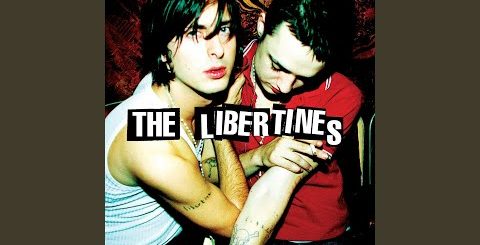
In the pantheon of post-punk revival bands, The Libertines stand tall with their gritty melodies and poetic charm. Amidst their collection of rebellious anthems lies ‘The Saga,’ a track that pulsates with the raw energy and existential musings characteristic of the band’s distinct sound. The song, from their self-titled 2004 album, is a deep, introspective piece that juxtaposes the theme of betrayal with the struggle of acknowledging one’s own flaws and failures.
Crafting a deceptively simple cadence over an up-tempo beat, ‘The Saga’ delves into themes of deception, self-deception, and the societal outcasts who revel in the downfall of the protagonist. Like many of The Libertines’ works, the true depth of the lyrics unfolds through a complex interplay of metaphor and rhetoric that begs for a purview beyond the surface.
The Piercing Prologue: A Discourse on Dishonesty
The opening lines of ‘The Saga’ serve as a mirror, reflecting the often-unacknowledged truth about personal accountability. The deliberate repetition of ‘A problem, becomes a problem’ is not merely poetic but a psychological reinforcement, a mantra that underscores the song’s central message: the magnification of issues through betrayal and deceit.
By invoking ‘friends,’ ‘people,’ and ‘yourself’ in succession, the songwriters explore the concentric circles of trust and expectation. In doing so, they lay the groundwork for a narrative that posits societal relations on one axis and self-awareness on another, building tension that is both interrelational and intrapersonal.
Nesting Vultures: The Symbols of Doom
When the lyrics shift to ‘only fools, vultures and undertakers,’ it is not simply a flourish but an indictment of the carrion birds of society – those who profit from the demise and misfortune of others. This seasoned imagery paints a macabre scene, conjuring notions of exploitation and parasitism that accompany personal failures.
Here, The Libertines touch upon the duality of mankind’s voyeuristic tendency to both dread and desire the spectacle of another’s downfall. The words are a bleak reminder of how swiftly the tide can turn when one’s own actions, or lack thereof, summon the forces that eagerly await a feast borne of folly.
Unearthing the Grave Digger Within
Midway through the track, the declaration ‘I am a pimp and a slave’ cracks the veneer of deflection, exposing a raw admission of personal complicity in one’s downfall. This coupling of sin and servitude is a poetic testament to the existential bind of being both the architect and victim of one’s predicament.
The repeated refrain ‘I dig my bed, you dig my bed, I dig my grave’ unspools a soundscape of self-inflicted demise, an allegory of the sabotage that lies dormant within each of us. It’s a haunting reminder that beyond each problem is a shovel in our hands, and sometimes it’s we who carve out our resting place among our failures.
Hidden Meaning: The Quintessence of Denial
‘And the truth’s too harsh to comprehend / You just pretend there isn’t a problem’—these lines are the crucible of the song’s exploration of denial, a cutthroat confession of the human condition. It’s a recognition of the defense mechanisms we often employ to avoid facing the repercussions of our actions.
In these lyrics, The Libertines tap into a universal plight: the heartache that comes with acknowledging hard truths about ourselves. Through their music, they unpack the layers of psychological resistance that shield us from our vulnerabilities and question the limits of our own sincerity.
Memorable Lines: The Anthem of Defiance
The anthemic close ‘No no, I ain’t got a problem / It’s you with the problem!’ reverberates as a bold, albeit ironic, declaration. It personifies the angst and defiance that pervade through the song, echoing the internal struggle against accountability that resonates with many listeners.
These final words serve as much as a diatribe against the external forces that one blames for their ills as a satirical jab at the ultimate act of self-deception. With this, The Libertines encapsulate the ethos of a generation fraught with contradiction—eager to point fingers outward while seldom glancing inward.