Time Tonight by John Frusciante Lyrics Meaning – Unraveling the Philosophical Depth
Lyrics
I’ve got no time tonight
In these times the wind surpassed the tide
When the wake up’s hard to find
Dreams make upfor your life
This crazy shine it never lets you die
Going up
We become what you want
Again the moon rises up too high
And we don’t need the sky
Wonder what it is that makes the world turn slower
Wonder what it is that makes me feel so mad
Everyone that talks to me I so which wouldn’t
I wouldn’t even care except I feel so bad
Why is there no one in my life
Time
There’s no time tonight
Wide
There’s no room to see wide
Time
There’s no time tonight
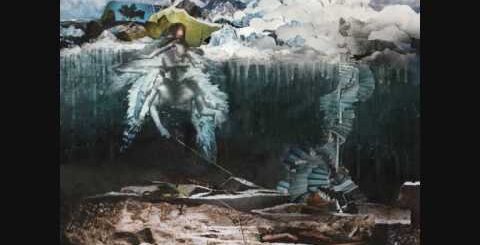
The enigmatic musing behind John Frusciante’s ‘Time Tonight’ is cloaked in melodic complexity and lyrical subtlety. A track from Frusciante’s 2005 album ‘Curtains,’ it invites listeners into an introspective journey marked by existential angst and a quest for meaning amid temporal constraints.
Eloquent but sparse, ‘Time Tonight’ drifts away from conventional storytelling, choosing instead to embrace an abstract exploration of time, existence, and personal longing. Its verses wind through the corridors of reflection, wrapping the themes in a stark yet lush musical arrangement.
Between Metaphor and Reality: The Paradox of Time
Frusciante serenades us with an opening line that instantly sets the tone for a temporal dilemma – ‘For changing lines / I’ve got no time tonight.’ There is a sense here of life’s relentless march, an acknowledgment of the constant flux that defines human existence. Each ‘changing line’ could represent a moment, a boundary, or a transformation.
The acknowledgement of having ‘no time tonight’ serves as a testament to the fleeting nature of our encounters with the essential truths of life. As listeners, we are led to confront the morass of routines that often eclipse our deepest reflections and contemplations, offering a nuanced commentary on the modern human’s struggle with time scarcity.
The Tidal Forces of Existence
Indeed, tidal forces are not just confined to the oceans; they sway our internal worlds as well. ‘In these times the wind surpassed the tide / When the wake up’s hard to find’ could be deciphering the struggle to maintain an individual direction amidst the push and pull of societal expectations and personal aspirations.
When Frusciante speaks of the ‘wake up’ that’s ‘hard to find,’ he could be hinting at an awakening of the self, a moment of lucidity that often escapes us as we are swept along by life’s relentless momentum. The line speaks to a universal quest: the search for moments of true consciousness and awareness.
Illuminating Dreams: The Escape from Mortal Shackles
In the second stanza, Frusciante shifts perspective to the otherworldly – ‘Dreams make up for your life / This crazy shine it never lets you die.’ Dreams here serve as a vital counterbalance to the confining nature of time, a space where mortality seems a distant whisper. It offers solace, escape, and potentially even immortality.
There is something innately human in our need for escapism, and via Frusciante’s lyrics, we’re afforded a glimpse into a place of reprieve where the constraints of the ticking clock can no longer inhibit the soul’s voyage. As we ascend ‘Going up / We become what you want,’ Frusciante seems to be asserting the transformative power of our innermost desires and dreams.
Defiant Lamentations: Resisting the Celestial Clockwork
Frusciante’s lyrics crescendo with existential queries – ‘Wonder what it is that makes the world turn slower / Wonder what it is that makes me feel so mad.’ This reflection signals a resistance to the hastened pace of life and a vexation with the world’s cumbersome turnings, challenging the forces that dictate our sense of progress and time.
The song’s narrative pushes against the bounds of cosmic order as seen in ‘Again the moon rises up too high / And we don’t need the sky.’ Here is an act of defiance, a longing to break away from the celestial tether that binds us, suggesting a profound restiveness with the given natural order.
Revelations and Regrets: The Song’s Innermost Confession
The poignant admission, ‘Everyone that talks to me I so wish wouldn’t / I wouldn’t even care except I feel so bad,’ lays bare a soul wrought with isolation and disenchantment. Through these lines, Frusciante voices a personal conflict – the desire for solitude in confrontation with an innate human yearning for connection.
This confession segues into an unadorned yet powerful repetition of ‘Time / There’s no time tonight.’ As with the lines that recount a lack of spatial breadth – ‘Wide / There’s no room to see wide’ – we are left with an echo of restriction. These verses carry a profound sense of urgency and a quest for breadth of experience that resonates with the contemporary listener’s plight.