Un Dernier Verre (Pour la Route) by Beirut Lyrics Meaning – Exploring the Depths of Melancholic Nostalgia
Lyrics
Once we’d seen eye to eye,
I’d known that I’d pass you by, and I tried.
The bell’s chime seven times
Completed at nine
The world moves on, I find,
No, but I,
Learned of time by your hands.
And in shallow waters, then,
I learned not to swim but to lie,
I await for none, ten or twenty to burn out
I insist on doubts,
We’re already laying on the glass, the glass…
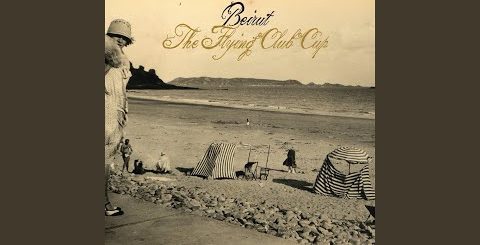
Beirut’s ‘Un Dernier Verre (Pour la Route),’ a heart-wrenching ballad off the album ‘The Flying Club Cup,’ plays out like a tender, sepia-toned snapshot of nostalgia and yearning. It’s a toast, a farewell, and an elegy to moments passed, wrapped in the embrace of an accordion’s lingering sigh. With each resonant note and poetic phrase, we plunge into the depths of human emotion, swimming through the undercurrents of time’s relentless flow.
Zach Condon, the mastermind behind Beirut, crafts a narrative that is both deeply personal and universally resonant. The song’s French title, which translates to ‘One Last Drink (For the Road),’ sets the scene for a bittersweet adieu and the nuanced journey that follows. Through the exploration of the song’s intricate layers, we uncover a tapestry woven with threads of regret, acceptance, and the inevitable march of time.
A Toast to Transience: The Ephemeral Nature of Connection
At the outset, ‘Un Dernier Verre’ evokes a sense of shared history between two souls. As they sit ‘under October’s able skies,’ there’s an intimacy implied, a oneness that was once undeniable. But paths diverge, life’s inevitabilities ensue, and the song captures that moment where acknowledgment and resignation collide. The past is a table at which they once sat together, but proceeds to become a tableau from which the protagonist finds themselves increasingly distanced.
The allusion to ‘eye to eye’ and the admission of passage – ‘I’d known that I’d pass you by, and I tried’ – speaks to a poignant awareness. There is pain in the realization that the fleeting connections of youth or the fervent promises of the past are just as susceptible to time’s decay as anything forged in the tangible world. In this awareness, Condon builds a bridge between listener and lyric, inviting us to reflect on our transient encounters and the fragments of them we carry.
Decoding the Chimes: A Metaphor for Life’s Inexorable Progression
The recurring motif of bell chimes in ‘Un Dernier Verre’ is more than mere embellishment; it’s a vehicle for the song’s existential core. With each peal, we’re reminded of the relentless advance of time – ‘The bell’s chime seven times / Completed at nine.’ The chimes mark the beginning and the end, an auditory symbol of life’s passing hours, days, and ultimately, the life cycle itself.
Chiming seven times and completing at nine, the bells suggest a cycle within a cycle, denoting perhaps the stages of life or key moments that shape our existence. This completion, however, is not one of fruition but of realization. The stark recognition that ‘the world moves on’ uncovers a universal truth: that our presence is but a whisper in the grand opera of time.
Through the Hands of Time: Learning in the Shallows
‘Learned of time by your hands,’ the singer intones, pointing to the other as a conduit to understanding life’s relentless march. These hands—once perhaps clasped in unity—are now guides in this solitary lesson. The shallow waters mentioned in the lyrics signify the superficial experiences or the initial forays into the profound depths of life’s meaning and emotion.
To ‘learn not to swim but to lie’ suggests a resignation to the currents, a choosing of stillness amidst the potential for struggle. It’s a poignant image, reflective of choosing passivity or acceptance over the frantic fight against the inevitable or the melancholic longing for what can no longer be grasped.
Embracing Doubt’s Fiery Embers: The Reluctance to Let Go
As the song’s narrator insists on their doubts, the resistance against closure becomes evident. The imagery of ‘await for none, ten or twenty to burn out’ captures the human desire to hold on to the flickers of hope, to forestall the end. Doubt becomes a defense mechanism, a last bastion against the finality of parting.
Yet, Beirut does not allow us to linger in the comforting shadows of uncertainty for too long. There is an oxymoronic clarity to this insistence on doubt, a clear-sightedness amidst the haze, that serves as a harbinger of growth. It confronts the listener with the necessity of confronting their own reservations, their own reluctance to face what comes next after the last embers die.
Laying on the Glass: Reflections on the Song’s Most Memorable Line
Arguably the song’s most arresting image surfaces in the closing line—’We’re already laying on the glass, the glass…’ There’s a vulnerability to this admission, an exposure that evokes both the fragility and resilience of human connections. The glass is a barrier, a divide that separates the past from the present, the tangible from the memory.
Yet to lay upon it suggests a closeness to the divide, a willingness to confront and be present with the pain and beauty of what was. It is, in a way, both the finality of the farewell and the comfort that, for a moment, there was something worth raising a glass to; a past so poignant that its echo resonates even when the figures within it have long since parted ways.