Vanity by Christina Aguilera Lyrics Meaning – Embracing Self-Love in the Spotlight of Pop Culture
Lyrics
I just love myself, bitch
Mirror mirror on the wall
Who’s the fliest bitch of them all?
Never mind, I am
That bitch is so fucking pretty
Yeah I am
If I were her, I would kiss me (muah!)
Hey
Mirror mirror on the wall
Hit up Prince Charming, tell him give me a call
Never mind, screw him
‘Cause I found somebody better
Never mind, screw him
I make myself so much wetter (wetter, wetter)
Everyday I see myself
I love me even more (it’s me I adore)
Ain’t nobody got shit on me
I’m the best for sure (I should be l’amour)
V is for Vanity
Every time I look at me
I turn myself on yeah
I turn myself on yeah
V is for Vanity (what)
Thank you Mum and Daddy ’cause
I turn myself on yeah (yeah)
I turn myself on
Get into it
Mirror mirror on the wall
Who’s the sexiest of them all?
Never mind I am (I am)
Oh, she’s so hot and sexy
Yeah I am (that’s right)
No-no-no wonder she’s cocky, ow, huh
Mirror mirror on the wall
They call me stuck up, but I’m not at all
Never mind, I am (I am)
It’s not my fault I’m the shit
Yeah I am
I am, and I’m a bad ass bitch, hey
Everyday I see myself
I love me even more (it’s me I adore)
Ain’t nobody got shit on me
I’m the best for sure (are you ready for me?)
V is for Vanity (yeah)
Every time I look at me
I turn myself on yeah
I turn myself on yeah
V is for Vanity
Thank you Mum and Daddy cause
I turn myself on yeah (yeah)
I turn myself on yeah
Get into it
No regrets (no regrets)
Get into it
No apologies (no apologies)
And now I take myself to be my lawfully wedded bitch
All the girls say
Yeah I’m vain, so what, so what
All the boys say
Yeah I’m vain, so what, so what
All the girls say
Yeah we’re vain, so what, so what
Everybody say
Yeah we’re vain, so what, and what
Whoa
V is for Vanity (yeah)
Every time I look at me
I turn myself on yeah
I turn myself on yeah (yeah what)
V is for Vanity (Hey)
Thank you Mum and Daddy ’cause
I turn myself on yeah (that’s right)
I turn myself on
Get into it
If the shoe fits (fits)
Wear a bitch (bitch)
If the shoe fits (fits)
Wear a bitch (bitch)
If the shoe fits (fits)
Wear a bitch (bitch)
Read my lips, muah
I’m a vain bitch, hey
Hey yeah
Got nothing on us
‘Til you love yourself
And if they don’t like it, tell em
Get in line
And kiss your ass bitch
Love you baby, au revoir
That’s right, let’s go out like this
Mirror mirror on the wall
Who’s the fliest of them all?
It’s me, bow down, get on your knees
Where’s my queens?
Who ain’t supreme?
Let me hear you scream
Whoa, oh
And they make you see lips on
Going strong
Let us not forget
Who owns the throne?
(You do mommy)
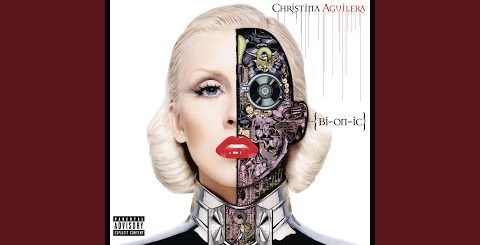
Within the gilded frame of pop culture, self-adulation often walks a tightrope between empowerment and narcissism. Christina Aguilera’s titular track ‘Vanity’ from her 2010 album ‘Bionic’ dives headlong into this glittery pool with unapologetic bravado.
Aguilera’s ‘Vanity’ is not merely a song; it’s an audacious anthem of self-love and unashamed confidence that struts through the boulevard of self-image, stiletto heels clicking to the beat of defiance against societal norms. The lyrics boldly confront conventional attitudes towards femininity, body image, and the perception of vanity itself.
A Sonic Mirror Reflecting Unabashed Confidence
Right off the bat, Aguilera gazes into her ‘sonic mirror,’ contemplating who the ‘fliest of them all’ is. The rhetorical question isn’t seeking an answer, because, in her sonic realm, Aguilera reigns supreme. This section of the song serves as a testament to the pop icon’s towering self-esteem and, perhaps, an encouragement for listeners to find their own reflections mesmerizing.
‘Vanity’ isn’t just about admiring one’s exterior but recognizing and celebrating one’s innate allure and individuality. The pop star’s vocal extravaganza corroborates that this isn’t mere narcissism; it’s an artistic amplification of self-love in an industry and a world that frequently dissects and criticizes women’s appearances.
Defying Prince Charming: An Ode to Independence
Historically rooted in the expectation of a Prince Charming to affirm a woman’s worth, Aguilera flips the script, liberating herself from this antiquated fairy-tale narrative. When she sings, ‘Hit up Prince Charming, tell him give me a call,’ only to retort with ‘Never mind, screw him,’ Christina radiates the self-sufficiency that has become the cornerstone of modern femininity.
The song suggests that dependency on external validation, especially from romantic interests, is obsolete. Instead, the magnanimous gesture of replacing Prince Charming with self-satisfaction serves as a battle cry for independence, a rejection of social dogmas tethering a woman’s value to a man’s gaze.
Splashing in the Waves of Self-Adoration
Traversing deeper into the lyrics, ‘V is for Vanity / Every time I look at me / I turn myself on,’ emerges as a carnal, electrifying chorus, charging the atmosphere with titillating confidence. ‘Vanity’ here is not a sin, but a celebration, a declaration of Aguilera’s self-pleasing autonomy that negates society’s quickness to demonize women who dare to openly express their sexuality and self-assurance.
As Aguilera thanks her ‘Mum and Daddy’ for her attributes, recognizing the genetic lottery while owning it unapologetically, she sets the stage for a broader conversation about beauty, inheritance, and the agency in embracing both.
The Unforgettable Mantra of a ‘Vain Bitch’
Navigating through the palatial corridors of ‘Vanity,’ we stumble upon the cheeky and provocative chant-like line ‘Read my lips, I’m a vain bitch.’ This phrase alone captures the essence of the song—turning a derogatory insult on its head and wearing it like a crown.
It begs recognition, not just as a memorable set of lyrics, but as a powerful reclamation. This tongue-in-cheek self-affirmation contributes to a cultural shift, repurposing the term ‘bitch’ from a word meant to belittle to one that signifies resilience, boldness, and sovereignty over one’s narrative.
Decoding the Subtler Shades of ‘Vanity’
Aguilera’s ‘Vanity’ might cloak itself in the garb of high-gloss pop perfection, but beneath the surface, it’s a dynamic commentary on the paradoxes that women navigate. It nudges the conversation forward—questioning why women’s self-esteem is often interpreted as vanity, yet for men, similar expressions of self-confidence are seen as aspirational.
The song, with its relentless beats and echoing affirmations, dances on the edge of satire. It’s reflective of how the concept of vanity is socially constructed and suggests that if one must be labeled vain for loving oneself boldly and loudly, then let it echo in every note, every beat, and every proudly proclaimed ‘muah!’