Vento na Cara by Terno Rei Lyrics Meaning – A Gust of Introspection and the Poetry of Everyday Life
Lyrics
Quando bate nos seus cachos
E eu vejo diferente
E se faço parte do desfile destes pássaros
O que é que eu faço agora
Além de cantar
Eu acho que todo mundo tem
Uma sina, uma cruz pra carregar
E eu conheço a sua dor
Eu andei por esses lados
Não tem nada demais
Não tem nada demais
Não tem nada demais
Larara larara
Larara larara
Larara larara
Larara larara
Tem um milhão de coisas que eu não sei
E o que é que eu faço agora
Além de cantar
Além de cantar
Quando estou aqui, estou inteiro
Você me entende eu daqui te vejo
Eu daqui te beijo
Eu daqui te vejo
Quando estou aqui, estou inteiro
Você me entende eu daqui te vejo
Eu daqui te beijo
Eu daqui te vejo
Com vento na cara
Os cachos nos olhos
Os olhos no tempo
O tempo não para
O tempo não cala
Com vento na cara
Os cachos nos olhos
Os olhos no tempo
O tempo não para
O tempo na cara
O tempo não cala
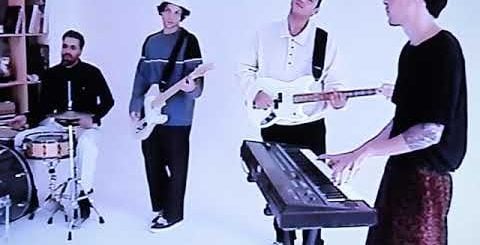
Terno Rei, a name that stands synonymous with the breezy yet profound fabric of contemporary Brazilian music, conjures images of the cool Sao Paulo nights and the eternal reverie of youth in their track ‘Vento na Cara’. The song, a mellow narrative rich with the band’s signature laid-back guitar strums and heartfelt vocals, takes listeners on a casual journey through ephemeral moments and quiet self-reflection.
But beneath the silky smooth exterior, ‘Vento na Cara’ is deceptively complex, woven with lyrical intricacies that transcend its surface-level tranquility. What might, at first listen, sound like a dreamy ode to the simple pleasure of feeling the wind in your face, steps forth under a closer lens as a meditative probe into the depths of existence, our shared burdens, and the solace found in the uncomplicated joys life offers.
A Deeper Dive into Breezy Melancholy
The opening lines of ‘Vento na Cara’ reveal more than just a soothing sensory experience; they invite us into a contemplative state. As the wind graces the curls of someone dear, there’s a moment of altered perception where the world shifts, widening into a recognition of the love interlaced within everyday occurrences.
However, this love is not without weight. By referencing a ‘sina’ and ‘cruz pra carregar’, Terno Rei invites us to acknowledge the universal burdens we each bear. The lightness of a breezy day juxtaposes with the inevitable heaviness that comes with living, creating a poignant contrast that’s deeply resonant.
A Chorus of Contemplation: The ‘Larara’ Anthemic Yet Cryptic
The seemingly nonsensical ‘Larara’ segment unfolds as an essential component of the song’s escapade into the introspective. Like a chant or a mantra, it eludes to the indescribable—a mirroring of life’s inexplicable moments that escape the confines of language yet are felt universally among those who seek meaning beyond words.
This chorus line doesn’t distract from the song’s substance but rather amplifies it, filling the space between thoughts with a musical embrace that listeners can find solace in, as they confront the boundless unknowns of their lives.
Existential Echoes in Pop Melodies
Through the repeated questioning of ‘O que é que eu faço agora,’ the narrator confronts a sense of aimlessness amidst the knowledge of life’s vast uncertainties. These existential considerations are cushioned within the pop harmonies of the track, allowing the confrontation to feel like a serenade rather than an anxiety.
Terno Rei thus crafts a seamless juxtaposition that mirrors our own fluctuating responses to existential dilemmas—find solace in the midst of chaos, music in the noise of uncertainty.
The Hidden Meaning: Intertwining Time and Presence
As the song progresses, the motif of time becomes a character of its own. ‘Os olhos no tempo’ speaks to a fixation with the passing of moments, and when sung, ‘O tempo não para, o tempo não cala,’ it reinforces the ceaseless forward march of existence, against which all human experience is set.
Yet, there is an acceptance in the acknowledgment that time carries forward. It is in the present, ‘Quando estou aqui, estou inteiro,’ that the narrator finds wholeness and clarity. Perhaps the true meaning behind ‘Vento na Cara’ is not about battling the current of time but embracing the completeness of the moment.
Memorable Lines that Resonate with Our Own Struggles
‘Eu conheço a sua dor; Eu andei por esses lados’, proclaims an intimate familiarity with suffering, implying a shared humanity that resonates with the listener’s own tribulations. It’s a line that quietly stands in solidarity with anyone who’s felt the sting of life’s struggles.
In living through the song, we find comfort knowing that although each of us carries a unique cross, the essence of our experiences—a longing for understanding, a yearning for connection—is what binds us together in the melody of existence.