Welcome to Paradise by Green Day Lyrics Meaning – Unraveling the Rebellion Anthem for a Generation
- Music Video
- Lyrics
-
Song Meaning
- Suburban Desolation and the Punk Perspective
- The Evolution of Home in the Eyes of the Disillusioned Youth
- Lurking in the Shadows: The Hidden Meaning Behind the Rock
- The Siren’s Call of Gunshots and Laughter: Memorable Lines that Define a Generation
- Welcome to Paradise: The Anthem of Reclamation and Self-Discovery
Lyrics
It’s been three whole weeks
Since that I’ve left your home
This sudden fear has left me tremblin’
‘Cause now it seems that I am out there on my own
And I’m feeling so alone
Pay attention to the cracked streets
And the broken homes
Some call it slums, some call it nice
I want to take you through
A wasteland I like to call my home
Welcome to paradise
A gunshot rings out at the station
Another urchin snaps and left dead on his own
It makes me wonder why I’m still here
For some strange reason it’s now
Feeling like my home
And I’m never gonna go
Pay attention to the cracked streets
And the broken homes
Some call it slums, some call it nice
I want to take you through
A wasteland I like to call my home
Welcome to paradise
Dear mother, can you hear me laughing?
It’s been six whole months since that
I have left your home
It makes me wonder why I’m still here
For some strange reason it’s now
Feeling like my home
And I’m never gonna go
Pay attention to the cracked streets
And the broken homes
Some call it slums, some call it nice
I want to take you through
A wasteland I like to call my home
Welcome to paradise, oh paradise
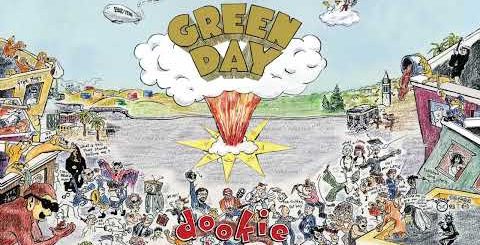
Far beyond a mere punk rock song, Green Day’s ‘Welcome to Paradise’ delves into the complex tapestry of youthful independence, urban decay, and the bittersweet taste of freedom. Released in 1992 as part of their album ‘Kerplunk’ and then re-recorded for their breakthrough ‘Dookie’ in 1994, the song is an explosive anthem resonating deeply with anyone who’s ever stepped foot outside their comfort zone only to find both beauty and chaos in the unknown.
The juxtaposition of angst-ridden lyrics with an invigorating melody captures the dual essence of excitement and fear as one ventures into the uncharted territories of life. ‘Welcome to Paradise’ isn’t just a roadmap through gritty cityscapes; it narrates the psychological journey of leaving behind the familiar and embracing the uncertain.
Suburban Desolation and the Punk Perspective
The very heartbeat of the punk genre thrives on the fringes of society, a point ‘Welcome to Paradise’ underscores with its stark portrayal of urban landscapes. Frontman Billie Joe Armstrong invites us on a walk through ‘cracked streets and broken homes,’ which serves as a graphic metaphor for life on the edge, the day-to-day for many who are part of the suburban sprawl yet feel disconnected from its manicured lawns.
To some, these environments are dismissed as slums, while to others, they are affectionately considered home. Green Day’s artistry lies in their ability to blur these lines, taking a seemingly deprived setting and transforming it into a haven for those who have discovered their identity amidst the chaos.
The Evolution of Home in the Eyes of the Disillusioned Youth
There is a compelling transformation woven into the lyrical tapestry of ‘Welcome to Paradise.’ The song begins with a sense of alienation and trepidation as the protagonist leaves the security of childhood. However, as time progresses, so does the emotional landscape; the alien environment slowly becomes a place of comfort, now sentimentally regarded as home.
This shift embodies the mutable concept of home and belonging. The character laughs in the face of once overwhelming fear, wholeheartedly embracing the once daunting wasteland. Green Day taps into the adaptability of youth — how the unfamiliar becomes the beloved, and what once induced panic becomes a peculiar source of pride.
Lurking in the Shadows: The Hidden Meaning Behind the Rock
While on the surface ‘Welcome to Paradise’ may seem like a grungy ode to independence, there’s a deeper narrative of socio-economic critique hiding in plain sight. The ‘broken homes’ are not just physical structures but are indicative of fractured communities, the collapse of the American dream in certain demographics, and the neglected corners society prefers to ignore.
Green Day does not merely observe but also challenges the listener to ‘pay attention’ to this hidden America. It’s an invitation to acknowledge the disparities and find camaraderie in the struggle, thereby transforming a personal journey into a universal exploration of identity and place.
The Siren’s Call of Gunshots and Laughter: Memorable Lines that Define a Generation
Certain lines in ‘Welcome to Paradise’ cut deep, acting as a rallying cry for those who recognize their own experiences within them. ‘A gunshot rings out at the station,’ juxtaposed with the seemingly incongruous ‘Dear mother, can you hear me laughing?’ acts as powerful commentary on the normalization of violence and the defense mechanisms people employ to endure their reality.
The song’s recurring mention of laughter amid the backdrop of chaos demonstrates the resiliency of those who live in the eye of the storm—the ability to find joy, or at least mock the absurdity of existence, in the face of adversity.
Welcome to Paradise: The Anthem of Reclamation and Self-Discovery
Ultimately, ‘Welcome to Paradise’ resonates as an anthem for those who reclaim their narratives and find strength in what was once weakness. It is a testament to the journey towards self-discovery, as the protagonist finds solace in the imperfections of their surroundings, defining their paradise not by external standards, but by personal experience and growth.
The song’s enduring legacy is a tribute to its ability to speak across generations, serving as a lifeline for those about to take the leap into the unknown. Green Day crafted not just a song but a timeless message of endurance and the power of redefining one’s circumstances to forge a personal paradise amidst any environment.