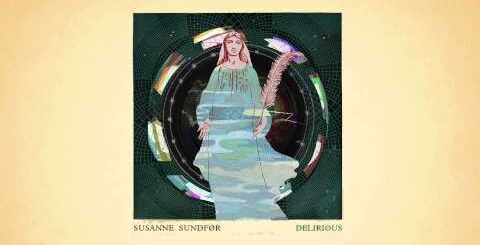
White Foxes by Susanne Sundfør Lyrics Meaning – Unraveling the Tapestry of Emotion
Lyrics
That’s all you are to me
Roses, roses
That’s all you’re offering me
And now I wish to God that the earth would turn cold
And my heart would forget it’s made of glass
And all the pretty tulips would disappear
And never disturb me again
You gave me my very first gun
I’ll go out and hunt the hidden dome
With white foxes, with white foxes
Freeze
Hunger, hunger is the purest sin
It is an empty church and crowded inn
I’ve wept and I’ve stumbled
I fought and I’ve craved
For the gravy of your soul
But all I wanna do now is walk along
Down barren trees in fields of snow
You gave me my very first gun
I’ll go out and hunt the hidden dome
With white foxes, with white foxes
Freeze, freeze
My eye is my sanctuary
In an auditory landscape where few songs dare to tread beyond the surface level, Susanne Sundfør’s ‘White Foxes’ emerges as a haunting marvel. It is a track that doesn’t just skim across the icy depths of human emotion, but breaks through, inviting listeners into a world both chilling and introspective.
At its core, ‘White Foxes’ beckons for exploration, not just of its melodic contours, but of the intricate and complex symbolism enshrined in its lyrics. Sundfør delivers a masterpiece that is both personal exorcism and universal inquiry, blurring the lines between poesy and raw emotive power.
A Frosty Allegory: Delving Beneath the Icy Sheen
The immediate chill that ‘White Foxes’ casts upon its first listen is no accident. Sundfør sets a stage of frost and cold, an allegory to the detachment and vulnerability that lace itself throughout the track. The recurring imagery of coldness serves to underscore themes of isolation, unguarded openness, and perhaps a yearning to become numb to the piercing emotions that humans are heir to.
But why choose a ‘white fox’ to symbolize this frozen odyssey? In many cultures, foxes are seen as sly and cunning—creatures of beauty and survival. Their white fur, in Sundfør’s universe, may well represent purity or a blank canvas, echoing the absence of premeditated judgment and perhaps the innocence that precedes betrayal.
The Lethal Gift: Unpacking the Meaning of ‘My Very First Gun’
Among the heavy weaponry of metaphors in the song, none is as striking as the central motif of receiving a ‘very first gun.’ Sundfør weaponizes this image to embody empowerment and self-preservation, yet the tool itself is a harrowing reminder of the danger that comes with newfound autonomy. Responsibility, regret, and the potential for self-destruction coalesce in the chilling promise of this ‘lethal gift.’
Whether the gun is a metaphor for love, knowledge, or awakening, Sundfør neither glorifies nor condemns its acquisition; instead, she presents it as the catalyst in a transformative hunt—perhaps the pursuit of truth, personal demons, or understanding in a world disillusioned by false appearances.
The Sanctuary of Sight: ‘My Eye Is My Sanctuary’
Beneath the frozen tableau and the specter of the gun, exists a sanctuary. Sundfør shifts focus from the outward to the inward, declaring her ‘eye’ as a safe haven. Her sanctuary is a refuge for sight, the ability to see things clearly, free of disguises and illusions perpetuated by ‘poses’ and ‘roses.’
Vision here transcends literal sight, venturing into the realm of insight and perception. In a realm so cold, where vulnerability leads to pain, her ‘sanctuary’ suggests a protective clarity, a place where truth cannot be clouded by external forces and where one can see things for what they truly are.
Unearthing the Crux: Hunger as the ‘Purest Sin’
In a haunting juxtaposition, Sundfør equates ‘hunger’ to the ‘purest sin,’ a provocative concept that elevates the song’s emotional complexity. It is the raw, insatiable desire for more—for sustenance of the spirit, not just the body—that Sundfør calls sinful. Paradoxically, it is also depicted as the most genuine, untainted form of yearning.
The duality of hunger, both as sin and as authenticity, is the battlefield of the human condition, where the visceral fight for fulfillment meets the sober realization of the potential hollowness of this pursuit. ‘White Foxes’ challenges one’s own conceptions of the voids they seek to fill and the true essence of the cravings that drive them.
Memorable Lines and Their Echoes in the Collective Psyche
Throughout the melodious narrative, Sundfør carefully crafts lines that resonate with a lingering fervor. Lines like ‘it is an empty church and crowded inn’ expose the loneliness and contradiction of seeking solace where there is none. Her imagery is sharp, a dagger cloaked in velvet, capturing the duality of seeking refuge in places brimming with others, yet feeling entirely alone.
Each verse, each chorus in ‘White Foxes’ is a thread in the larger tapestry of Sundfør’s message, sewn with deliberation and poetic flair. As listeners, we find pieces of our own experiences reflected in her words, and it is this ability to mirror the human condition, to resonate with the dissonance in our own lives, that makes ‘White Foxes’ so undeniably piercing and emblematic.