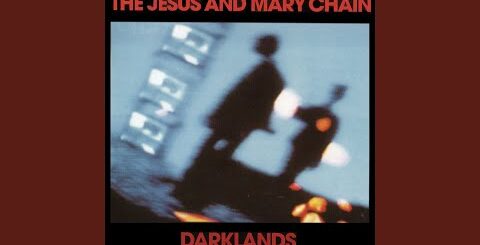
You Trip Me Up by Jesus and Mary Chain Lyrics Meaning – Unraveling the Enigma of Love’s Labyrinth
Lyrics
Sometimes
I walk sideways
To avoid you
When I’ve annoyed you
Love’s like
The mighty ocean
When it’s frozen
That is your heart
What would I be
If I could free
I couldn’t even walk
You trip me up
But you break me in two
And you throw me away
And you spit on my head
You trip me up
And you break me in two
And you throw me away
Knock me on my back
I’ll send a heart attack
I’d like to trip you up
I’d like to trip you up
I’d like to trip you up
I’d like to trip you up
I’d like to trip
I’d like to trip
I’d like to trip you up
I’d like to trip you up
In the pantheon of post-punk anthems, The Jesus and Mary Chain’s ‘You Trip Me Up’ stands as a monumental paradox, a sweetly melodic soundscape wrapped around a core of enigmatic lyricism. Released in 1985 as part of their ‘Psychocandy’ album, it remains a quintessential example of the band’s ability to juxtapose noise pop with profound lyricism.
Diving into the depths of this track, one can’t help but be ensnared by the enigmatic and seemingly contradictory lyrical content. Regarded as an emblem of the group’s trademark songwriting style, these lines are a heady mix of love, frustration, and defiance that mirror the complexity of human emotions.
A Labyrinth of Sidesteps: Navigating Emotional Evasion
The song opens with a candid confession; sometimes the protagonist walks sideways to avoid a loved one. The movement here isn’t just physical; it’s emblematic of the emotional detours we take when confronted with the tricky terrain of intimate relationships.
This side-stepping is not without cause. It’s a dance of diplomacy and self-preservation, activated when one has ‘annoyed’ their significant other. Here, love’s complexities are laid bare. What should be direct becomes diagonal, hinting at the intricate choreography love often requires.
Frozen Oceans: The Chilling Metaphor of a Stagnant Heart
The Jesus and Mary Chain has always been adept at using metaphor to paint evocative imagery, and ‘You Trip Me Up’ is no exception. Comparing love to a mighty ocean and a lover’s frozen heart, they evoke a sense of grandeur and impassable distance all at once.
It’s a clever twist on the idea of love’s expansiveness, suggesting that even the mightiest of emotions can become immobilized, not by lack of depth, but by coldness. The image of a frozen ocean is as powerful as it is desolate, implying a state of suspended animation where emotions are present but cannot flow.
Breaking Free from Emotional Shackles
Amidst the sheer frustration expressed throughout the song, there’s a poignant query about identity and existence sans these romantic entanglements. The lines ‘What would I be / If I could free’ reflect an existentialist ache, a soul yearning to understand its purpose beyond the confines of a tumultuous relationship.
In the context of the song, this tethering is confining to the point of incapacitation, where the idea of ‘walking’ without the other’s tripping feels like an unknown, distant reality. This admission exposes the duality of dependency and the longing for personal liberation.
The Inescapable Cycle: Ambivalence in Rhythmic Verse
Perhaps the song’s most haunting aspect is its cycle of vindictive fantasy that mirrors the reality of the emotional harm done. ‘I’d like to trip you up’ isn’t just a singular thought; it’s a repetitive desire, a fantasy of giving back the pain that’s been received. It’s the allure of retaliation, a method of coping by mirroring the hurtful actions of another.
And yet, there’s an undeniable rhythm to this cycle. The recurring lines in the lyrics drive home a beat of power dynamics in turmoil, a tumultuous dance between victimhood and the seductive pull of becoming the perpetrator.
Decoding the Cryptic: ‘You Trip Me Up’s’ Hidden Meaning
Beneath the shadowy noise pop and the dissonant swirl of guitars, the song’s essence lies in vulnerability smothered by an armor of apathy. ‘You trip me up’ becomes an incantation of hurt, a report from the frontline of the battle not against a lover, but against one’s own susceptibility to pain.
This might explain why the song’s famous lines resonate with an almost disquieting clarity, despite their ostensibly simple structure. They articulate a universal human condition, a potent and relatable brew of yearning and bitterness that’s as timeless as the music that carries it.