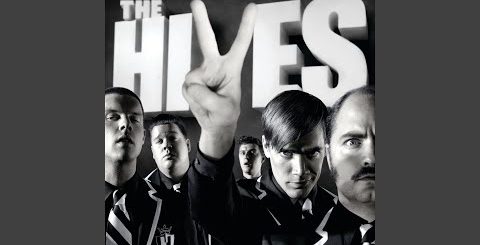
Here We Go Again by The Hives Lyrics Meaning – Unpacking the Anthem of Consumerist Discontent
Lyrics
A sign spelling out a word that none of us has heard.
Fourteen bucks today and I get a new life tomorrow
A new product rejects unhappy moments and sorrow.
I’ll take this one and that one and then some more.
I’ll use a piece of paper and the almighty pen, here we go again.
A voice inside of me says insufficiency how come it worked out for you?
I better try something new.
Not satisfied just yet, want to receive and get.
I believe that word my inner voices never left unheard.
Twenty bucks today and I get a new life tomorrow
A new product rejects unhappy moments and sorrow.
I’ll take this one and that one and then some more.
I’ll use a piece of paper and the almighty pen, here we go again.
Bucks today and I get a new life tomorrow
A new product rejects unhappy moments and sorrow.
I’ll take this one and that one and then some more.
I’ll use a piece of paper and the almighty pen, here we go again.
Here we go again!
Here we go again!
Here we goddamn go again!
Beneath the raucous, relentless beats and the venomously catchy hooks of The Hives’s ‘Here We Go Again’ lies a narrative of disillusionment, a scathing critique of the consumer culture that devours the modern psyche. This isn’t just another punk anthem with its noise cranked up to eleven—it’s a manifesto for the disaffected, a rallying cry for those who sense the emptiness of the never-ending chase for satisfaction through acquisition.
Weeding through the sardonic wit and rebellious spirit, the song dissects how society enchants us into believing that happiness can be purchased, that contentment is just a wallet’s reach away. With every relentless ‘Here we go again,’ The Hives encapsulate a feeling of futility that resonates deeply within the collective consciousness of their listeners, hinting at the cyclical trap of consumer satisfaction and subsequent disillusionment.
The Neon Sign of Existential Crisis
The neon light that looms over ‘every average teen’ illuminates the pervasive influence of marketing and media in shaping the ambitions and self-esteem of individuals. It is ‘a word that none of us has heard,’ suggesting an elusive promise, a panacea for all life’s ailments that always seems just out of reach. However transient or undefined, it stimulates the consumer’s quest for the next fix, the next burst of ephemeral fulfillment.
The Hives thrust listeners into the neon glow of desire, where every new product promises a revolution within one’s life, all while cleverly critiquing the ease at which society falls prey to these twinkling illusions. The song becomes a reflection of the crisis, not just among teens, but within anyone who’s felt the gnawing sense of insufficiency that fuels our collective shopping sprees.
The Almighty Pen and the Cycle of Desire
Employing ‘the almighty pen,’ The Hives symbolize the power of decision and autonomy that seems to take the forefront in the act of purchasing. We’re tricked into thinking we’re the authors of our own narratives, choosing our happiness in the aisles of superstores and in the endless scroll of online shopping. Yet this power is illusory, as the pen is no mightier than the next ‘fourteen bucks’ or ‘twenty bucks’ that feed into the cycle of consumption.
This ‘almighty pen’ is also a nod to the contracts, the financial agreements, and the mounting debts that tie us to our purchases. It becomes a tool of servitude rather than liberation, condemning us to repeat the cycle as the song spirals into its frenetic chorus, a piercing reminder that we are stuck ‘here we go again.’
The Unsung Chorus of Insatiable Voices
At the soul of ‘Here We Go Again’ is the internal struggle, the ‘voice inside of me’ that critiques our insufficiency. The Hives don’t just broadcast the advertised lies; they delve into the personal battle, the innate human desire to belong, to succeed, to be more. This voice is never quite silenced, eternally whispering that we must ‘try something new,’ inadvertently chaining us to a carousel of constant displeasure and reinvention.
It’s a voice that’s all too familiar, one that taps into the deeply rooted fear that we have yet to figure out the secret formula of ‘it worked out for you.’ With piercing precision, the band draws attention to the envy and comparison that fuel our sense of lack, encouraging the consumer to always crave more than what they have.
Memorable Lines That Echo Our Collective Frustration
‘I’ll take this one and that one and then some more’—the lyrics can’t get more direct in painting the voracious appetite of the consumer. It’s an indulgence that’s both individually felt and culturally encouraged. The simplicity and repetition of these lines create an infectious rhythm that mirrors the consumption patterns they criticize, becoming earworms that nag at our consciousness every time we reach for our wallets.
The urgency in these lines, paired with the anarchic energy of the track, creates a juxtaposition that’s impossible to shrug off. It’s a grim chant for a generation recognizing the trap of material excess, even as they partake in its rituals.
Unraveling the Hidden Meaning: A Reflection on Consumerism’s Hollow Promises
Far beyond the jagged guitar riffs and the relentless pace of the track, ‘Here We Go Again’ is a study of the void at the heart of commercialism. It’s a song that understands too well the overarching narrative sold to us in glossy packages and shiny new tech. The cost is not just in currency, but in the abandonment of genuine joy in pursuit of the high that comes with ‘a new life tomorrow.’
The Hives reveal the paradox: the more we seek to fill the void with things, the more we reinforce the very emptiness we aim to conquer. The song serves as a reminder that authentic happiness cannot be manufactured or marketed. Within its high-octane delivery lies a potent truth—a call to resist the siren songs that lead us to believe otherwise, even as we find ourselves chanting, ‘Here we goddamn go again!’