A Place in the Dirt by Marilyn Manson Lyrics Meaning – Unearthing the Symbolic Strata of Morbidity and Salvation
Lyrics
All God’s children to be sent
To our perfect place in the sun
And in the dirt
There’s a windshield in my heart
We are bugs so smeared and scarred
And could you stop the meat from thinking
Before I swallow all of it
Could you, please?
Put me in the motorcade
Put me in the death parade
Dress me up and take me
Dress me up and make me your dying God
Angels with needles
Poke through our eyes
And let the ugly light
World in
We were no longer blind
We were no longer blind
Put me in the motorcade
Put me in the death parade
Dress me up and take me
Dress me up and make me your dying God
Now we hold the “ugly head”
The Mary-whore is at the bed
They’ve cast the shadow of our perfect death
In the sun and in the dirt
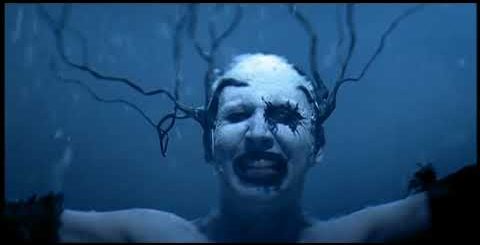
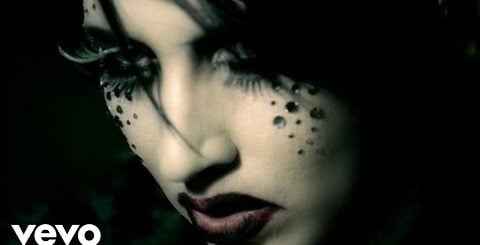
In the landscape of rock, few artists paint with such a disturbing yet captivating palette as Marilyn Manson. His track ‘A Place in the Dirt’ from the 2000 album ‘Holy Wood (In the Shadow of the Valley of Death)’ serves as a profound narrative buried beneath a tumult of industrial beats and eerie melodies. This exploration ventures deep into the crevices of Manson’s artistry, where the intertwined themes of death, deification, and human nature congeal.
A Place in the Dirt’ is not just a catalogue of visceral images; it is a canvas where Manson dissects the societal and existential motifs that plague the collective psyche. Like a modern-day Dante journeying through the contemporary inferno, he takes listeners by the hand, leading them through the complexities of the lyrics, guiding them towards a personal and universal understanding.
The March of the Doomed: A Death Parade Deconstructed
Manson’s invitation to be put in ‘the motorcade’ or ‘the death parade’ is an embrace of the inevitable procession towards mortality we all partake. The phrase ‘death parade’ conjures a macabre carnival where life’s grand finale is both celebrated and mourned. This oxymoronic spectacle encapsulates the human condition, where embracing our radiance inevitably means confronting our ashes.
The ensuing ‘dressing up’ and desire to be made ‘your dying God’ speaks to the veneration of figures that live and perish before the public eye. Here, Manson seems to comment on celebrity culture, the fetishization of demise, and the sacrificial nature inherent in fame. The sought-after deification is as much a curse as it is a blessing, highlighting the duality of existence.
Through the Windshield: Vision of the Tarnished Heart
‘There’s a windshield in my heart’ is a powerful metaphor suggesting a barrier that both protects and exposes the core of one’s being. The comparison to ‘bugs so smeared and scarred’ amplifies this vulnerability, bringing to mind the fragility of life squandered against an unyielding surface. It’s a stark reminder of our contact with experiences that mark us indelibly.
The plea to ‘stop the meat from thinking’ is as a poignant call for respite from the incessant churning of a mind overburdened by cognition and conscience. The ingestion of reality’s harshness is a process Manson characterizes with grim resignation; one’s psyche becomes the very dirt we’re bound to claim a place within.
In the Light of the Ugly: The Awakening of Perception
The lyrics ‘Angels with needles poke through our eyes’ serve as a brutal awakening to the world around us. The ‘ugly light’ that ensues is the cruel truth of existence laid bare, robbing us of the solace of naivety. Manson presents enlightenment as a painful process, wherein the world’s inherent ugliness is both a burden and a catalyst to cast away the veil of ignorance.
Such insights catapult the listener into a realm where being ‘no longer blind’ isn’t about clarity or joy, but about the resigned acceptance of the world’s imperfections. It’s a critical message for those who consider awareness a merely hopeful transition, rather than also a potential gateway to disillusionment.
Divinity and Profanity: The Human Condition Caught Between
Manson’s portrayal of ‘the Mary-whore’ invokes a dichotomy between reverence and revulsion, sanctity and scandal. This amalgamation reflects society’s ambivalence, constantly oscillating between the aspiration to purity and the embrace of our most base instincts.
The convergence of religious iconography and sexual transgression highlights the complexity of human morality. The ‘perfect death’ cast ‘in the sun and in the dirt’ offers a juxtaposition of light and filth, capturing the essence of Manson’s view on life: a constant struggle between the elevated and the earthbound.
The Most Haunting Refrains: Revelations in the Reverberations
Amidst the dirge, certain lines resound with a chilling echo. The repetition of ‘Put me in the motorcade’ is as much a chant of longing as it is a surrender to fate. As the line reverberates, it etches in the mind the image of a humanity processing, perhaps even parading, towards an unavoidable end, all while yearning for some form of posthumous elevation or remembrance.
In similar fashion, ‘dress me up and make me your dying God’ encapsulates our dual craving for adoration and fears of oblivion, curling around the psyche with the tenacity of an ancient hymn. They exude a lugubrious beauty that allows listeners to flit between a confrontation with mortality and the quest for a legacy, eternally enshrined in the aura of celebrity.