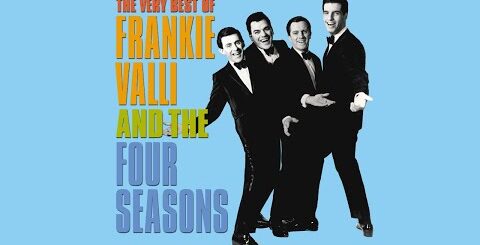
Big Girls Don’t Cry by Frankie Valli & The Four Seasons Lyrics Meaning – Unraveling a 60s Pop Anthem
Lyrics
Big girls don’t cry
Big girls don’t cry (they don’t cry)
Big girls don’t cry (who said they don’t cry?)
My girl said goodbye (my, oh, my)
My girl didn’t cry (I wonder why)
(Silly boy) told my girl we had to break up
(Silly boy) hoped that she would call my bluff
(Silly boy) then she said to my surprise
“Big girls don’t cry”
Big girls don’t cry (they don’t cry)
Big girls don’t cry (who said they don’t cry?)
(Maybe) I was cruel (I was cruel)
Baby I’m a fool (I’m such a fool)
(Silly girl) “Shame on you” your mama said
(Silly girl) “Shame on you, you’re cryin’ in bed”
(Silly girl) “Shame on you, you told me lies”
Big girls do cry
Big girls don’t cry (they don’t cry)
Big girls don’t cry (that’s just an alibi)
Big girls don’t cry
Big girls don’t cry
Big girls don’t cry
Big girls don’t cry
Big girls don’t cry
In the pantheon of 1960s rock ‘n’ roll, there’s a special place for the doo-wop harmonies and charismatic crooning of Frankie Valli & The Four Seasons. Among their myriad of hits, ‘Big Girls Don’t Cry’ stands out as a cultural touchstone emblematic of its era while capturing timeless themes of love, emotional fortitude, and the intricate dance between vulnerability and strength.
Yet, behind its seemingly straightforward title and catchy refrain lies a rich tapestry of narrative and nuance. Scaling the heights of the Billboard charts in the early ’60s, this song interweaves the heartfelt with the whimsical, offering a melodic exploration into the nature of heartache and the stoicism expected in the face of it.
The Era of Teen Angst and a Falsetto that Pierced Hearts
To truly grasp the essence of ‘Big Girls Don’t Cry,’ one must consider the epoch it emerged from—a time when teenagers were navigating the choppy waters of post-war identity, and music became their guiding light. The song struck a chord with its target audience, at once resonating with the drama of youthful relationships and the expectations of handling them with a stiff upper lip.
Valli’s piercing falsetto served as the perfect vessel for this saga of teenage melodrama. Whether emulating the wails of a forlorn lover or the patronizing tone of societal norms, Valli and his group encapsulated both the fortitude and fragility that come with young love.
The Juxtaposition of ‘Big Girls’ and the Teardrops of Reality
‘Big Girls Don’t Cry’ thrives on contrast, with its upbeat tempo belying the sorrow of the lyrics. It captures an age-old maxim imparted on the young—particularly on women—that strength is synonymous with emotional suppression. Yet, as the song unfolds, it reveals that tears are an unavoidable truth, regardless of the front put up to the outside world.
Through this juxtaposition, The Four Seasons tap into a deeper narrative; one where societal expectations often conflict with the natural human response to pain. Valli’s delivery is both a nod to the brave face we show and an acknowledgment of the tears we shed in solitude.
A Surprising Confession: The Hidden Vulnerability
Amid the seemingly dismissive chorus, the verses of ‘Big Girls Don’t Cry’ unveil a story of a boy who tries to end a relationship by bluffing, only to be met with unwavering resolve from his counterpart. This unexpected role reversal does more than just serve the plot—it challenges the listener to consider the complexities of strength and vulnerability.
The true brilliance lies in the confession, where the protagonist’s bluff is called, exposing his own frailty and, in a twist, his need to abide by the same stoic standards he sets. It’s a cyclical tug of war between heart and expectation, individual and society.
Dissecting the Sorrow in Signature Lines
By contrasting phrases like ‘My girl said goodbye’ and ‘My girl didn’t cry,’ the song dives into the personal turmoil beneath the surface. In openly questioning why tears are absent, the song cleverly subverts the stoic narrative and suggests that, perhaps, real strength comes from allowing oneself to express pain.
The memorable lines, ‘Shame on you, you’re cryin’ in bed’ and ‘Shame on you, you told me lies,’ are not just indictments but a mirror to the harsh self-criticism that often accompanies heartbreak. These lines reflect the inner conflict and the societal chastisement that compounds the emotional wounds.
Echoing Beyond an Era: Legacy and Relatability
Despite being rooted in the doo-wop tradition, the reasons ‘Big Girls Don’t Cry’ endures are its universal themes and raw emotional honesty. It’s these aspects of the song that continue to make it relatable, serving as an anthem for anyone who has ever felt the need to remain composed amidst personal tumult.
Over the decades, ‘Big Girls Don’t Cry’ has transcended its initial context to become a poignant commentary on the human experience. As the refrain plays on, it remains a reminder of the dance we all do with our emotions and the veneer of strength we construct—often as much for ourselves as for those watching.