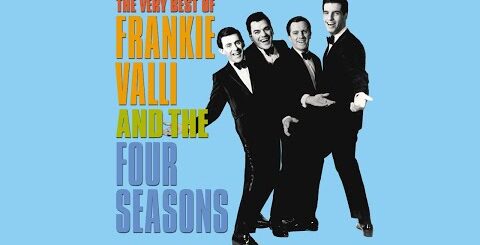
Sherry by Frankie Valli & The Four Seasons Lyrics Meaning – Unraveling the Nostalgic Romance of a ’60s Classic
- Music Video
- Lyrics
-
Song Meaning
- The Enchanting Clarion Call: Sherry’s Irresistible Invitation
- Twist the Night Away: Decoding the Dance Craze Phenomenon
- A Subtext of Rebellion: Sherry’s Hidden Meaning Unveiled
- Memorable Lines that Echoed through Time: ‘Come out with your red dress on’
- The Eternal Vibrato: Frankie Valli’s Voice as the Soundtrack to a Generation
Lyrics
Sherry, Sherry baby
Sherry baby (Sherry baby)
Sherry can you come out tonight
(Come,come, come out tonight)
Sherry baby (Sherry baby)
Sherry can you come out tonight
(Why don’t you come out) To my twist party
(Come out) Where the bright moon shines
(Come out) We’ll dance the night away
I’m gonna make you mine
Sherry baby (Sherry baby)
Sherry can you come out tonight
(Come, come, come out tonight)
You better ask your Mama (Sherry baby)
Tell her everything is alright
(Why don’t you come out) With your red dress on
(Come out) Mmm you look so fine
(Comeout) Move it nice and easy
Girl, you make me lose my mind
Sherry, sherry baby
In the unequivocal swell of the early ’60s music scene, a particular tune by Frankie Valli & The Four Seasons managed to capture the zeitgeist of a generation. ‘Sherry,’ a song as effervescent as the carbonated namesake, bubbled its way into the hearts of millions, becoming emblematic of the era’s innocence and its rousing dance parties.
Behind its catchy melody and vibrant harmonies lies a tapestry of youthful longing, a call to freedom, and a window into the social fabric of the time. This track isn’t merely a projection of teenage desire but rather a finely spun thread weaved into the broader cultural narrative that underpinned the 1960s.
The Enchanting Clarion Call: Sherry’s Irresistible Invitation
The repetitive chanting of ‘Sherry’ serves as a siren’s call, a beckoning that is as much a plea as it is an invocation of joy. Valli’s impassioned pleas bring to life the earnestness of a love-struck youth, while the staccato delivery of ‘come out tonight’ acts as both literal and metaphorical. It’s a snapshot of the era’s dance culture and the thrill of a night that promised endless possibilities.
Beneath the surface, the song also reflects a societal shift. The repeated call for Sherry to ‘come out’ subtly mirrors the burgeoning sense of individualism and female autonomy that would come to define the decade. In requesting her presence, the song’s protagonist is engaging in a dialogue with the evolving norms surrounding courtship and gender roles.
Twist the Night Away: Decoding the Dance Craze Phenomenon
Mention of the ‘twist party’ directly plugs into the pulse of the ’60s dance fad craze, indicating an era-specific social setting that was more than just a place for dance – it was a petri dish for adolescent interaction and the joys of newly found freedoms. Frankie Valli & The Four Seasons encapsulate this cultural moment, using the popularity of the ‘twist’ to create a sense of unity and collective experience among their listeners.
The allure of ‘dancing the night away’ goes beyond literal movements on the dance floor. It’s a metaphor for living life in the moment, for shaking off the constraints of the day and celebrating the now with wild abandon. ‘Sherry’ encapsulates that joyful rebellion, that sense of seizing youth before it fades into the dawn.
A Subtext of Rebellion: Sherry’s Hidden Meaning Unveiled
The insistent suggestion for Sherry to ask her mother if everything is alright hints at the generational tensions prevalent in the ’60s. It’s a window into the subtle negotiations between the expectations of the older generation and the burgeoning independence of the younger. The song can be interpreted as a message encoded within a musical Trojan horse, intended to reach the ears of a generation seeking its own voice amidst a symphony of tradition.
It’s the image of Sherry in her red dress that paints her not merely as an object of affection, but as an icon of autonomy and sexuality. She is encouraged to present herself boldly, to ‘move it nice and easy’, embodying a dynamism and control over her presence and appeal. The song discreetly applauds the breaking of old molds and celebrates a newfound agency within the social dance of the era.
Memorable Lines that Echoed through Time: ‘Come out with your red dress on’
There is potent imagery at work in the command for Sherry to ‘come out with your red dress on’ – it’s a declaration ripe with the symbolism of passion, attraction, and vitality. That red dress becomes a character in itself, emblematic of the transition from the constrictive fashions of the ’50s to the bold statements of the ’60s, reflecting a shift in the cultural and fashion landscape that would inform the ethos of the decade.
The color red, often associated with confidence and allure, here serves as a chromatic anthem for the era’s awakening to the power of personal expression. The line sticks in the mind like a visual earworm, an invocation of the transformative power of not just the right outfit, but the spirit it conjures within the wearer.
The Eternal Vibrato: Frankie Valli’s Voice as the Soundtrack to a Generation
Frankie Valli’s piercing falsetto became more than a signature sound; it was the vocal banner under which a legion of teens rallied. It carries within its unique timbre a sense of the urgent, the boundless, and the divine. Valli’s voice catapults the lyrics of ‘Sherry’ from mere words to a heartfelt anthem resonating with the emotional high stakes of youthful yearning.
Few songs manage to become cultural touchstones, but ‘Sherry’ accomplishes this through the sheer force of Valli’s vocal performance. It’s an instrument that communicated not just to the listener, but for the listener—a golden thread in the tapestry of American musical heritage that continues to resonate with the vibrancy of the time it so perfectly captured.