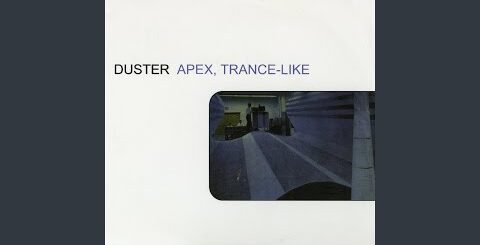
Earth Moon Transit by Duster Lyrics Meaning – An Introspective Voyage Through Isolation and Reflection
Lyrics
And cigarettes are fine
I wonder if you think
About me like I do
Of you at night
And who will write the hits
With Bowie back on earth?
It’s in the way
It’s in the way
Duster, the band known for its reclusive nature and shoegaze soundscape, returns to the ethereal cosmos with their latest track ‘Earth Moon Transit.’ The song, dripping in melancholia and wistful chords, tugs at the existential strings of the heart—a somber meditation on distance, both physical and emotional.
Amidst the track’s minimalist instrumentation and reverberating vocals lies a narrative, rich and complex. It’s a piece that demands a delve beneath its surface, relying upon the listener to uncover the subtext within the subtle poetry of its lyrics. This deconstruction seeks to unveil the layers hidden in the cosmic murk of Duster’s hauntingly beautiful ode.
The Dark Embrace of Solitude
At the forefront of Duster’s ‘Earth Moon Transit’ is the sensation of darkness enveloping the narrator. It’s a darkness that’s more than just the absence of light—it’s the encapsulation of isolation that comes with distance. The ‘dark around me now’ can be interpreted as a metaphor for the void that fills the space where connection once was.
This pervasive darkness is a shared human experience, universal and timeless. It conjures the image of a solitary figure, dwarfed by the expansive night, reaching out for a semblance of warmth in the cold traverse of life’s journey. In this context, cigarettes morph into temporary flickers of solace, ephemeral companions offering momentary reprieve from the encompassing void.
Yearning for a Muse’s Embrace
The rhetorical musing ‘I wonder if you think / About me like I do’ lays bare the heart’s core, steeped in the vulnerability of unrequited thoughts. It’s an oneiric tether to another soul—a plea for reciprocity that may or may not be echoed back across the vast emptiness separating lives and experiences.
This plea is not just about romantic longing; it is equally about creative inspiration. The muse, ever so distant, becomes the focal point of nightly contemplation, the fuel for the artistic fire that burns within the songwriter. The unanswerable question transforms into a poignant evocation of desire—the hunger for affirmation, for shared consciousness.
David Bowie: The Celestial Navigator
Mentioning David Bowie, an icon of transformation and a voyager of musical realms, ‘Earth Moon Transit’ invokes a sense of guidance lost. ‘Who will write the hits / With Bowie back on earth?’ is not merely about the physical absence of a legend, but also an ode to the end of an era—an epoch where chart-topping tracks held more depth than the industry might now allow.
Bowie’s return to earth might symbolize the reincarnation of creativity and genius in a new form, a beacon for the disoriented artists roaming the creative wastes. A haunting lament arises, querying who, now, will sail the turbulent seas of innovation and breathe fresh vitality into the vacuum of mainstream melodies.
In the Echoes of Obscure Verses
Duster has always excelled at crafting lines that resonate on a multiplicity of frequencies, their lyrics reverberating with shades of interpretation. ‘It’s in the way’ becomes a chant—a mantra woven into the song’s fabric, repeated as if to affirm its own meaning through sheer force of recitation.
What is ‘the way’? It’s a question that invites a pause, a contemplation. Perhaps it’s the way life’s intangible essence ebbs and flows, the manner in which the universe’s grand design unfolds, or the method by which we navigate our innermost thoughts and fears. These are lines to get lost within, to ruminate on beneath a star-drenched sky, providing both refuge and a mirror to our inquiry.
Unveiling the Astral Metaphor
Peeling back the celestial layers, ‘Earth Moon Transit’ reveals itself as more than a commentary on distance—it’s a metaphor for the cycles that govern our very existence. The earth and moon, in their eternal dance, depict the rhythms of closeness and separation, of intimacy and alienation.
In this delicate balance, Duster captures the human experience with an astronomer’s precision: the transit is not just a physical phenomenon but a representation of the soul’s journey across the vastness of its emotional landscapes, sometimes basked in light, oftentimes shrouded in shadow.