Hope by Björk Lyrics Meaning – Navigating the Winds of Moral Dilemma
Lyrics
Here’s my version of it, eternal whirlwind
Here’s my version of it, eternal whirlwind
What’s the lesser of two evils?
If a suicide bomber
Made to look pregnant
Manages to kill her target, or not
What’s the lesser of two evils?
What’s the lesser of two evils
If she kills them
Or dies in vain?
Nature has fixed no limits on our hopes
Oh, what’s the lesser of, of two evils?
What’s the lesser of two evils
If the bomb was fake
Or if it was real?
Here’s my version of it, eternal whirlwind
I have fostered since childhood
Well, I don’t care
Love is all
I dare to drown
To be proven wrong
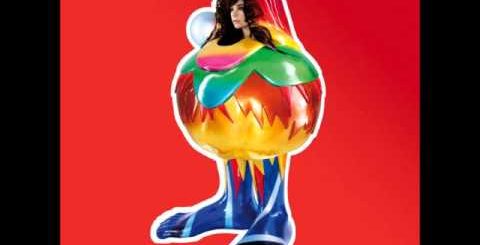
Björk, the Icelandic iconoclast, has never shied away from stirring the pot with her ethereal soundscapes and thought-provoking lyricism. Her track ‘Hope’ off her critically acclaimed 2007 album ‘Volta’ prods deeply into the human condition. At first glance, it’s a song steeped in controversy, tackling the tale of a suicide bomber — a storyline drawn from a news story the artist encountered. But as with many of Björk’s works, peeling back layers reveals a universal struggle with moral ambiguity and a quest for understanding.
With ‘Hope’, Björk doesn’t just provide social commentary; she dives into the heart of hope’s enduring, often tumultuous relationship with humanity. The song, a whirlwind of minimalistic beats and reflective moments, serves as a canvas for discussing themes as varied as the limits of hope, the nature of evil, and the resilience of love. What emerges from this auditory abyss is a complex interplay of questions without definitive answers, which may be the song’s ultimate value.
The Clash of Compassion and Catastrophe
Through ‘Hope’, Björk illustrates the complexity of human actions under extreme circumstances. The lyrics present a pregnant suicide bomber — an immensely powerful image that forces the listener to reconcile feelings of nurturing and creation with acts of destruction. By asking what the ‘lesser of two evils’ is, Björk isn’t merely contemplating the ethics of terrorism. Instead, she invokes a more profound dilemma: how does one measure the morality of desperation and pain?
The bomber’s choice — whether to kill others or die without effectuating her plan — isn’t offered as a judgment but as a stark portrayal of human struggle. In a world where righteousness and sin intertwine, Björk’s tentative vocal delivery underscores the uncertainty that riddles hope itself. Perhaps suggesting that hope’s true challenge isn’t in its fulfillment, but in its potential to inspire both good and evil.
Bridging the Personal and the Political
Björk takes a daring step by personalizing the narrative. ‘Here’s my version of it, eternal whirlwind…’ she begins, suggesting that interpretations of events are subjective, rooted in our personal histories. This line brings listeners into her sphere, showing empathy for the bomber. It suggests that ‘Hope’ is not just a global political statement, but also a deeply felt reflection on the choices everyone must navigate.
Through this personalization, Björk provides a mirror for self-reflection, urging listeners to delve into their own ‘versions’ of the eternal whirlwind — the internal moral compass that guides decisions. It is in this personal space that hope takes form, nurtured since childhood and carrying every person through the turbulence of existence.
Pondering the Fragility of Hope
Björk’s references to nature’s indifference to the limitations of hope confront a paradox. Hope is integral to progress and survival, yet it remains vulnerable to the whims of circumstance. When she sings, ‘Nature has fixed no limits on our hopes,’ the listener is at once empowered and cautioned: hope can propel to great heights but can also drive towards great destruction.
The fragility of hope is a recurring theme in literature and philosophy, with many pondering its necessity versus its unreliability. Björk adds a musical dimension to this discourse, setting it against a backdrop of rhythmic beats that mimic the persistent and sometimes unsettling pulse of hope in our lives.
The Song’s Hidden Commentary on False Hope
A pivotal question arises when Björk presents a new predicament: ‘What’s the lesser of two evils if the bomb was fake or if it was real?’. Here, she introduces the concept of false hope — the bomber’s weapon may be a dummy, yet the intent and its psychological ramifications are genuine. The scenario highlights the ambiguity of hope’s validity, often regarded as a buoyant, positive force but has a dark double, capable of folly and pain.
This conundrum symbolizes life’s gray areas where hope and despair coexist, weaving a dual narrative where certainty is a luxury, and hope can be a tool for manipulation or a symbol for desire and change. It’s a haunting reminder of the depth of deception that hope can encompass, illustrating that its portrayal is as multifaceted as humanity itself.
Reciting the Most Memorable Lines: ‘Love is all’
In the depths of ‘Hope’s’ complexity, the simplicity of a line stands out. When Björk declares, ‘Love is all, I dare to drown, to be proven wrong,’ she reverts to a fundamental human principle — love. It’s a lifeline in the tumultuous sea of moral quandaries. By saying she dares to drown for it, she acknowledges the risk involved in embracing love as the ultimate act of faith in humanity.
These lyrics resonate with a raw vulnerability that is quintessentially Björk. Love, the elixir of hope, is both the antidote to despair and a perilous leap into the unknown. Put simply, hope endures because of love, and despite the whirlwinds we weather, it is love that we invariably return to, seeking proof that it can, indeed, conquer all.