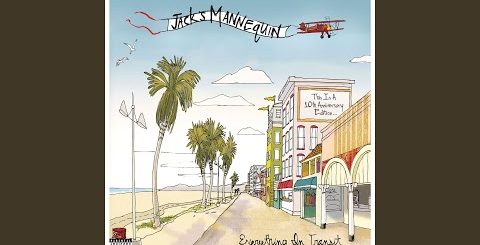
Kill the Messenger by Jack’s Mannequin Lyrics Meaning – Unraveling the Emotional Odyssey Through Song
Lyrics
I had that dream again
Where I was lost for good in outer space
Tell my doctor how to shake
Awake a nightmare that is only worse
when I am sleeping
[Chorus]
Kill the messenger
I swear it’s not me
It’s just what I use to know
And get to church cause you’re a good girl
And I never told you that
And all I need from you
Could be the thing that leaves us both up here forever
I’m gunna send a little rain, away
I’m gunna send a little rain
It’s not so easy caving in
I walk by your apartment twice today
While you were gone at work
And all the colors got so dim
It’s not as cold out here,
But come quick, I am losing feeling
[Chorus]
I’m gunna send a little rain,
To pour down on you
Rain, to make the flowers bloom (you know)
Rain, to leave you all alone,
But keep eye lashes fallin’
Eye lashes washed away
[Chorus]
I’m gunna send a little rain
I’m gunna send a little rain your way
I’m gunna send a little rain
Send a little rain
Jack’s Mannequin delves deep into the labyrinth of the human condition with their poignant track ‘Kill the Messenger’. The song, riddled with metaphor and raw emotion, captures a powerful message that extends beyond its alternative rock melodies and into the heart of introspection and confrontation.
Through the lyrics, penned by frontman Andrew McMahon, the artist weaves a tale of personal trials and the universal struggle with inner demons. The narrative of ‘Kill the Messenger’ serves as a catalyst for dialogue about the darkness we face in solitude and the yearning for release from the pain that binds us.
The Cry for Release in the Melancholic Melody
The song opens with a visceral depiction of internal struggle, ‘Oh my God this hurts like hell,’ immediately setting the tone of conflict and the search for respite. The haunting dream that follows speaks to the human experience of feeling lost, trapped in situations, or within our own minds, desperately seeking a way back to stability.
McMahon’s cry to ‘Kill the messenger’, repeats as both a plea and a command, signaling the desire to silence the bearer of bad news – often our own critical inner voice. The metaphorical ‘messenger’ becomes a target, a personification of the negative thoughts that wage war inside us.
A Dissection of Personal Revelation
In an enigmatic call to ‘get to church cause you’re a good girl,’ McMahon alludes to the dichotomy of external perceptions versus internal turmoil. The societal expectations, the facade of piety, clash with the unspoken truths we harbor, igniting a silent struggle between who we appear to be and the authenticity of our hidden selves.
This juxtaposition invites listeners into a private world where reassurances are rare, and the admission of needing something from another—a plea for help, perhaps—can seem as vulnerable as it is necessary.
Navigating the Spectrum of Emotional Isolation
The visuals of dimmed colors and railing against the cold underscore a profound sense of isolation. The absence of warmth, both physically and emotionally, illustrates the void that accompanies silence and the fear of reaching out for human connection, despite an innate need for it.
Such evocative imagery not only paints a picture of solitude but walks the listener through the phase of despair where insensitivity beckons, warning of the impending numbness that threatens to envelop the heart.
The Hidden Meaning Behind the Deluge
The refrain ‘I’m gunna send a little rain’ emerges as a paradox—a destructive force yet also one that nurtures and promotes growth. In the song, ‘rain’ epitomizes the trials we face, the emotional downpours that can both isolate and cleanse us.
In this, McMahon encapsulates the dual nature of life’s challenges; they can lead to personal solitude but also present an opportunity for renewal and growth. The rain signifies not just the hardships but also the potential for new beginnings born from endurance.
Memorable Lines That Echo in the Soul
Among the lyrics, ‘Rain, to leave you all alone, But keep eyelashes falling, Eyelashes washed away’ resonate as a profound reflection on the fragility of the human spirit. While the rain can wash away the tears, it also leaves an individual desolate, yet strangely purified.
It’s in these memorable lines that McMahon touches a nerve, opening a channel of empathy that allows us to feel the sorrow but to also comprehend the subtlety of finding solace in the remnants of a storm.