La La Lie by Jack’s Mannequin Lyrics Meaning – Unpacking the Anthems of Resilience in Modern Rock
Lyrics
You give up your job at the bank
Proving money’s not fun when you’re gone
So this is the first verse
It’s not very long
But I’m ready to move on
Guess what, I’m done
Writing your book
The ending got twisted around
But for all of the hell that it took
The electrical wires
They hum in the walls
In the room that I rent now without you
I’ve got friends who (la la lie)
Will help me pull through (la la lie la la la lie)
The spaceman that can’t get high
I’m coming back to my girl by July
Yeah yeah yeah
So guess what, I’m done
Drawing you pictures
I’m dulling the day with a drink
In a parking garage by the theatre
We met for a movie
Every scene was a sign
We made out through their meaning
Well I’ve got friends who (la la lie)
Will help me pull through (la la lie la la la lie)
The spaceman that can’t get high
I’m coming back to my girl by July
Yeah yeah yeah
Guess what, I’m done
Writing you songs
I’m far too unstable to settle
I doubt that the doctors are wrong
So I’ll wait by a palm tree, a palm tree, a palm tree
Well, I’ve got friends who (la la lie)
To help me pull through (la la lie la la la lie)
A spaceman that can’t get high
I’m coming back to my girl by July
Well I’ve got friends who (la la lie)
Will help me pull through (la la lie la la la lie)
This song for a long goodbye
I’m coming back
I’m coming back to my girl (la la lie)
Back to my girl (la la lie la la la lie)
This song for a long goodbye
I’m coming back to my girl by July
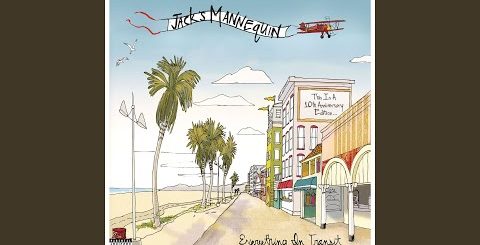
The piano-driven power ballads of Jack’s Mannequin always had a way of intertwining deeply personal narratives with infectious melodies. ‘La La Lie’, a standout track from their acclaimed album ‘Everything in Transit’, exemplifies this blend with poetic precision. The song is an emotional odyssey, mapping the journey of moving on from a consuming relationship against a backdrop of introspection and self-discovery.
Woven into the lyricism of ‘La La Lie’ is an intricate tapestry of motifs that speak to the complexities of healing, the ambiguity of closure, and the resilient chord struck by collective camaraderie. We dive into the heart of this melody, unraveling the nuanced tales stitched within its lines and exposing the raw edges of its rhythms.
The Struggle of Letting Go and Moving Forward
At its core, ‘La La Lie’ is an anthem of release, a declaration of the artist’s readiness to relinquish the memories that stall progression. The opening lines establish a tone of finality, the breaking away from a partner and a past that once felt definitive. The phrase ‘Guess what, I’m done writing you songs’ serves as a powerful prelude to the narrative: the end of composing music as a means to mollify or memorialize a relationship that is no longer.
The song’s character confronts the practicalities of life post-separation, where the minutiae of existence—like renting a room alone—becomes stained with the residue of absence. Yet within this personal struggle to find footing in unfamiliar territory, there arises a sense of determination and resilience that propels the song’s protagonist towards the promise of self-recovery.
A Deeper Look into ‘La La Lie’s’ Hidden Meaning
‘La La Lie’ delves beyond the superficialities of a breakup song, embedding a latent commentary on the societal constructs of success and fulfillment. Through lines such as ‘You give up your job at the bank/ Proving money’s not fun when you’re gone’, the song subtly critiques the notion of financial pursuits overshadowing personal connections and happiness.
This undercurrent of disillusionment with conventional life paths suggests a rebellion against the expectations that dictate career over personal satisfaction. The track becomes a vehicle for questioning and rejecting the societal pressures that often hinder genuine contentment, revealing the hidden struggle between material achievement and emotional well-being.
Memorable Lines That Echo in Eternity
‘La La Lie’ is replete with lyrical gems that resonate with listeners long after the final chord has been struck. One of the most poignant lines is ‘The spaceman that can’t get high’, which serves as a metaphor for the paradox of feeling trapped despite being surrounded by infinite possibilities. It’s a nimble juxtaposition that illustrates the song’s theme of seeking liberation and reconnection.
Another indelible refrain, ‘I’m coming back to my girl by July’, finds the singer setting a target for personal return, creating a narrative charge with an ambiguous deadline that resonates with anyone attempting to reclaim control over their destiny after a period of chaos or confusion.
The Power of Friendship and Collective Healing
Central to ‘La La Lie’ is the recognition of communal support as a lifeline during times of personal turmoil. The choral repetition of ‘Well, I’ve got friends who (la la lie)’ affirms this interconnectedness that cushions the fall of the individual. It highlights the salvation found in friendships that offer strength and solace, allowing for a shared journey through hardship.
This sense of unity is further amplified by the communal ‘la la lie’ chant, a seemingly nonsensical yet deeply evocative lyric that binds the community together in a sort of anthem, transforming individual struggle into a collective experience of overcoming and perseverance.
From Breakup Ballad to an Uplifting Tune of Redemption
While many songs wallow in the sorrow of love lost, ‘La La Lie’ takes an empowering turn. It eschews the darker narrative arc for a storytelling that infuses hope and the promise of rejuvenation with each verse and chorus. The repeated commitment to ‘coming back’ speaks volumes of the optimism permeating the track, indicating a return not just to a person or place, but to the very essence of oneself.
‘La La Lie’ ultimately reveals itself as a blueprint for rebuilding, a song that encourages the listener to not merely exist within their grief, but to actively construct a pathway out of it. The dynamic crescendos and the buoyant piano carry the weight of this message, driving home a theme that both challenges and cherishes the human capacity for starting anew.