Mister Superstar by Marilyn Manson Lyrics Meaning – Dissecting the Dark Satire of Fame
Lyrics
Hey, Mr. Superstar, I’m your number one fan”
“Hey, Mr. Porno Star, I-I-I-I want you
Hey, Mr. Sickly Star, I wanna get sick from you
Hey, Mr. Fallen Star, don’t you know I worship you?
Hey, hey, Mr. Big Rock Star, I wanna grow up just like you”
I know that I can turn you on
I wish I could just turn you off
I never wanted this
“Hey, Mr. Super Hate, I just wanna love you
Hey, hey, hey, Mr. Super Fuck, I wanna go down on you
Hey, Mr. Super God, will you answer my prayers?
Hey, hey, hey, Mr. Superman, I wanna be your little girl”
I know that I can turn you on
I wish I could just turn you off
I never wanted this
I know that I can turn you
I wish I could just turn you
I never wanted any of this
I know that I can turn you
I wish I could just turn you
I never, never, never, never, never
Never, never wanted this
You could kill yourself on TV (I wish I was dead)
I wish you’d kill yourself on TV (I wish I was dead)
Will you kill yourself on TV? (I wish I was dead)
We’d like to see you dead (I wish I was dead)
Hey, Mr. Superstar, I’ll kill myself for you
Hey, Mr. Superstar, I’ll kill you, if I can’t have you
Superstar, super fuck, baby
Superstar, super fuck, baby
Superstar, super fuck, baby
Superstar, super fuck, baby
Superstar, super fuck, baby
Superstar, super fuck, baby
Superstar, super fuck, baby
Superstar
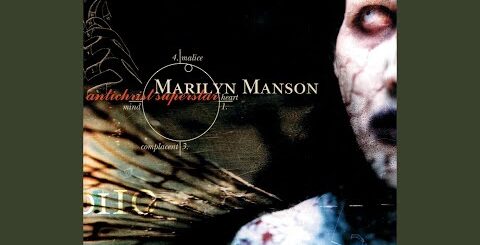
Marilyn Manson has never been an artist to shy away from the provocative, using his platform and music to peel back the layers of society’s façade, often revealing the sordid underbelly of fame and human desire. ‘Mister Superstar,’ a track from the 1996 album ‘Antichrist Superstar,’ carries this same torch, burning a hole through the canvas of celebrity worship and offering a stark commentary on the nature of idolization and self-destruction.
With its jarring lyrics and abrasive soundscape, ‘Mister Superstar’ stands as a grotesque mirror, forcing listeners to confront the ugliness of their own adulation and the lengths they would go to either emulate or possess the stars they revere. Manson employs a mixture of sarcasm, earnestness, and a sense of foreboding that collectively dive into the complex relationships people build with their idols.
The Unveiling of Fanatic Obsession
At its core, ‘Mister Superstar’ is a song that revolves around the darker corners of fandom. Each verse reads like a twisted love letter, a volatile mix of love and hate that teeters on the razor’s edge of adoration and repulsion. The protagonist’s declaration of doing anything for their idol, claiming to be the ‘number one fan,’ echoes the dangerous obsession seen in Stephen King’s ‘Misery,’ where devotion bleeds into madness.
Manson’s portrayal of the fan reflects a grim reality where the very people who elevate stars to their godlike pedestals are also the ones capable of tearing them down. These complex dynamics serve as a rumination on the power that fans hold and the potentially perilous consequences when that power becomes fanaticism.
A Portrait of the Star as a Damned Deity
Manson doesn’t spare the objects of such obsession either—the eponymous ‘Mr. Superstar’ is depicted in a multitude of guises: a porno star, sickly star, fallen star, rock star, superhate, superfuck, supergod, and superman. In these creative epithets, Manson seems to sketch out the various stages and faces of a celebrity’s journey, worshipping their image even as it corrodes and distorts.
The procession of titles bestowed upon the superstar depict the conflicting views society holds towards fame. On one hand, there’s the glorified, near-omnipotent figure on stage; on the other, there’s a dehumanized object of sexual fantasy, ridicule, and ultimately, tragedy and disregard.
Transcending the Decaying Dream
The haunting refrain ‘I wish I could just turn you off,’ serves as a chilling admission within the song. It represents a terrifying moment of clarity amid the fog of obsession—recognizing the toxicity but being too ensnared to simply walk away from it. Such lines reveal that fame, both for the fan and the star, is a double-edged sword.
This internal conflict sings to the disillusionment one may feel when idolized figures fail to live up to the grandeur bestowed upon them. It’s about the damaged aspirations of wanting to ‘grow up just like you,’ and the crippling realization that the dream is tainted, if not inherently rotten.
The Memorable Lines: ‘I’ll Kill Myself for You’
Perhaps one of the most striking and unsettling lines is ‘Hey mr. superstar, I’ll kill myself for you.’ This desolate vow becomes the zenith of the song’s exploration of idolatry, where the fan’s identity and worth are so intertwined with their devotion that self-annihilation seems like a reasonable tribute.
Such lyrics provoke a visceral reaction, confronting listeners with the frightening extremities of fandom. They illustrate the toxic dependency that can develop between a star and their admirers, whereby the latter derive their sense of meaning purely from their connection to the former.
Unmasking the Hidden Meaning: The Sinister Cycle of Celebrity
Beyond the graphic imagery, ‘Mister Superstar’ hides a more insidious commentary on fame’s cyclical nature. Manson suggests a perverse symmetry: just as fans can ‘kill themselves’ to prove their allegiance, they also possess the capacity to ‘kill you if I can’t have you,’ illustrating the fatal potential of obsession gone sour.
This narrative reflects the volatile cycle of idolization, where today’s icons can quickly become tomorrow’s scapegoats. Manson’s poignant and visceral songwriting exposes the corrosive effects of celebrity culture, both on those who consume it and those who are consumed by it.