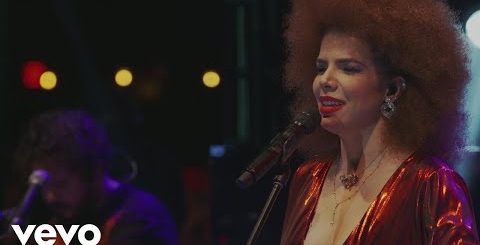
Não me deixe só by Vanessa da Mata Lyrics Meaning – Unraveling the Layers of Longing in Brazilian Pop
Lyrics
Eu tenho medo do escuro
Eu tenho medo do inseguro
Dos fantasmas da minha voz
Não me deixe só
Eu tenho medo do escuro
Eu tenho medo do inseguro
Dos fantasmas da minha voz
Não me deixe só
Tenho desejos maiores
Eu quero beijos intermináveis
Até que os olhos mudem de cor
Não me deixe só
Eu tenho medo do escuro
Eu tenho medo do inseguro
Dos fantasmas da minha voz
Não me deixe só
Que o meu destino é raro
Eu não preciso que seja caro
Quero gosto sincero de amor
Fique mais
Que eu gostei de ter você
Não vou mais querer ninguém
Agora que sei quem me faz bem
Não me deixe só
Que eu saio na capoeira
Sou perigosa, sou macumbeira
Eu sou de paz, eu sou do bem, mas
Não me deixe só
Eu tenho medo do escuro
Eu tenho medo do inseguro
Dos fantasmas da minha voz
Não me deixe só
Eu tenho medo do escuro
Eu tenho medo do inseguro
Dos fantasmas da minha voz
Fique mais
Que eu gostei de ter você
Não vou mais querer ninguém
Agora que sei quem me faz bem
Não me deixe só
Que eu saio na capoeira
Sou perigosa, sou macumbeira
Eu sou de paz, eu sou do bem, mas
Não me deixe só
Eu tenho medo do escuro
Eu tenho medo do inseguro
Dos fantasmas da minha voz
Vanessa da Mata’s ‘Não me deixe só’ (Don’t Leave Me Alone) is more than just a melody that captures the ear; it is a soulful appeal that reverberates with the raw human emotions of fear, desire, and the quest for genuine connection. The Brazilian singer-songwriter, known for fusing pop with traditional Brazilian rhythms, delves into the depths of vulnerability and self-discovery in this evocative track.
Through her poignant lyrics and captivating voice, da Mata takes listeners on an introspective journey, exploring the duality of longing for independence while fearing solitude. The song’s popularity not only lies in its melodious enchantment but also in the universally relatable themes that transcend cultural and linguistic boundaries.
A Symphony of Shadows: Interpreting Fear and Darkness
When Vanessa da Mata croons about the fear of the dark and the uncertainty, she is voicing a deeper psychological struggle. ‘Não me deixe só’ beautifully constructs the imagery of internal battles against the anxieties and insecurities that haunt us. This metaphorical darkness represents the unknown, the unfamiliar territories of our psyche that we often dare not navigate alone.
The repetition of these lines throughout the song underlines the persistent nature of these fears. Da Mata’s frank admission of such vulnerabilities is a potent reminder that everyone, regardless of stature or success, grapples with these phantoms of the self.
Infusing the Soundscape with Cultural Roots
Vanessa da Mata ingeniously infuses ‘Não me deixe só’ with elements of Afro-Brazilian culture, notably mentioning capoeira and macumba. Capoeira, a martial art that combines dance, acrobatics, and music, symbolizes resilience and the artful dodging of life’s confrontations. Macumba, a term used for a variety of African-influenced religious practices in Brazil, hints at the mystical and the singer’s connection to heritage and tradition.
These cultural references do more than add layers to the song; they anchor it firmly to da Mata’s lineage. They evoke a rich tapestry of meanings that resonate with listeners familiar with these traditions, tying the personal pleas of the song to the collective experiences of a community.
The Hidden Meaning: A Dance of Dependence and Independence
Underneath the surface, ‘Não me deixe só’ presents the dichotomy between the longing for autonomy and the innate human need for companionship. Her declaration of independence (‘sou perigosa’) clashes with her pleas for someone to stay. This push and pull between self-sufficiency and the reliance on others for emotional stability captures a universal dance that many will find familiar.
The song then becomes a call to touch, to connection without inextricable ties, where the protagonist seeks affection that is neither costly nor bound, symbolizing the purest form of love.
Memorable Lines: The Colors of Desire
Amidst the raw expressions of fear, one finds the invigorating expression of passion: ‘Eu quero beijos intermináveis / Até que os olhos mudem de cor’ (‘I want endless kisses / Until the eyes change color’). These lines evoke the transformative power of love and desire and how it can change one’s perspective – quite literally altering how one sees the world.
The mention of ‘mudar de cor,’ or to change color, can be interpreted metaphorically as the ability of love to redefine experiences and emotions, which begs the listener to rethink love’s influence on one’s life journey.
The Resonance of Love as a Safe Haven
‘Fique mais / Que eu gostei de ter você / Não vou mais querer ninguém / Agora que sei quem me faz bem’ (Stay more / I liked having you / I won’t want anyone else / Now that I know who does me good) speaks to the final resolve of human connection over isolation. Vanessa da Mata captures a sentiment that is both deeply personal and sweetly universal—the desire to hold onto the ones who illuminate our darkest moments and calm our inner turmoils.
‘Não me deixe só’ is not just an ode to the physical presence of another; it encapsulates the search for an emotional anchor. As much as it is a call for companionship, it’s a celebration of finding solace and understanding in another soul.