SONG MEANINGS (AND FACTS) Since 2017, The Song Meanings and Facts Team have told the stories behind the songs you love. Stay with us on our endless journey to the heart of music understanding and knowledge.
With the holiday season casting its perennial glow, ‘Mistletoe’ by Justin Bieber emerges once again as a modern carol echoing through winter-chilled streets. Delicate and ripe with romantic infatuation, the song captures the essence of young love wrapped in festive spirit. In this classic holiday pop hit, Bieber doesn’t just sing about Christmas traditions; he weaves a tale of heartwarming affection that melts even the iciest of seasonal cynics.
In the expansive sea of modern music, it’s rare to come across a song that seems to stop time and demand reflection. Weyes Blood’s track ‘Movies’ from her 2019 album ‘Titanic Rising’ does just that, encapsulating the elusive essence of our collective dream state. The song is a wistful journey that hinges on the juxtaposition of the cinematic reel and the authenticity of life experience.
Navigating the choppy waters of love and self-awareness, The 1975’s song ‘Happiness’ takes listeners on a journey into the heart of what it means to find joy in the most authentic of experiences. At its core, the track is a vibrant exploration of the peaks and pitfalls that come with self-discovery and the pursuit of love in a modern context.
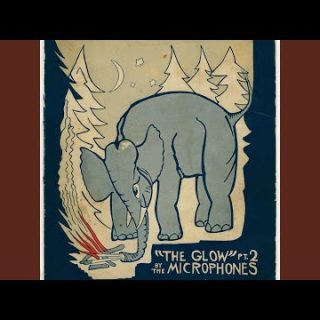
In the realm of indie folk music, few songs capture the raw uncertainty and intimate self-reflection as poignantly as ‘I Felt My Shape’ by The Microphones. Phil Elverum’s tender yet discordant melodies serve as a conduit for an exploration of human connection, the ghosts of closeness that once were, and the struggle to define oneself independently of another.
Embarking on a mental expedition beyond the realms of typical pop soundscapes, ‘Tomorrow Never Knows’ remains one of The Beatles’ most audacious sonic adventures. Released in 1966 as the final track on their groundbreaking album ‘Revolver’, the song is an aural representation of enlightenment and the dissolution of ego, transcending the standard tropes of the mainstream music that dominated the era.
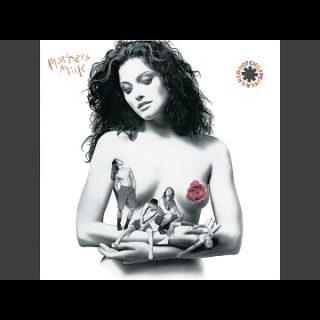
When the Red Hot Chili Peppers covered Stevie Wonder’s funk manifesto ‘Higher Ground’ in 1989, they not only paid homage to a musical legend but also reignited the song’s fiery message for a new generation. The Pepper’s take on the classic, laced with their signature punk-funk verve, became an anthem of perseverance and metaphysical ascent amidst an era of change and tumult.
Within the rhythmic catacombs of The Kills’s ‘Future Starts Slow’, lies a labyrinth of raw emotion and unwavering determination. From the frantic thump of a ‘broken sail’ to the ironclad resolve in the statement ‘I’ll never give you up’, there is an unmistakable blend of defiance and vulnerability throbbing at the heart of this track.
Through the smoke of raw, unfiltered expressionism comes the song ‘Matte Black’ by $uicideboy$, a veracious earful of lyrical audacity and cold, unapologetic realism. The enigmatic duo, comprised of Ruby da Cherry and $lick Sloth, has always been revered for their ability to translate the ethos of a troubled psyche into a hauntingly melodic poetry. Deconstructing ‘Matte Black’ reveals not only the complex layers of personal struggles and societal critiques but also solidifies $uicideboy$’s role in pioneering the subgenre of shadowy, trap-laced rap.
Deep Purple’s ‘Child in Time’ is a hauntingly beautiful opus that thrives on its powerful crescendos, raw vocal emotion, and contemplative lyrics. Often regarded as a protest song of its era, it transcends mere political statement, delving deep into the crossroads of the human experience and our moral compass.
Like an abstract painter distilling emotion onto canvas, Mitski masterfully weaves the complexities of desire and loneliness into the aching verses of ‘Lonesome Love’. Through her meticulous storytelling, Mitski delves deep into the human condition, articulating the paradoxes of seeking connection in a world that simultaneously pushes us toward isolation.