Phantom of the Opera by Iron Maiden Lyrics Meaning – Unraveling the Lyrical Labyrinth of a Metal Masterpiece
Lyrics
I’ve been lookin’ so long for you now
You won’t get away from my grasp
You’ve been living so long in hiding, in hiding
Behind that false mask
And you know that I know that
You ain’t got long now to last
Your looks and your feelings
Are just the remains of your past
You’re standing in the wings
There you wait, for the curtain to fall
But knowing the terror and holding
You have on us all
Yeah, I know that you’re gonna
Scratch me and maim me and maul
And you know I’m helpless from
Your mesmerizing catcall
Ooh
Keep your distance, walk away
Don’t take his bait
Don’t you stray, don’t fade away
Watch your step, he’s out to get you
Come what may
Don’t you stray, from the narrow way
I’m running and hiding
In my dreams, you’re always there
You’re the phantom of the opera
You’re the devil, you’re just out to scare
You damaged my mind and my soul
It just floats through the air
You haunt me, you taunt me
You torture me back at your lair
(Torture me back at your lair)
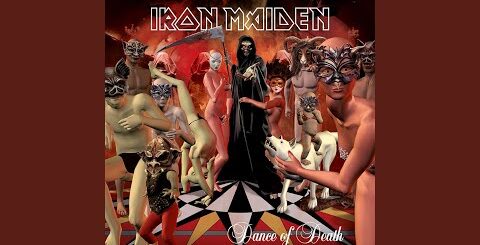
When Iron Maiden unleashed ‘Phantom of the Opera’ upon the world in 1980, contained within their eponymous debut album, they weren’t just adding another song to the annals of heavy metal – they were crafting a narrative that was as enigmatic as it was enthralling. Decades later, the song remains a seminal anthem, with lyrics that still captivate the imagination of listeners and beg for a deeper interpretation.
What lies beneath the surface of this galloping metal juggernaut are not just words, but a tapestry of meaning woven by bassist and primary songwriter Steve Harris. With a title borrowed from Gaston Leroux’s 1910 novel, and later, Andrew Lloyd Webber’s famous stage adaptation, the track is often dissected for its thematic parallels and storytelling prowess, which speak to broader human experiences far beyond the confines of its literary inspiration.
The Haunting Chase: A Metaphoric Pursuit
Delving into the opening verse, ‘I’ve been lookin’ so long for you now/You won’t get away from my grasp,’ sets up an immediate tension. It’s a pursuer and the pursued, a seeking and hiding, but Iron Maiden stretches the metaphor to encompass more than just physical chase. This is about the inescapable pursuit of one’s own darker sides, the aspects of self that we hide behind ‘that false mask.’
Iron Maiden propels the narrative with powerful imagery, suggesting a struggle with inner demons, or even a confrontation with another whose guise is beginning to fail. The inevitability of truth surfacing, ‘You ain’t got long now to last,’ might hint at a personal apocalypse where the false veneer will soon be shattered, exposing what truly lurks beneath.
A Macabre Dance: The Artistry of Horror in Lyricism
There is an elegant, almost poetic horror to the lines, ‘And you know that you’re gonna/Scratch me and maim me and maul.’ These violent actions evoke the primal fear of being damaged not just physically but psychologically. It mirrors the operatic theme wherein the Phantom was both a figure of terror and fascination.
Iron Maiden, much like the creatives behind the original ‘Phantom of the Opera,’ understands the compelling draw of the horrifying. The lyricism conjures scenes within the listener’s mindscape, veiling menacing threats beneath beautiful, melodic compositions. It’s the eternal interplay of beauty and the beast, rendered in harmonious dissonance.
Guidance Turned Warning: The Siren’s Call to Avoid Temptation
The refrain, ‘Keep your distance, walk away/Don’t take his bait,’ is a siren’s call to the listener, a universal warning to steer clear from the dangers that enthral while they endanger. Maiden’s masterpiece goes beyond the confines of narrative, operating as a timeless caveat against the allure of temptation that beckons with sweetness before revealing its sour cores.
Listeners find shared experiences in these words, a communal voice cautioning them to remain on ‘the narrow way,’ which symbolizes the path of righteousness and vigilance. In a world rife with devious allurements, the song becomes an anthem for those who resist the easy allure of vices and deceptions.
Echoes in the Mind: The Phantom’s Psychological Haunt
The lyrics ‘You haunt me, you taunt me/You torture me back at your lair,’ serve as a stark reminder of the mental prisons one can be subjected to by their own thoughts. This internal specter, the Phantom, stands as a symbol for the obsessions and fears that follow us into our most private spaces – our dreams and subconscious.
This passage might reflect on the concept of psychological trauma and the way it permeates our wellbeing, haunting us relentlessly like a melody in the dark. It’s about the internal struggle against an adversary only the individual can fully comprehend or confront, and the existential battle to emerge whole and unscathed.
Unmasking the Hidden Message: A Eulogy to Individual Struggles
While one could easily interpret the lyrics to ‘Phantom of the Opera’ as a tribute to its namesake narrative, there is a hidden depth to be found when examining it through a personal lens. The ‘Phantom’ might be every challenge, adversity, or shadow self that each person must face. The opera, thus, is life itself – complex and layered, with its underbelly of conflicts and resolutions.
Iron Maiden’s narrative invites listeners to find their own meanings within the layers of its lyrics. Each verse can be seen as a reflective surface, asking us to confront the masks we don and the specters we carry. It’s a call to become the main character in our operatic existence and resolve the dissonance between what is seen and what is hidden.