Roman Candle by Elliott Smith Lyrics Meaning – Exploring the Intense Emotional Undercurrents
Lyrics
Didn’t need me to give him hell
He could be cool and cruel to you and me
Knew we’d put up with anything
I want to hurt him
I want to give him pain
I’m a roman candle
My head is full of flames
I’m hallucinating
Hallucinating
I hear you cry your tears
Cheap wet hot red swollen cheeks
Fall asleep
I want to hurt him
I want to give him pain
I’m a roman candle
My head is full of flames
I want to hurt him
I want to hurt him
I want to hurt him
I want to give him pain
Make him feel this pretty burn
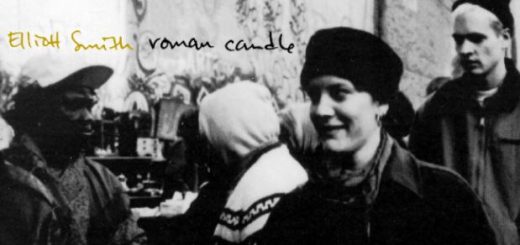
Elliott Smith’s song ‘Roman Candle’, from his album of the same name, has long echoed in the hearts of listeners, a complex tapestry of emotional distress woven through deceptively simple acoustics and raw, whispery vocals. The song’s title itself is a poignant metaphor that Smith utilizes to illustrate inner turmoil, a vibrant yet painful emotional release akin to the erratic bursts of a Roman candle.
In peeling back the layers of ‘Roman Candle’, fans are privy to an intimate look at the song’s protagonist—a character who resides in the intersection of vulnerability and fury, entangled in a struggle that is as personal as it is painfully universal. Its visceral impact derives not from grandiosity but from the stark, unfettered honesty that has become the hallmark of Smith’s songwriting.
A Self-Portrait in Pain: The Man in the Mirror
The lyrics begin as an unapologetically blunt self-assessment, a character deconstruction conveyed with a deliberate candidness. Smith sings of a man who seems to have mastered the art of self-sabotage, indifferent to any collateral as he perpetrates his own suffering. It’s fascinating, albeit harrowing, how Smith crafted a figure who embodies resilience and self-infliction—all without the need of an outside tormentor. Autonomy in ruin.
Underscored by Smith’s characteristic gentleness with the guitar, the harshness of the confession that he ‘played himself’ offers no respite from the accusatory. It raises questions about complicity and the masochistic tendencies in human relationships, which can so often leave even the most perceptive among us feeling adrift.
Fiery Words: Misery’s Vocabulary in ‘Roman Candle’
Metaphors act as the cryptic currency of ‘Roman Candle’, with Smith brandishing phrases like ‘I’m a roman candle, my head is full of flames’ as both self-accusation and an admission of self-awareness. The comparison to a firework—capriciously beautiful and destructive—speaks to the volatility of his emotions, bursting with the need to express yet wary of the consequences.
Furthermore, this flame-filled head Smith croons about suggests the constant, overwhelming bombardment of thoughts that can plague a troubled mind. Here, Smith not only articulates his own battle against these flames but translates the universal struggle of containment and the potential for emotional conflagration.
Behind the Combustion: The Veiled Allusions in ‘Roman Candle’
Smith’s use of ‘hallucinating’ might stir imagery of losing touch with reality, yet herein lies a deftly hidden allusion to the internal mirage of suffering. This is not the literal description of visions, but rather the distortion of perception wrought by pain—seeing the world through tear-stained eyes can make every element appear as if it’s part of a cruel deception.
This hallucination might also represent the songwriter’s struggles with the infirmities of life, with pain so omnipresent it blurs the lines between what’s real and what’s a figment of distorted cognition. The lyric ‘I hear you cry your tears’ can be interpreted as a projection, the externalization of his internal state onto the people around him, a cry for understanding wrapped in the solipsism of hurt.
The Refrain that Burns: Dissecting Smith’s Chorus
Repetition in music can often mirror the cycling of obsessive thoughts, and the chorus of ‘Roman Candle’ exemplifies this with its incessant, mantra-like plea to impart pain. It’s almost as if the act of repeating ‘I want to hurt him, I want to give him pain’ is a cathartic release, a symbolic flagellation allowing a brief escape from his mental immolation.
Yet an important distinction in these lines lies not in the avowal of violence towards another but as a self-directed wish. This compulsion towards self-punishment insinuates that anger turned inward is as much a cry for help as it is an expression of deep-set emotional conflicts.
Lingering Lines: ‘This Pretty Burn’ and the Aftermath of Listening
As the song closes on the masochistic desire for someone to ‘make him feel this pretty burn’, Smith encapsulates the poem’s motif—suffering viewed through a prism that distorts and embellishes, reframing scars as beauty marks. It is here where Smith’s poetic deftness shines, capturing an essence that is at once alluring and damaging, like moths to the flame.
The lingering effect of Smith’s ‘Roman Candle’ is akin to the residue left by fireworks: a smokey shadow that mingles with the atmosphere long after the initial burst. It raises the enduring question: how does one reconcile with the haunting beauty found amidst the chaotic release of grief sealed within the profound simplicity of a song?