
Unhappy Girl by The Doors Lyrics Meaning – Peeling Back the Layers of Personal Captivity
Lyrics
Left all alone
Playing solitaire
Playing warden to your soul
You are locked in a prison
Of your own device
And you can’t believe
What it does to me
To see you
Crying
Unhappy girl
Tear your web away
Saw through all your bars
Melt your cell today
You are caught in a prison
Of your own device
Unhappy girl
Fly fast away
Don’t miss your chance
To swim in mystery
You are dying in a prison
Of your own device
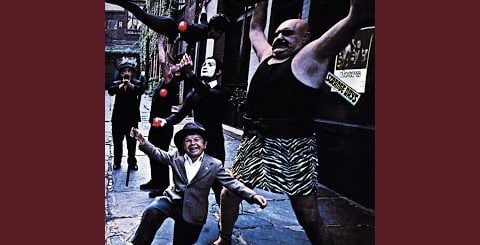
In the verdant fields of rock ‘n’ roll history, The Doors have cultivated an enduring legend, as much for their psychedelic sounds as for their profoundly introspective lyrics. ‘Unhappy Girl,’ a track less trodden among their hits, is a cerebral echo from 1967’s ‘Strange Days.’ Within the chambers of its melody resides a haunting narrative that shimmers with existential questioning and the human struggle.
Peeling back the simplicity of its tune, one discloses layers of meaning; a dialogue on self-imprisonment and the plea for liberation. As we journey through the corridors of this song, it becomes evident that ‘Unhappy Girl’ is not just a whisper in The Doors’ discography but a scream into the void of human emotion, imploring to be understood and, perhaps, prompting introspection about our own metaphorical incarcerations.
Chasing Ghosts in Solitude: The Inescapable Self-Made Prison
The lyrics of ‘Unhappy Girl’ paint a stark portrait of solitary confinement – not within the walls of an external construct, but in the fortress of one’s mind. ‘Playing solitaire, Playing warden to your soul,’ Morrison sings, evoking images of a self-imposed warden living in isolation, painstakingly guarding the essence of oneself. The word ‘solitaire,’ a game traditionally played alone, becomes a metaphor for a life lived in seclusion, a self-chosen exile.
As the verses unfold, a recurring theme of imprisonment ‘of your own device’ emphasizes that the chains restraining the girl are of her forging. Morrison isn’t just setting a scene; he is underlining a fundamental human predicament — the patterns and defenses we unconsciously construct, which, though meant to protect, eventually become our own cages.
A Framed Cry: The Song’s Heart-Wrenching Plea
Throughout ‘Unhappy Girl,’ there’s a palpable desperation in the call for the girl to break free from her self-imposed shackles. The refrain ‘You can’t believe, What it does to me, To see you, Crying’ is more than an expression of empathy; it’s a reflection of shared anguish. Morrison’s voice, dense with emotion, reveals a vicarious suffering as profound as the girl’s own.
The song’s plea — ‘Tear your web away’ — is a raw supplication for the girl to confront the entanglements of her psyche. These bars are not ones that can be sawed through with steel, nor can the web be torn by force. Still, the urgency for metamorphosis is clear — it’s a plea for psychological emancipation.
Breaking Bonds: The Charge for a Rebirth
Existential rebirth is the loud undercurrent in ‘Unhappy Girl,’ with Morrison urging the protagonist to ‘Melt your cell today.’ It’s a call to action, to shed and molt past restraints. The phrase ‘melt your cell’ conjures images of transformation, suggesting not just escape but also the introduction of a heat so powerful it changes the structure of that which confines.
This compelling imagery beseeches a level of change that is elemental and irreversible — once the cell is melted, it cannot return to what it was. The transformation is as essential as it is desperate; the unhappiness runs so deep that only a fundamental shift within can bring forth the light.
Flights of Fancy: A Dive into the Mysterious Liberation
The song resolves into a haunting send-off: ‘Fly fast away, Don’t miss your chance, To swim in mystery.’ It is not just an escape that’s being offered, but an invitation to an experience far richer. To swim in mystery is to engage with life’s enigmatic and often terrifying complexities, to delve into the unknown with courage and abandon the comfort of the familiar, however painful that familiarity might be.
In these lines, Morrison casts a stark contrast between the stagnant waters of the prison and the vast, uncharted waters of liberty. He doesn’t promise an easy journey; instead, he proposes an alternative that is as daunting as it is tempting, suggesting the value in the very act of seeking the inexplicable.
Shrouded Truths: Unveiling the Song’s Hidden Meanings
On the surface, ‘Unhappy Girl’ may resonate as a straightforward serenade for a lost, isolated soul. Yet, when sifting through its harmonics and lyrical craftsmanship, one discovers a dense tapestry of hidden meanings. Each line is laced with a dual exploration of individual suffering and the universal human condition of feeling trapped within the constructs of our making.
As we unlock the allegorical, the girl in question stretches into a mirror, reflecting our inner shadows and the partitions we build. The song is as much about the unhappy girl as it is about each listener’s inner prisoner. Morrison’s words, delivered with the distinct Doors’ rhythm, are an invitation to confront these inner cells, acknowledge them, and, ultimately, open the door to our individual liberation.




As a huge fan of the Doors for many years, not to mention a student of Morrison’s poetry, I can’t say that the lyrics of “Unhappy Girl” consist of any subliminal meanings within a woman’s psyche; thus, the general embattlement of what she’s grappling with internally. I believe Morrison was reaching out to his companion in regard to her challenges with her heroin addiction.