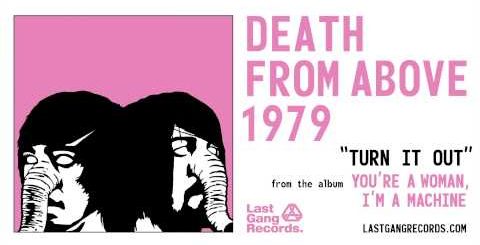
Dead Womb by Death From Above 1979 Lyrics Meaning – Deciphering the Incessant Beat of Societal Decay
Lyrics
I’m sick of all these girls poisoning their
We’re looking for wives so tired of sluts coming to us in the clubs with their cocaine [2x]
I know you think you have it all but you will never even
We’re looking for wives so tired of sluts coming to us in the clubs with their cocaine
You will never even know
You think you have control
One day we’ll lose you all
One day we’ll
We’re looking for wives so tired of sluts coming to us in the clubs with their cocaine [2x]
I know you think you have it all but you will never even
We’re looking for wives so tired of sluts coming to us in the clubs with their cocaine
Chapter 14 [3x]
Chapter.
With the raw energy of punk and the thudding bass lines that could only come from Death From Above 1979, ‘Dead Womb’ is more than just a song—it’s a social commentary wrapped in sonic aggression. Through its relentless repetition and seemingly brash lyrics, the track pushes listeners into a dialogue with modern societal norms, as if thrashing through the muddled throng of a mosh pit to reach the surface of understanding.
This track, off the band’s explosive 2002 debut, the ‘Heads Up’ EP, brings forth an unapologetic critique of hedonism and the search for genuine connection amidst a culture rife with superficiality. Let us dismantle the cacophony of ‘Dead Womb’ and locate the deeper resonances within its music and words, doling out an interpretation that goes beyond the first abrasive listen.
The Womb as Metaphor: Unpacking the Title
‘Dead Womb’ launches into a jarring snarl against the self-destructive choices of ‘poisoning the womb’. This vivid metaphor of a ‘dead’ womb is a provocative symbol denoting far more than biological function—it’s a stark representation of the death of potential, the extinguishing of what could have been, a future nipped in the bud by the rampant hedonism that the lyrics disdain.
The song’s title alone holds a mirror to the uncertainties of the early aughts, a time when rampant club culture often glamorized reckless living, leaving little space for the fostering of traditional values such as the nurturing role of motherhood, and by extension, the propagation of a ‘healthy’ society.
Contrasting Yearnings: The Search for Substance Over Superficiality
The repetition of the line ‘We’re looking for wives so tired of sluts’ encapsulates a yearning for true connection, a bond that can withstand the ephemeral highs of ‘cocaine’ nights. It is an outcry against the objectification within the nightlife scene, where people can often be reduced to their utility for temporary pleasure.
In challenging the listener to consider the depth of relationships beyond hedonistic indulgence, the song wrestles with the dichotomy between finding a lasting partnership versus the transient satisfaction found in superficial encounters.
An Inevitable Disconnect: A Cautionary Tale in Verse
The forewarning tone of ‘You will never even know / You think you have control / One day we’ll lose you all’ serves as both a cautionary note and a grim prognosis for a generation lost in the throes of excess. Death From Above 1979 isn’t just admonishing; they’re prophesying a future where this disconnection from authentic values leads to a figurative death—a loss of what it means to be connected as a society, as individuals, as partners.
Perhaps it’s a commentary on the impermanence of such lifestyle choices, or a broader social critique of the illusion of control we hold when we choose surfaces over substance. These lines reside in the song like a ticking time bomb of consequence, offering no solutions, only the stark reality of the outcome.
Decoding Chapter 14: An Ominous Conclusion
The cryptic chant of ‘Chapter 14’ that closes the song remains enshrouded in mystery. It could be a biblical reference, a nod to literature, or an entirely personal annotation by the band. But within the context of the song, it bears the weight of finality, a period at the end of a convoluted statement, leaving listeners in the lurch of their own interpretations.
It reinforces the notion that ‘Dead Womb’ is not a narrative with a clean resolution but a fragmented snapshot of a moment in time, a cultural reference point that demands the audience piece together its significance.
Reverberating Across the Decades: The Lasting Impact of ‘Dead Womb’
The blunt force of ‘Dead Womb’ continues to resonate, proof of Death From Above 1979’s ability to tap into the vein of cultural consciousness. The disquieting lines and bass-driven energy refuse to fade into the background of music history and instead call to mind the timeless angst against a society battling with the ghosts of hedonism.
Raging against the machine of a materialistic and superficial zeitgeist, the song, in spite of or perhaps due to its uncomfortably explicit delivery, persists as a sobering reflection of the ongoing struggle for genuineness in a world still grappling with the echoes of the themes it tackles.