Deadhouse by Katatonia Lyrics Meaning – Unpacking the Darkness Within
Lyrics
Headlights fuck the city
Somewhere I’m broken
No sensations nevermore
What do you say when you speak
I sense no time
Discouraged television sleep
Not awake until it’s dark
Somehow I never leave
This dead house
Somehow I don’t mind being gone
And if you think you’ve seen me
I have to prove you
That you’re wrong
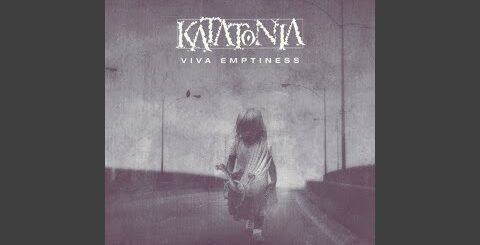
Katatonia, a band known for their brooding melodies and soul-stirring lyrics, have created a sanctuary for the melancholic. ‘Deadhouse’, a standout track from their heralded 1998 album ‘Discouraged Ones’, is a torturous anthem that lingers long after the final note has decayed. It paints in shades of despondency and captures a portrait of internal exile that resonates with anyone who’s ever felt isolated within the clamorous confines of modern existence.
Decoding the layers of ‘Deadhouse’ takes the listener on a journey through urban desolation, a tumultuous inner world, and an overarching sense of detachment. This confluence of unspoken emotion and raw sentiment embodies a complex, cryptic narrative, begging an exploration beneath the surface of its haunting prose.
The Urban Wasteland – a Metaphor for Mental Malaise
Katatonia crafts a vivid depiction of a city that overwhelms and alienates with its persistent glow. The recurring evocation of ‘headlights’ not only critiques the relentless pace of city life but also symbolizes the invasive nature of thoughts that disrupt internal peace. As the city ‘fucks’ the night, so does the singer’s tranquility get brutally invaded by the persistent hum of a world that doesn’t sleep.
The term ‘Deadhouse’ could be referring to the mind of the protagonist, a mental space devoid of feeling and warmth, akin to the cold concrete structures that populate the urban sprawl. The very bones of this cityscape are infused with a deep-seated ennui, one that’s both found and lost within the shadowy corners of the singer’s consciousness.
Timelessness in Isolation – The Eternal Now
In the verse, ‘I sense no time’, the band taps into the universal fear of oblivion and the stasis it signifies. Detached from the cycle of day and night, Katatonia’s lyrics evoke a purgatory-like existence. The ‘discouraged television sleep’ serves not as a leisure activity but as a suspension of life – a static state where reality blurs and time stands still.
The confinement of the ‘dead house’ is not just physical but temporal. There’s a dense eeriness to the idea that, within these walls, one might find themselves in a loop of ceaseless insomnia, where the concept of time has not just stopped, but has ceased to exist altogether.
Cryptic Communications – The Weight of Words Unspoken
‘What do you say when you speak?’ is a line that pierces through the white noise of everyday discourse. It’s a stark reminder of the depth often lost in conversation, and the understanding that words are both inadequate and drowning in their excess.
There is an implicit challenge here too, casting doubt on the authenticity of our interactions. The facade of small talk hides the hunger for conversations with substance, a substance that the silent protagonist of ‘Deadhouse’ either cannot reach or refuses to embrace.
The Paradox of Presence – Physical Existence versus Spiritual Absence
‘Somehow I never leave’ alongside ‘Somehow I don’t mind being gone,’ encapsulate a duality that defines the human struggle. To be physically bound to a place yet mentally adrift within the ether of one’s own thoughts affords a detached observance of life passing by.
This disconnection becomes not just a coping mechanism, but a shadow existence. The individual is caught in the limbal state of being both absent and present, dead yet undeniably alive in their own ‘dead house’ of emotion.
Shattering Misconceptions – The Hidden Meaning of Self-Reflection
When the protagonist insists ‘If you think you’ve seen me, I have to prove you that you’re wrong,’ there is a searing revelation of mistaken identity, both towards the self and others’ perceptions. Here, Katatonia deftly crafts a spectacle of mistaken perception—what the world sees is but a husk of the individual’s true self, while the essence remains hidden and misunderstood.
It’s a resolute declaration of autonomy that challenges the listener to question surface-level judgments and to look beyond the facade. The ‘dead house’ thus becomes a symbol of the unrecognized and unvalidated experiences that each of us may harbor within.