Guess God Thinks I’m Abel by Oasis Lyrics Meaning – Unraveling the Enigmatic Ode to Love and Determination
Lyrics
We’d go on for ever, ’til the end of time
You could be my best friend, stay up all night long
You could be my railroad, we’d go on and on
Let’s get along, there’s nothing here to do
Let’s go find a rainbow
I could be wrong, what am I to do?
Guess God thinks I’m Abel
You could be my enemy, I guess there’s still time
I get round to loving you, is that such a crime?
Let’s get along, there’s nothing here to do
Let’s go find a rainbow
I could be wrong, but what am I to do?
Guess God thinks I’m Abel
No-one could break us
No-one could take us
If we tried
No-one could break us
No-one could take us
If we tried
No-one could break us
No-one could take us
If we tried
Come on, oh, let’s make it tonight
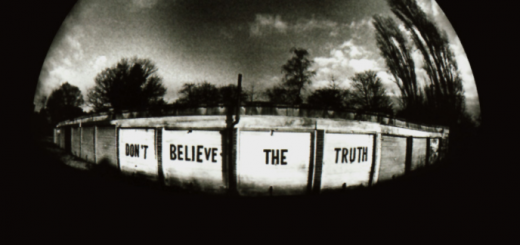
Delving into the musical tapestry of Oasis’s ‘Guess God Thinks I’m Abel,’ listeners find themselves wrapped in a lyrical enigma that deftly weaves themes of unwavering love, existential introspection, and the timeless fight against odds. This lesser-known cut from their 2005 album ‘Don’t Believe the Truth’ captures the raw essence of a band known for their brash confidence and anthemic sound.
The genius of Oasis has always been their ability to speak to the soul’s core with deceptively simple language. ‘Guess God Thinks I’m Abel’ is no exception; it’s a song that peels away its layers with every listen, inviting audiences into a deeply personal sphere that questions destiny, alignment, and the strength of human connections.
The Eternal Dance of Love and Fate
From the initial notes, ‘Guess God Thinks I’m Abel’ establishes itself as a celebration of love’s timelessness. The idea of becoming someone’s lover, friend, or ‘railroad,’ reiterates the desire for connection and journeying together. This is not just about being in love; it’s the quintessence of partnership, of finding that one person who becomes your existential ‘ride or die.’
The narrative voice is one that balances on the edge of hope and resignation. On one hand, it’s a poetic confession of love’s potentials; on the other, it’s a commentary on the absurdity of existence. When the lyrics muse, ‘Let’s go find a rainbow,’ it injects a whimsical chase for the unattainable, a universally relatable gambit of human endeavor.
Anthem of Reconciliation: To Love One’s Enemy
In a twist of lyrical prowess, the song suggests a readiness to embrace the adversary as a loved one. Love is painted not just as an emotion, but as an act of will. The line, ‘You could be my enemy, I guess there’s still time,’ evokes the transformative power of love to turn even conflict into camaraderie, hinting at hope for resolution in this turmoiled world.
This is not mere romantic introspection; it echoes broader societal divides and personal battles. It’s about conquering the animosity within and without, while still acknowledging the ticking clock of mortality. As if the song implores: isn’t community, connection, and ultimately love worth fighting for, even against seemingly insurmountable odds?
Divinity’s Role in Human Connection
The refrain, ‘Guess God thinks I’m Abel,’ provides a rich scriptural allusion to the Biblical brothers, Cain and Abel. This line goes beyond a clever play on words; it’s a rugged exploration of predestination and free will. The protagonist sees himself as favored by fate, or in this case, a deity, to possess the strength and virtue necessary to overcome obstacles in love and life.
This cannot be viewed in a vacuum. It speaks volumes about the human condition, about the desire to be seen as worthy in the eyes of an omnipotent force. It’s a declaration that echoes through the ages: in the grand tapestry of life, perhaps there’s a greater power that believes in our inherent goodness and capability.
A Creed of Undeniable Perseverance
Repetition in the song is key, particularly with, ‘No-one could break us, No-one could take us, If we tried.’ It turns into a mantra of invincibility. The emphasis on effort—’if we tried’—indicates that though love might be preordained, it requires work, determination, and resilience to maintain.
This line doesn’t just resonate; it reverberates with the steadfastness required to navigate a relationship in a world fraught with cynicism. Oasis encapsulates the unyielding spirit that defines those epic love stories, ones that withstand the trials of time, circumstance, and indeed, the naysayers.
Memorable Lines: Carving Out Oasis’s Legacy
Every Oasis song seems to have lines that fans etch into their memories, and ‘Guess God Thinks I’m Abel’ has its jewels. Lyrics like, ‘We’d go on forever, ’til the end of time,’ and ‘Let’s make it tonight,’ are not only sticky for their simplicity but for their bold declaration of seizing the moment. They’re imbued with that classic Gallagher swagger—a mix of vulnerability and confidence.
In these lines lies the quintessential Oasis spirit: brash, bold and unapologetically straightforward. They speak to a generation that is simultaneously weary and hopeful, defiant and ready to love all-in. Such lines ensure that Oasis’s legacy isn’t merely one of success, but of emotional resonance that transcends their era.