La Primavera by Manu Chao Lyrics Meaning – Unveiling the Global Heartbeat of Disillusionment
Lyrics
¿Qué horas son mi corazón? (señor presidente)
(Les habla el presidente)
¿Qué horas son mi corazón?
(¿Qué horas son mi corazón?)
¿Qué horas son mi corazón?
(¿Qué horas son mi corazón?)
¿Qué horas son mi corazón?
¿Qué horas son en Inglaterra?
(¿Qué horas son mi corazón?)
¿Qué horas son en Gibraltar?
(¿Qué horas son mi corazón?)
¿Qué horas son allá en Fisterra?
(¿Qué horas son mi corazón?)
¿Qué horas son hey, bye, bye, bom?
(¿Qué horas son mi corazón?)
¿Qué horas son la vida entera?
(¿Qué horas son mi corazón?)
¿Qué horas son en el Japón?
(¿Qué horas son mi corazón?)
¿Qué horas son en Mozambique?
(¿Qué horas son mi corazón?)
¿Qué horas son en Washington?
(¿Qué horas son mi corazón?)
Nos engañaron bye, bye, bom
(¿Qué horas son mi corazón?)
Nos engañaron con la primavera
(¿Qué horas son mi corazón?)
Nos engañaron bye, bye, bom
Bombala, bombala, bombala, bombala, bombala
Bombala, bombala, bombala, bombala, bombala
Bombala, bombala, bombala, bombala, bombala
(¿Qué horas son mi corazón?)
(¿Qué horas son mi corazón?)
(¿Qué horas son mi corazón?)
(¿Qué horas son mi corazón?)
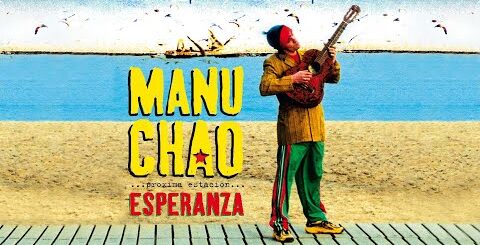
The ebb and flow of Manu Chao’s playful yet poignant track ‘La Primavera,’ off the prophetic album ‘Próxima Estación: Esperanza,’ encapsulates the zeitgeist of a generation in search of temporal meaning amidst global chaos. What time is it in our hearts, the artist asks, a question rhythmically pulsing like the heartbeat of a world waking up.
Throughout the song, Chao’s repetition isn’t just a catchy linguistic hook; it’s a clarion call to listeners worldwide. The chorus resonates with a mixture of personal longing and collective confusion, reflecting an era where time zones mix with emotional states, and geopolitics blurs with personal disappointments.
Chiming Hearts Around the Globe – A Sonic Journey
At the surface, ‘La Primavera’ mirrors the stylistic eclecticism Manu Chao is renowned for—mixing rock with Latin grooves, punk energy with reggae relaxation. The song’s repetitious inquiry about time acts as an invisible thread, stitching together various global zeitgeists.
The question ‘What time is it in my heart?’ moves geographically from England to Mozambique, symbolizing not just different hours in a day but distinct cultural and political issues. Even as the rhythm remains consistent, the listener is taken through diverse landscapes of thought and experience.
The Spring of Deception – A Metaphor for False Promises
Spring symbolizes renewal, hope, and the blossoming of life—a stark contrast to Chao’s message of deception. As the song unfolds, the recurring phrase ‘We were deceived by spring’ takes on a new weight. It whispers of revolution’s failed promises and the fracturing of idealistic dreams in the face of harsh realities.
Chao taps into a profound collective disillusionment, recognizing that the expected ‘spring’—whether it be political changes, personal growth, or social revolutions—has often misled the people. This deception ticks away in the background like a time bomb of discontent.
A Love Letter to the Disheartened – Embracing Global Discontent
One might argue that Manu Chao writes a universal love letter to all who feel downtrodden by their nations, betrayed by their leaders, and lost in the tides of time. By questioning, ‘What time is it in my heart?’ he challenges the listener to confront their inner world’s discord with the outer world’s disorder.
The candid references to places like Washington and Gibraltar present a global canvas where individual disillusionment is part of a larger, more universal narrative. Chao’s song becomes an embrace, validating the emotional strife felt across continents.
Dissecting the Infectious Refrain – ‘Bombala’ Unpacked
The hypnotic chant ‘Bombala,’ rhythmically threaded throughout the song, might not carry an explicit meaning, but it evokes a tribal call to arms or a collective venting of frustration. This nonsensical word becomes a vessel for the unsaid, a percussive outburst conveying what words cannot.
As Chao leads the chant, the audience is invited to release—through this primal, musical exclamation—the pent-up disillusionments that haunt them. In this act of communion, ‘Bombala’ becomes more than just a lyric; it’s a liberating force.
The Unforgettable Lines That Bind Us – A Common Quest
Though the lyrics may seem simple, their profound resonance lies in their ability to weave complex, global themes into memorable lines. ‘What time is it in my heart?’ and ‘We were deceived by spring’ emerge as emotional anchor points, underscoring the song’s essence of shared human experience.
By concluding that ‘They cheated us with spring,’ Chao captures the universal sense of betrayal that pervades the modern psyche. It’s a stark reminder that across our various latitudes and longitudes, we are bound by common threads of hope and disillusionment.