mOBSCENE by Marilyn Manson Lyrics Meaning – Decoding the Anthem of Dissent
Lyrics
We are the thing of shapes to come
Your freedom’s not free and dumb
This Depression is Great
The Deformation Age, they know my name
Waltzing to scum and base and
Married to the pain
Bang we want it
Bang we want it
Bang bang bang bang bang
You came to see the mobscene
I know it isn’t your scene
It’s better than a sex scene and it’s
So fucking obscene, obscene yeah.
Girls (in the spirit of Oscar Wilde)
Be obscene, be be obscene
Be obscene, baby, and not heard.
The day that love opened our eyes
We watched the world end
We have “high” places but we have no friends
They told us sin’s not good but we know it’s great
War-time full-frontal drugs, sex-tank armor plate
Bang we want it
Bang we want it
Bang bang bang bang bang
You came to see the mobscene
I know it isn’t your scene
It’s better than a sex scene and it’s
So fucking obscene, obscene yeah.
You want commitment?
Put on your best suit, get your arms around me
Now we’re going down down down
You want commitment?
Put on your best suit, get your arms around me
Now we’re going down down down
Girls(in the spirit of Oscar Wilde):
Be obscene, be be obscene
Be obscene, baby, and not heard.
You came to see the mobscene
I know it isn’t your scene
It’s better than a sex scene and it’s
So fucking obscene, obscene yeah.
You want commitment?
Put on your best suit, get your arms around me
Now we’re going down down down
You want commitment?
Put on your best suit, get your arms around me
Now we’re going down down down
“Ladies and gentlemen, be obscene! Be be obscene!”
Girls(in the spirit of Oscar Wilde)
Be obscene, be be obscene
Be obscene, baby, and not heard.
Bang bang bang bang bang.
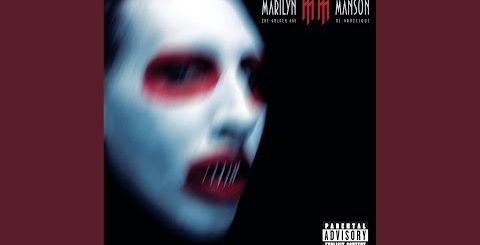
Marilyn Manson’s ‘mOBSCENE’ reverberates as a siren song of rebellion, tantalizing the senses with its auditory assault and lyrical audacity. Released as a lead single from the album ‘The Golden Age of Grotesque’ in 2003, the song has since become a hallmark of Manson’s provocative oeuvre, dissecting the contours of societal taboos and the spectacle of human behavior.
The track’s title itself—a portmanteau of ‘mob’ and ‘obscene’—suggests a confluence of the masses and the morally outrageous. Manson’s raw energy and acerbic wit lace every verse, inviting listeners to plunge into a chaotic symphony that deconstructs themes of freedom, conformity, and the sensationalist culture that defines the modern era.
The Unsettling Dance: A Waltz with Scum and Deformation
Manson opens with an apocalyptic vision, evoking ‘The Deformation Age,’ where societal decay is choreographed like a twisted waltz. This ‘waltz’ conjures images of a public entranced by scandal and perversion, willingly ‘waltzing to scum and base.’ Here, he suggests that the audience’s fascination with the grotesque is part of a deeper malaise—an era where depression is not only ‘Great’ but celebrated.
This motif is not just a portrait of decadence but also a commentary on the commodification of rebellion. ‘Bang we want it’—Manson’s emphatic refrain—captures the essence of a society addicted to the shock factor, desperate for the next titillating scene that inevitably becomes a part of the ‘mobscene,’ the collective spectacle intoxicating the masses.
Echoes of Wilde: The Prophetic Call to Be Obscene
The invocation of Oscar Wilde in the chorus ties Manson’s modern-day denunciation to a lineage of societal provocateurs. Wilde, the quintessential figure of scandal and wit, provides a historical touchstone for the song’s rallying cry to ‘be obscene.’ Manson’s lyrics implore the listener to embrace notoriety, to be ‘obscene, baby, and not heard,’ thus highlighting the paradox of being outspoken yet ignored, revered yet reviled.
The allusion to Wilde speaks to the timeless struggle against the prudish mores of society, rallying individuals to a cause of shameless expression. It’s a battle cry against the forces that would quiet the unconventional and the celebration of art that transcends respectability.
The Love Affair with Sin: War-Time Full-Frontal Provocation
Manson doesn’t refrain from displaying a certain kind of affection for the sinful, hinting at a complex relationship between morality and pleasure. The ‘high places’ allude to perch of moral superiority often claimed by the critics of sin, while simultaneously acknowledging the solitude of such positions—in ‘high places, but we have no friends.’
Through the juxtaposition of drugs, sex, and war imagery, ‘mOBSCENE’ illustrates the hedonistic escapism that typifies the Age Manson depicts. The ‘war-time full-frontal’ metaphor suggests not just an exposure to the horrors of conflict, but also a desensitization that requires an extreme sensory experience to feel anything at all—an ‘armor plate’ against the banality of everyday existence.
Defying Commitment: Manson’s Satire on Societal Contracts
Arguably, the ‘best suit’ referenced in the commitment stanza stands as a metonym for societal expectations—the uniform of conformity. Manson plays with the idea of commitment, juxtaposing it with a lemming-like decline, ‘going down.’ It’s not just a promise of loyalty to someone or something; it’s an acceptance of the fate that such adherence brings—a plunge into the mire alongside the rest of the begrudgingly compliant crowd.
The repeated descent ‘down down down’ mirrors the slide into the ‘obscene’—a commitment to the subversive as a conscious choice against the status quo. This flirtation with the idea of commitment serves as a sarcastic rebuttal to conformity, aligning instead with the liberating act of rebellion.
Unearthing the Hidden Relevance: Beyond the mOBSCENE
At first glance, ‘mOBSCENE’ is a cacophony of rebellion, a teenage anthem against authority. But to pause at such a superficial reading would be a disservice to Manson’s craft. The song, in its thunderous chords and sardonic lyrics, is a nuanced critique of modern media, the glorification of the lurid, and the manufacturing of public opinion through orchestrated outrage.
In the grander context of Manson’s work, ‘mOBSCENE’ conveys a sense of urgency—a plea for authenticity in an age of artificiality. The song resonates as a reminder that in the theatre of the obscene, we are both the audience and the actors, complicit in the scenes we condemn. As society is seduced by the ‘mobscene,’ perhaps the true obscenity lies in our collective craving for the spectacle, hidden in plain sight.