The Love Song by Marilyn Manson Lyrics Meaning – Diving into the Depths of Despair and Defiance
Lyrics
Should I tell her that I feel this way?
Father told us to be faithful”
“I got a crush on a pretty pistol
Should I tell her that I feel this way?
I’ve got love songs in my head
That are killing us away”
“Do you love your guns?” Yeah
“god?” Yeah
“The government?”
“Do you love your guns?” Yeah
“god?” Yeah
“The government?”
Fuck yeah
I’ve got love songs in my head, killing us away
I’ve got love songs in my head, killing us away
She tells me I’m a pretty bullet
I’m gunna be a star some day
Mother says that we should look away
She tells me I’m a pretty bullet
An Imitation Christ
I’ve got love songs in my head
That are killing us away
“Do you love your guns?” Yeah
“god?” Yeah
“The government?”
“Do you love your guns?” Yeah
“god?” Yeah
“The government?”
“Do you love your guns?” Yeah
“god?” Yeah
“The government?”
“Do you love your guns?” Yeah
“god?” Yeah
“The government?”
Fuck yeah
I’ve got love songs in my head, killing us away
I’ve got love songs in my head, killing us away
I’ve got love songs in my head, killing us away
“Do you love your guns?” Yeah
“god?” Yeah
“The government?
“Do you love your guns?” Yeah
“god?” Yeah
“The government?”
“Do you love your guns?” Yeah
“god?” Yeah
“The government?”
“Do you love your guns?” Yeah
“god?” Yeah
“The government?”
Fuck yeah
Last night
I think he should of suffered
Longer
In an era where music often blurs into the monotonous, Marilyn Manson’s ‘The Love Song’ stands out as a defiant scream against the complacency of contemporary culture. The track, a potent mixture of aggressive guitar riffs and Manson’s distinctive vocal drawl, offers more than just a sonic punch; it delivers a message that is as provocative as it is poetic.
With a closer look at the seemingly straightforward lyrics, listeners uncover layers of meaning, which touch upon the politics of love, violence, and societal indoctrination. Manson’s artistry lies in his ability to weave these themes into a composition that both captivates and challenges his audience.
The Cult of the Pretty Pistol: Romanticizing the Weapon
The opening line ‘I got a crush on a pretty pistol’ sets the tone for a journey down the darker corridors of love. This personification of the gun as a forbidden lover encapsulates the allure of the dangerous and the taboo. Herein lies a parallel with society’s infatuation with violence; it is both glamorized and feared, drawing a thin line between passion and destruction.
Manson’s rhetorical question, ‘Should I tell her that I feel this way?’ hints at an internal struggle – a debate between confessing one’s darkest desires and the moral imperative to withhold them. It’s a dance with the devil where the stakes are as high as life and death, love and hate.
Chorus of Chaos: Deciphering the Repetitive Refrain
The recurring chorus ‘Do you love your guns? Yeah. God? Yeah. The government?’ becomes a chant, a battle cry for the disillusioned. Manson is not posing these questions to seek answers but to highlight the irony in loving entities that are often contradictory or detrimental to one’s own existence.
The final ‘Fuck yeah’ following this list of controversial loves serves as a punctuation mark of rebellion, underlining an abandonment of traditional values and a surrender to more sinister inclinations. Manson’s provocations encourage us to dissect our beliefs and the institutions we are taught to respect unquestioningly.
An Imitation Christ: Manson’s Counter-Culture Proclamation
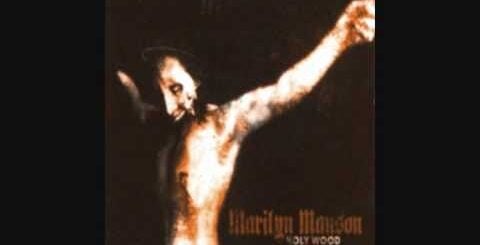
When the persona is lauded as an ‘Imitation Christ,’ it is a crucifixion of the societal presumptions of purity and righteousness. This mirrors the struggle of those cast out by society’s norms and the performers who paint their pain on public canvases.
In this line, Manson subverts the concept of love songs, transforming them into anthems of martyrdom. The metaphor extends to a commentary on the role of the artist as a sacrificial figure, performing the masochistic ritual of public scrutiny for the sake of art and message.
Love Songs in My Head: The Hidden Meaning Behind the Melody
These ‘love songs’ that Manson claims are killing us, serve as a metaphor for the poisonous doctrines and ideologies that infiltrate our consciousness through the sweet veneer of melodies. It’s as if the love songs of our culture are nothing more than sirens leading us to our demise.
The duality of love songs as both enchanting and destructive reflects the internal struggles of the characters in Manson’s narrative – and perhaps of Manson himself. Each repetition of the line ‘I’ve got love songs in my head, killing us away’ echoes the persistent push of society towards self-destruction cloaked in the guise of love and loyalty.
Memorable Lines: Striking a Chord with the Anarchic Creed
‘She tells me I’m a pretty bullet / I’m gonna be a star some day,’ stands as one of the song’s most memorable lines, showcasing a twisted vision of success that balances precariously on the border of fame and infamy. These words, when spoken through Manson’s rasping tone, offer a biting critique of how notoriety and destructive behavior are often romanticized by the masses.
The lines’ chilling seduction and the promise of legacy through violence encapsulate the song’s overarching narrative. Manson’s work is at once an exploration of and a cautionary tale about the love we choose to embrace and the ghosts of consequence that haunt those very affections.