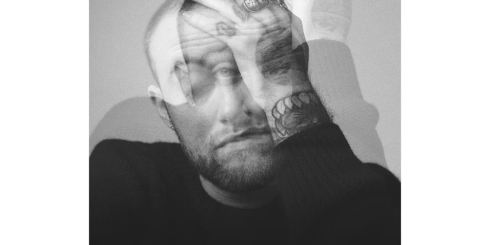
Circles by Mac Miller Lyrics Meaning – Unraveling the Spiral of Reflection and Acceptance
Lyrics
This is what it looks like right before you fall
Stumblin’ around, you been guessing your direction
Next step, you can’t see at all
And I don’t have a name, I don’t have a name, no
Who am I to blame? Who am I to blame though?
And I cannot be changed, I cannot be changed, no
Trust me I’ve tried
I just end up right at the start of the line
Drawing circles
Mm
Well, I drink my whiskey, and you sip your wine
We’re doing well, sitting, watching the world falling down, its decline
And I can keep you safe, I can keep you safe, mm
Do not be afraid, do not be afraid
You’re feeling sorry, I’m feeling fine
Don’t you put any more stress on yourself, it’s one day at a time
It’s gettin’ pretty late, gettin’ pretty late
Yeah, and I find
It goes around like the hands that keep counting the time
Drawing circles
The poet laureate of the introspective, the late Mac Miller left behind a poignant legacy of music that explored the depths of his psyche. The track ‘Circles’ is no exception—a soul-baring anthem that veils profound truths about life, impermanence, and self-acceptance within its lilting melody and seemingly simple lyrics.
‘Circles’ serves as a testament to Miller’s artistry, weaving the existential with the everyday. The song delves into the cyclical nature of life, self-discovery, and the importance of perseverance amidst it all. What initially comes across as a soft-spoken musing evolves into a profound dialogue with the self about the complexities of growth and the peace found in acceptance.
A Spiral of Self-Reflection – The Core of ‘Circles’
Central to ‘Circles’ is the imagery of a never-ending loop, portraying the human condition of grappling with change. Mac Miller employs the simple act of drawing circles as a metaphor for the way we often find ourselves stuck in the same patterns, be they habits, thoughts, or the circumstances we seemingly can’t escape.
Herein lies a heartfelt admission; despite efforts to change, there is a sense of resignation. Yet, there’s beauty too. Miller’s reflective tone suggests that our repeated journeys around the same paths can lead to deeper understanding—a message that resonates with anyone familiar with the struggle to find growth amid stagnation.
Decoding the Anthem of Self-Acceptance
Beyond the metaphor of the loop, ‘Circles’ can be seen as an embrace of self-acceptance. There’s a potent humility in admitting that some aspects of ourselves are immutable, ‘I cannot be changed, I cannot be changed, no.’
Miller’s words encourage listeners to accept their limitations while continuing to strive for better—an acceptance that doesn’t signal defeat, but rather an acknowledgment of one’s authentic self. It is a reminder that transformation is often a slow process, not a moment of epiphany.
The Lingering Question of Identity
‘And I don’t have a name, I don’t have a name, no’ Miller poignantly croons, opening a window into a recurring human concern: the search for identity. This line, drenched in existential qualms, captures the feeling of being adrift, unanchored by a clear sense of self.
Here, Miller subtly addresses the weight of labels and the freedom that comes from releasing them. The song suggests that perhaps in letting go of the need to define ourselves, we might more genuinely fulfill who we are.
Emotive Storytelling Through the Power of Memorable Lines
Throughout ‘Circles,’ Miller crafts lines that resonate on a universal level. ‘Well, I drink my whiskey, and you sip your wine’ he relates the ways we each have to cope with the world’s ‘decline’—an intimate glimpse at personal response to universal entropy.
These lyrics normalize the existence of universal coping mechanisms, while also pointing out the comfort found in companionship and shared experience. It’s the recognition that we each navigate life’s challenges differently, yet there’s solace in the collective journey.
The Hidden Meaning Behind Time’s Relentlessness
In ‘Circles,’ time becomes an agent of the cyclical motion—the hands on a clock, ‘counting the time,’ serve as a visual anchor but also as an inexorable force moving us through the arcs of our lives. Miller encapsulates a profound awareness of life’s impermanence and the way time slips through our grasp despite our best efforts.
The relentless passage of time is mirrored in our own cyclical quests for meaning and purpose. Miller, in his artful simplicity, taps into a poignant truth: that the more things change, the more we encounter cycles repeating—be it in the world or within ourselves.